
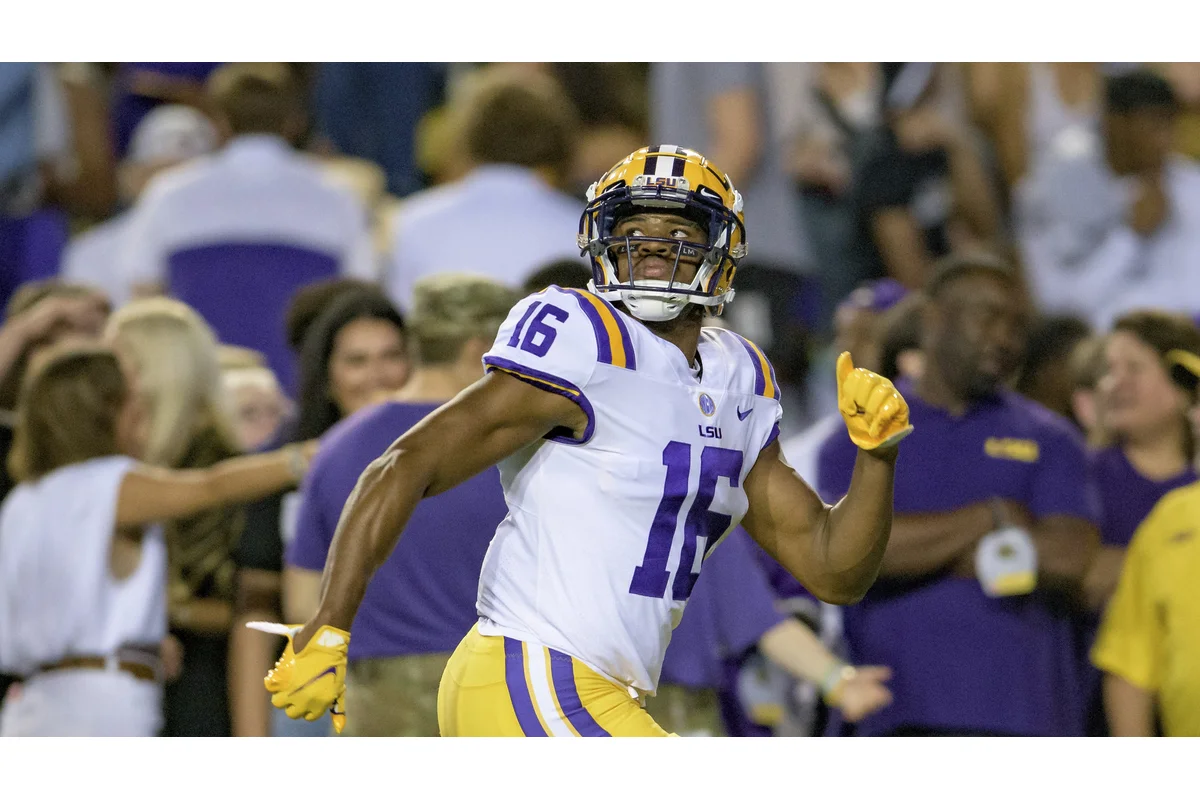
Fargo, North Dakota, may not come to mind when discussing elite quarterback development, but North Dakota State University (NDSU) has consistently produced NFL-ready quarterbacks. Players like Carson Wentz, Trey Lance, and Easton Stick have paved the way, establishing NDSU as a notable source for NFL signal-callers despite competing at the FCS level. The latest in this lineage is Cole Payton, whose emergence embodies a critical evolution beyond raw athleticism toward a defined quarterback identity.
Payton faces the challenge of shifting perceptions that emphasize his athleticism over his quarterback capabilities. Rather than being categorized as just an athlete who plays quarterback, he insists on being recognized primarily as a quarterback with athletic skills. His goal is to prove that he can effectively lead offenses, deliver from the pocket, and strategically win games while utilizing his mobility when necessary.
Embodying the Grit and Tradition of North Dakota State
The NDSU culture is steeped in toughness and perseverance, especially evident during playoff pushes. This grit is symbolized by a tradition known as the “playoff stash,” where players grow mustaches throughout the postseason as a mark of blue-collar resilience. Payton embraces this aspect openly, linking it to his playing style and mindset.
“The thing about [my] mustache is it’s the playoff stash,”
Payton shared,
“Every year a lot of the guys would grow out their mustaches for the playoffs. … I’ve stuck with it, you know. Got to stay gritty. Got to stay gritty.”
This toughness is reflected in his approach on the field, where his mentality surpasses physical ability.
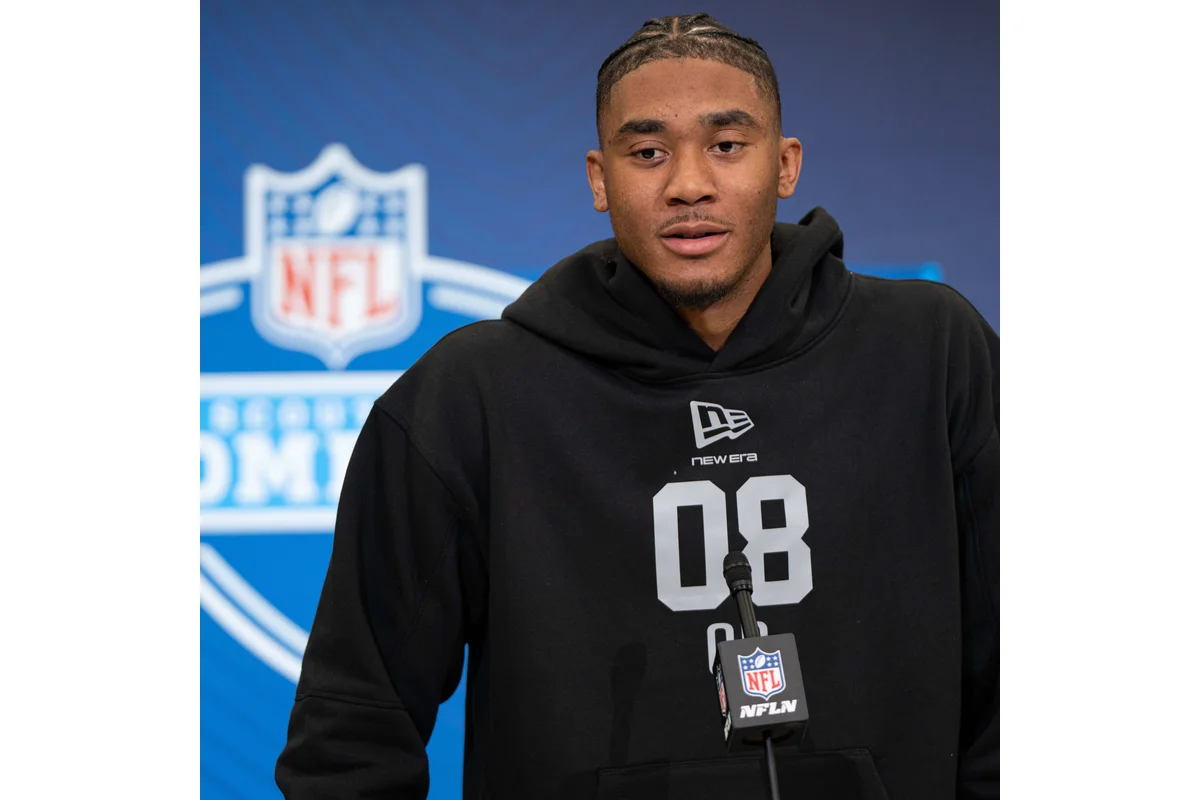
Rather than relying on impressive combine metrics alone—such as a 4.56-second 40-yard dash or a 40-inch vertical leap—Payton emphasizes his fierce competitive drive and mental resilience.
“I’m an animal when the ball’s in my hand,”
he declared.
“I’m going to go over, through, or around you. It starts with being an ultimate competitor and I’m gritty. … I think it comes down to being the ultimate competitor and freaking gritty, man.”
This aggressive mindset helped Payton rush for over 900 yards last season, establishing him as a tough presence in red zone situations. However, he is careful to clarify that long-term success in the NFL depends on his ability to manage the game from within the pocket, emphasizing his strategic and methodical style over physical exploitation.
Dispelling the ‘Taysom Hill’ Comparison
A frequent comparison made about Payton is to BYU’s Taysom Hill, known for his versatility and unique usage in New Orleans as an offensive weapon capable of playing multiple roles. While often intended as praise, Payton views this label as reductive and potentially limiting.
“Taysom Hill is a great athlete, a great competitor, [and he’s] been in the league for a while … but I’m trying to change that [perception],”
Payton said.
“I definitely changed that this year, especially along with being at the Senior Bowl. A lot of the conversations [with NFL teams] have been strictly playing quarterback. Some will ask me about special teams, but more often than not, it’s about playing quarterback.”
During the 2025 season, Payton’s development focused heavily on refining his passing abilities. His performance at the Senior Bowl debunked doubts about FCS quarterbacks’ readiness to face elite competition, showing his poise and resilience against larger, faster defenders. He not only matched but often outperformed other quarterbacks during practices, reinforcing his value as a pure quarterback prospect.
Payton credits much of his growth to the supportive environment at NDSU and talented teammates — notably wide receiver Bryce Lance, younger brother of former NFL quarterback Trey Lance. The connection Payton formed with Lance highlights his passing accuracy and decision-making.
“I think that [connection with the younger Lance] stems from my passing ability and being able to make every throw,”
Payton explained.
Bryce is an unbelievable talent… freakishly fast, has got great hands and can move his body in this way, kind of like Justin Jefferson. But the thing about Bryce is he works his tail off… everything he’s gotten, he’s earned.”
Athleticism Beyond Football Shapes His Vision
Before his time as a Bison quarterback, Payton was a multi-sport athlete, excelling in baseball as a 6-foot-3 left-handed thrower, primarily playing center field. The skill set required for that position—range, spatial awareness, vision, and arm strength—is directly transferable to quarterback play. Yet, Payton is determined not to let this athletic background overshadow his identity as a passer.
“I pitched, but my thing was center field,”
he said. “Playing center field.”
This blend of athleticism and quarterback discipline forms a cornerstone of his style, allowing him to leverage his physical tools without being confined to the “athlete” label that sometimes limits quarterbacks to gadget roles.
The Growth and Restraint of a Developing Passer
For mobile quarterbacks, learning when to resist the urge to scramble is a significant challenge. With his exceptional athleticism, Payton had the physical ability to evade pressure regularly, but his recent development emphasizes discipline and decision-making within the pocket.
“It’s just this idea of developing as a passer and that’s just getting the ball to your playmakers, right?”
Payton said.
“Sitting in that pocket, not blowing over a read and just getting yards with your legs. It’s finding the open guy, finding the completion. And I think that’s [part of] me developing as a passer throughout my college career.”
Like renowned dual-threat NFL quarterbacks Donovan McNabb and Russell Wilson, Payton prioritizes a pocket-first approach despite his mobility. When asked about maintaining his focus within the pocket, he responded:
“I’m definitely not [thinking about it once the ball is snapped],”
he said.
“I’m just in my zone doing my thing.”
His “thing” now involves nuanced pocket presence, precise footwork, and the ability to orchestrate plays through layered passing and subtle manipulations of opposing defenses. This refined skill set demonstrates that he is more than a one-dimensional runner; he is a cerebral quarterback capable of controlling the offense.
Looking Ahead: Defining the Quarterback Role in the NFL
As Cole Payton progresses through the NFL Draft process, he faces the inevitable questions regarding his size, rushing ability, and potential role as a versatile, multi-faceted player. However, he remains steadfast in his pursuit to be recognized strictly as a quarterback who excels in traditional terms.
“I believe I’m a starter in this league,”
Payton affirmed.
He accepts that the labels of athlete, grittiness, and mobility will always be attached to him, but his aspiration is clear: to prove that he can consistently win games from the pocket at the highest level. This goal has guided his development from his early days in Fargo to his status as a promising NFL prospect today. His signature playoff mustache serves as a quiet but powerful symbol of his commitment to toughness and focus in the face of skepticism.
“I believe I’m a starter in this league.”
For Payton, this conviction is more than words—it is the identity he is determined to establish as he transitions to the professional ranks, challenging dated notions of quarterback roles and redefining what it means to be a dual-threat passer in today’s NFL.
.@NDSUfootball QB Cole Payton rolls off a 4.56u
2026 NFL Combine on @nflnetwork
Stream on @NFLPlus pic.twitter.com/FdwX0230FO— NFL (@NFL) February 28, 2026
The No. 3 vertical jump by a QB on the all-time NFL Combine list belongs to Cole Payton (40.00”)
📺 #NFLCombine on @nflnetwork pic.twitter.com/unne8mb2aO
— NDSU Football (@NDSUfootball) March 1, 2026
