
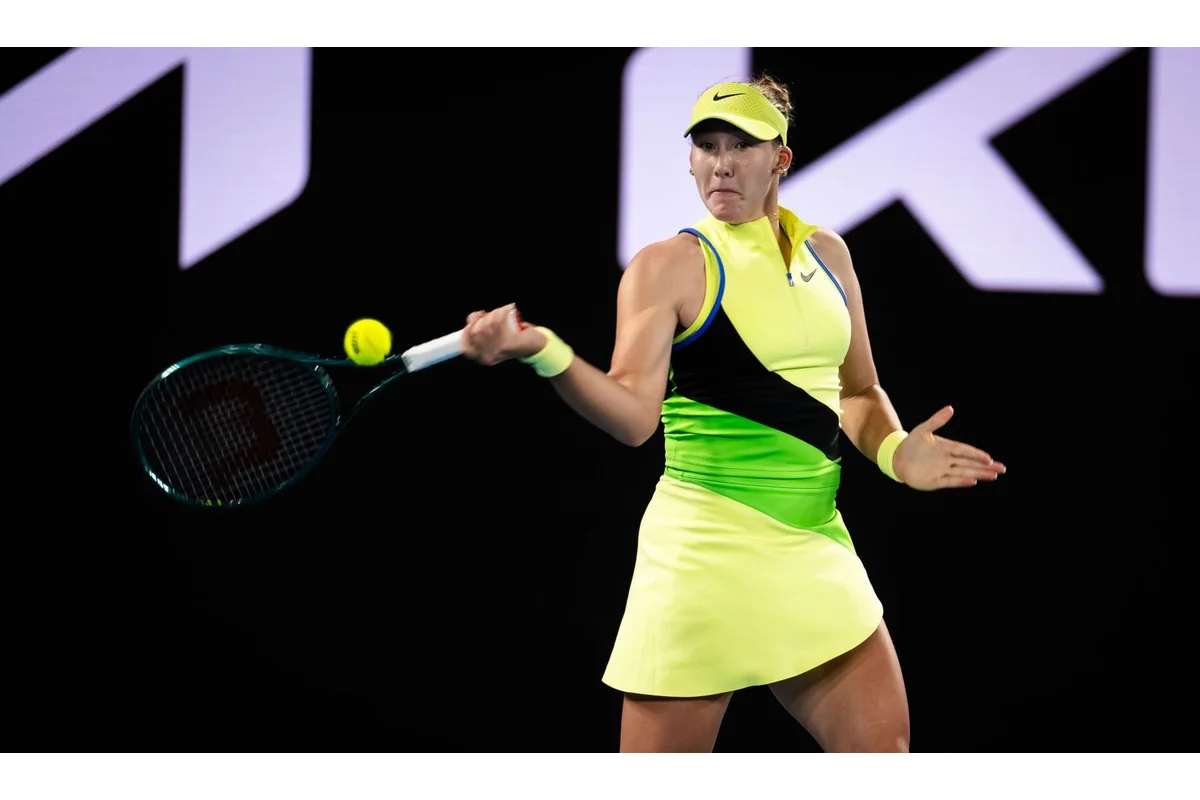
Mirra Andreeva’s run at the 2026 Australian Open ended abruptly in the fourth round as the 18-year-old Russian was defeated in straight sets by seasoned Ukrainian player Elina Svitolina. Former World No. 1 Yevgeny Kafelnikov analyzed Andreeva’s performance, revealing critical weaknesses that continue to hamper the young player’s progress, which could affect her aspirations for major titles and top rankings.
Yevgeny Kafelnikov Details Limitations in Andreeva’s Playing Style
Speaking on the sports show First&Red, the two-time Grand Slam champion provided a detailed critique of Andreeva’s game following her loss in Melbourne. Kafelnikov pointed out that the youngster lacks the ability to generate her own shot power, especially on the forehand side, and instead relies heavily on the pace set by her opponents.
“To be honest, I wish I hadn’t watched that match between Andreeva and Svitolina, because it really revealed a huge number of shortcomings in Mirra’s game. First and foremost, she can’t generate her own power, especially on the forehand side. Basically, if opponents just keep feeding balls to her right side, she can’t hit a powerful forehand. She’s basically playing off the pace and power of her opponents’ shots,” Kafelnikov said. (translated from Spanish)
Kafelnikov emphasized that Andreeva’s dependency on others’ shot speed makes her vulnerable to players like Svitolina who employ medium-paced rallies, allowing them to target Andreeva’s weaker forehand effectively.
“When she comes up against players who can neutralize her strengths with clean, medium-pace shots – and we all know her main weapon is the two-handed backhand – as soon as they start targeting the forehand side, all the negative things come out. She starts getting late, starts resorting to slice, and on slower surfaces especially, relying on slice is already a clear sign of technical gaps.”
Despite praising improvements in her serving and lateral court movement, Kafelnikov expressed concerns about her forward and backward mobility during matches, highlighting areas that require significant development.
“Yes, she’s improved her first serve. Yes, her side-to-side movement is at a decent level now. But there are still very big holes in her forward-backward movement. There’s an enormous amount of work that needs to be done,” the 51-year-old continued.
He concluded with a sobering forecast regarding Andreeva’s potential to rise as a major Grand Slam winner or reach the World No. 1 ranking any time soon without addressing the core flaws in her game.
“And honestly, with the way she’s playing right now, I’ll say this – you can hate me, you can say whatever you want – but she has no prospects of becoming the world No. 1 or winning a Grand Slam. You need to look reality straight in the eye. I genuinely want – I’m telling you this honestly – for her to improve as a tennis player and to win a huge number of Grand Slam tournaments, but to do that, something has to change.”
Brad Gilbert’s Concerns Mirror Criticism About Andreeva’s Forehand
Mirroring Kafelnikov’s assessment, renowned American coach Brad Gilbert, known for guiding champions such as Andre Agassi, Andy Roddick, Andy Murray, and Coco Gauff, expressed doubts over Andreeva’s forehand effectiveness following her Australian Open defeat. In a message posted on X (formerly Twitter), Gilbert described her forehand as inconsistent and lacking aggression, coining it the “fearhand.”
“I think after last year’s back-to-back 1000 titles, everyone thought she was going to be ascending to the number one spot potentially. The ‘fearhand’ to me, is a major issue in a lot of her losses lately. It’s kind of spinny, makes a lot of errors and she really can’t do anything aggressive, and I think a lot of the players now know that.”
Gilbert’s critique underscores a widespread perception within the tennis community that Andreeva’s forehand is a tactical weakness, limiting her ability to dominate points and impose pressure on opponents consistently.
Future Prospects and Upcoming Tournaments for Mirra Andreeva
Arriving at the Australian Open following a confidence-boosting title at the Adelaide International—her fourth WTA Tour-level singles victory—Andreeva’s 2026 season had high expectations. However, her exit in Melbourne has raised questions about the adjustments needed to compete against experienced players effectively. The young Russian is now preparing to compete at the WTA 1000 Qatar Open, where observers will watch closely to see if she can address the issues highlighted by Kafelnikov and Gilbert.
Andreeva’s future successes will depend on her ability to develop greater shot aggression, improve technical gaps in movement, and generate her own power to escape tactical targeting on weaker wings. These changes appear vital if she is to fulfill the early promise shown in her breakthrough season and convert potential into lasting dominance on the women’s tour.
