
Brad Gilbert, an experienced tennis analyst and former coach of top players like Andy Murray, Coco Gauff, and Andre Agassi, continues to monitor developments across both the ATP and WTA Tours closely. Currently working with The Tennis Channel, Gilbert recently shared his thoughts on how height influences performance differently on the women’s circuit compared to the men’s game.
Although Gilbert has been a long-time supporter of women’s tennis, he declined the opportunity to coach Emma Raducanu in recent times. Nonetheless, he remains actively engaged in evaluating performances within the WTA Tour.
Gilbert Highlights Sara Bejlek’s Victory and Size Advantage
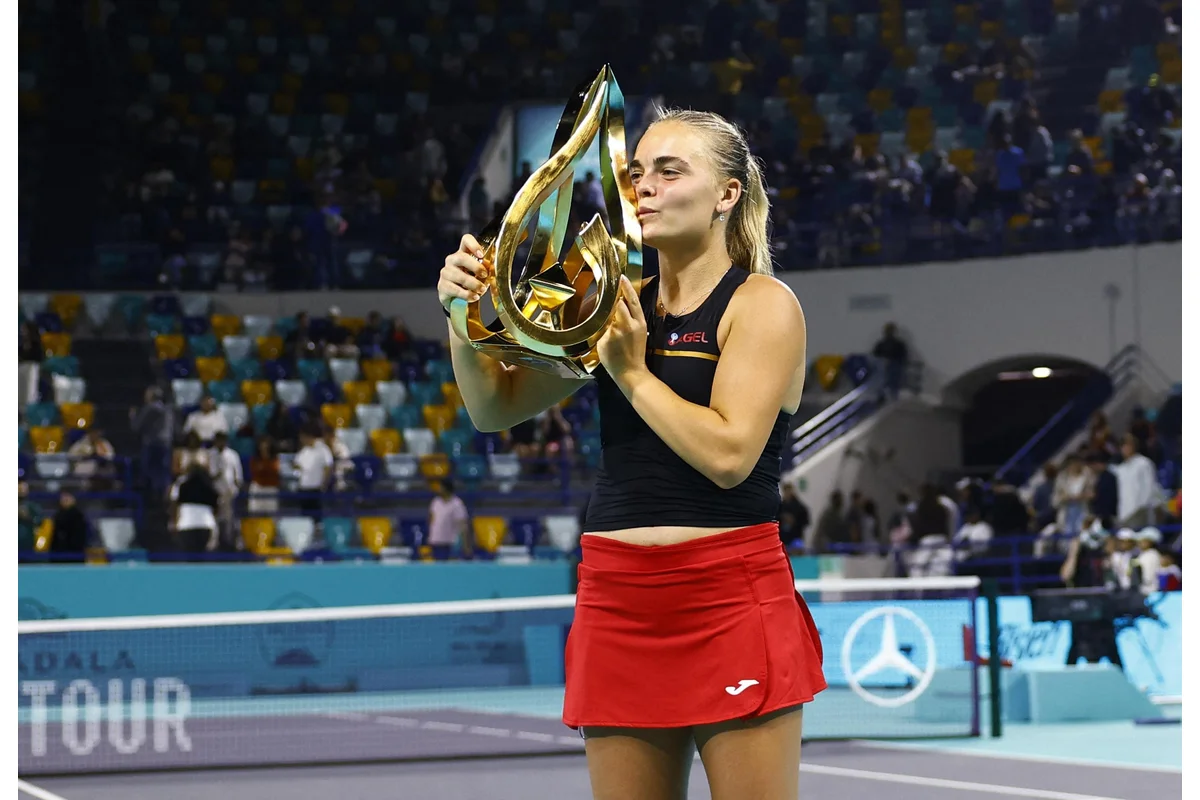
Gilbert publicly commended young Czech player Sara Bejlek following her win over Ekaterina Alexandrova at the Abu Dhabi Open. On social media platform X, he praised Bejlek’s breakthrough achievement, noting her remarkable week at a young age.
Gilbert emphasized Bejlek’s relatively short stature at 5’3” and pointed out how being smaller is less of a disadvantage for women on the WTA Tour than it is for men competing on the ATP Tour.
“She might be the smallest one I’ve seen from there at 5’3, being this small as a woman does definitely not hurt as it does on the men’s side.”
After securing the Abu Dhabi title, Bejlek reached a career-high ranking of world number 38, climbing 37 spots above her previous best position.
Height Trends Among Top ATP and WTA Players Compared
Gilbert’s observation aligns with current statistics showing a marked difference in average height between leading male and female players. The top 10 women on the WTA Tour average around 5’10”, with Jasmine Paolini being the shortest among them.
In contrast, the top 10 men in the ATP rankings average roughly 6’3”, with taller players such as Alexander Zverev, who stands at 6’6”, raising the overall height average.
Interestingly, both the number one ranked players on the WTA and ATP Tours share the same height of 6’0”: Aryna Sabalenka leads the women’s rankings while Carlos Alcaraz holds the top spot in men’s tennis.
Implications for Player Development and Tour Dynamics
Gilbert’s comments suggest that while physical height strongly influences men’s tennis due to factors like power and reach, women’s tennis allows for greater variability without this factor being as limiting. This difference could impact how emerging players on the WTA Tour approach development, emphasizing skill and agility alongside physical attributes.
Given these trends, the WTA may continue to champion a diverse range of player profiles, demonstrating that success on the women’s circuit does not depend as heavily on stature as it does on the men’s tour. Observers and aspiring professionals will likely watch future WTA events closely to see how these size differences continue to shape competition.
impressive week for 20 year old Czechia 🇨🇿 Sara Bejlek she takes 🏆 in Abu Dhabi, this country always has great 👍 female players, she might be the smallest one ☝️ i’ve seen from there at 5’3, being this small on women’s does definitely not hurt 😞 like it does on men’s side…
— Brad Gilbert (@bgtennisnation) February 7, 2026
