

Anna Kalinskaya, a well-known competitor on the WTA Tour, has shared a candid account of her demanding journey at the renowned Mouratoglou Tennis Academy in France. In a recent interview, she revealed the stark contrast between the academy’s celebrated reputation and the difficult physical challenges she endured during her training. This reflection highlights why she ultimately decided never to return to the facility.
First Impressions Versus Intense Physical Challenges
The Mouratoglou Academy is celebrated for its impressive facilities and the success stories of numerous top tennis stars. Kalinskaya recalled being initially impressed by the academy’s expansive layout, stating,
“I went there, they have a really cool academy, a million courts, an incredible gym.”
However, this positive first impression was soon overshadowed by an intense training regimen that focused heavily on physical conditioning, a shift that proved difficult for her body.
Kalinskaya explained that before joining the academy, she had minimal exposure to weightlifting or strenuous workouts.
“They started putting a lot of physical effort there, and I wasn’t ready for that. Until I was 16, I did very little; I didn’t do any weightlifting; if I did, it was just some one-off workouts,”
she revealed. The demanding physical program lacked personalized attention, leading to immediate negative effects on her health.
Adapting to Elite Practices at a High Physical Cost
Trying to match the routines of experienced players like Alizé Cornet played a role in her adaptation. Kalinskaya shared,
“Alizé Cornet, I would copy her there. I did less weight there, but overall, the program was intense,”
highlighting the difficulty in keeping up with established professionals. The strenuous sparring and grueling workload started producing results on court but also caused lasting physical pain.
She described the first injury she sustained during this period, which became a recurring issue:
“I played with sparring, and the workload was insane. I started seeing results. I was playing well, but my back also started hurting. And that was my first injury, and yes, it still comes back sometimes.”
Inconsistent Coaching and Priority Given to Top Players
Beyond the physical strain, Kalinskaya criticized the academy’s management style, particularly its approach to lesser-known players. She depicted a disorganized environment where attention shifted away from rising athletes in favor of established tour professionals. Recalling her experience during a short visit, she said,
“The last time I was there, I came for 10 days, I trained with one coach for two days, and I came on the third day, and there’s already a different coach,”
which disrupted her training continuity.
When she inquired about her initial coach, she learned that he had been reassigned to support a professional player.
“So priority was given to tour players. That’s my experience, and I never went there again, because in 10 days, I changed three coaches.”
Current Performance Amid Lingering Effects of Early Training
Despite these hardships, Kalinskaya’s resilience remains evident as she continues to compete strongly on the WTA circuit. Notably, in January 2026 at the Australian Open, she challenged World No. 2 Iga Świątek in a tense third-round match. Although hampered by back issues that forced a medical timeout, Kalinskaya took the second set before ultimately falling 6-1, 1-6, 6-1.
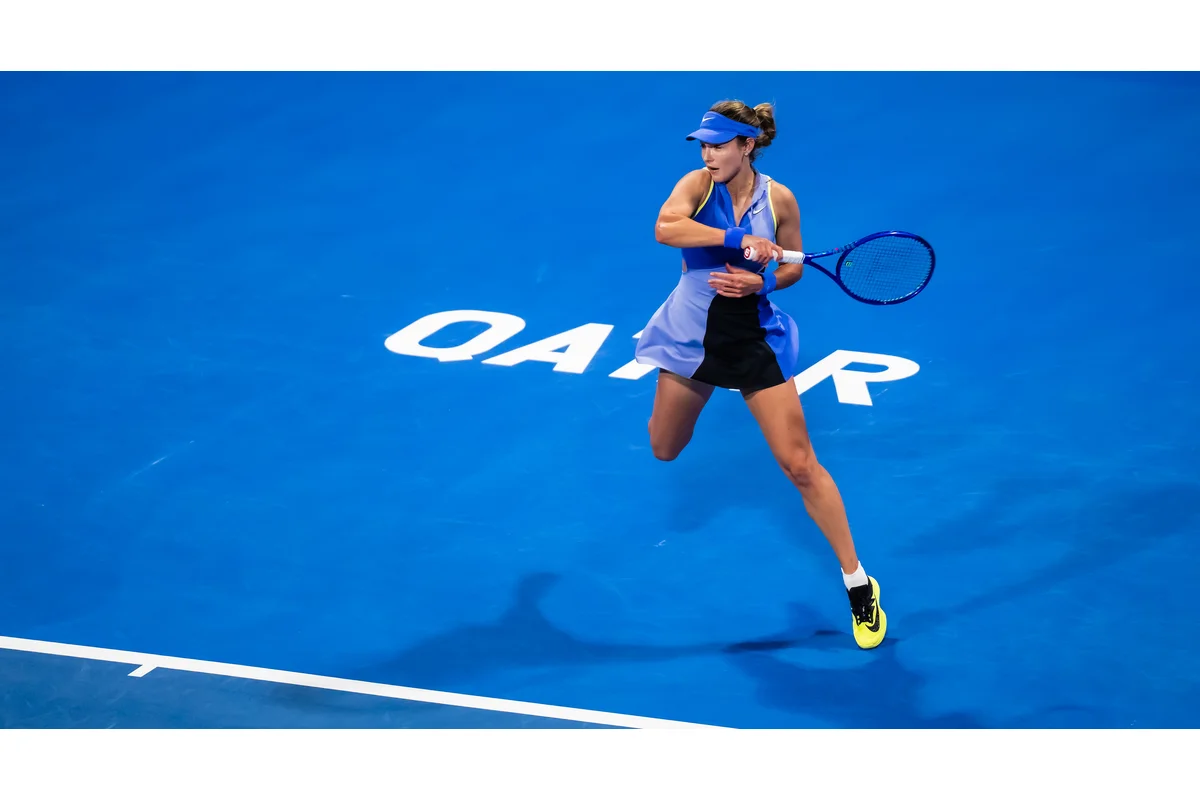
Her competitive streak carried forward into the Qatar Open in February, where she advanced to the quarterfinals. Her tournament run was stopped by Karolína Muchová, who defeated her in straight sets on the way to the semifinals. This performance highlights Kalinskaya’s persistence despite the physical challenges rooted in her early training years.
Ongoing Implications for Up-and-Coming Players at Elite Academies
Kalinskaya’s revelations offer a nuanced glimpse into the realities confronted by rising tennis players at elite training centers. While institutions like Mouratoglou Academy boast exceptional resources and attract top professional talent, the intense physical demands and prioritization of established stars may lead to difficulties for younger players seeking stability and personalized development. These firsthand insights contribute to ongoing discussions about how tennis academies can better support the holistic growth and well-being of emerging athletes.
Kalinskaya explains how she injured her back training at the Mouratoglou Academy:
"Until I was 16, I did very little weight. The training was super intense and there was no individual approach. Whatever Cornet was doing, I had to repeat it."
Mourataglou is a dangerous fraud pic.twitter.com/mkyf8iXBPp
— Corvath Draemir (@Archaicmind3000) February 13, 2026
