
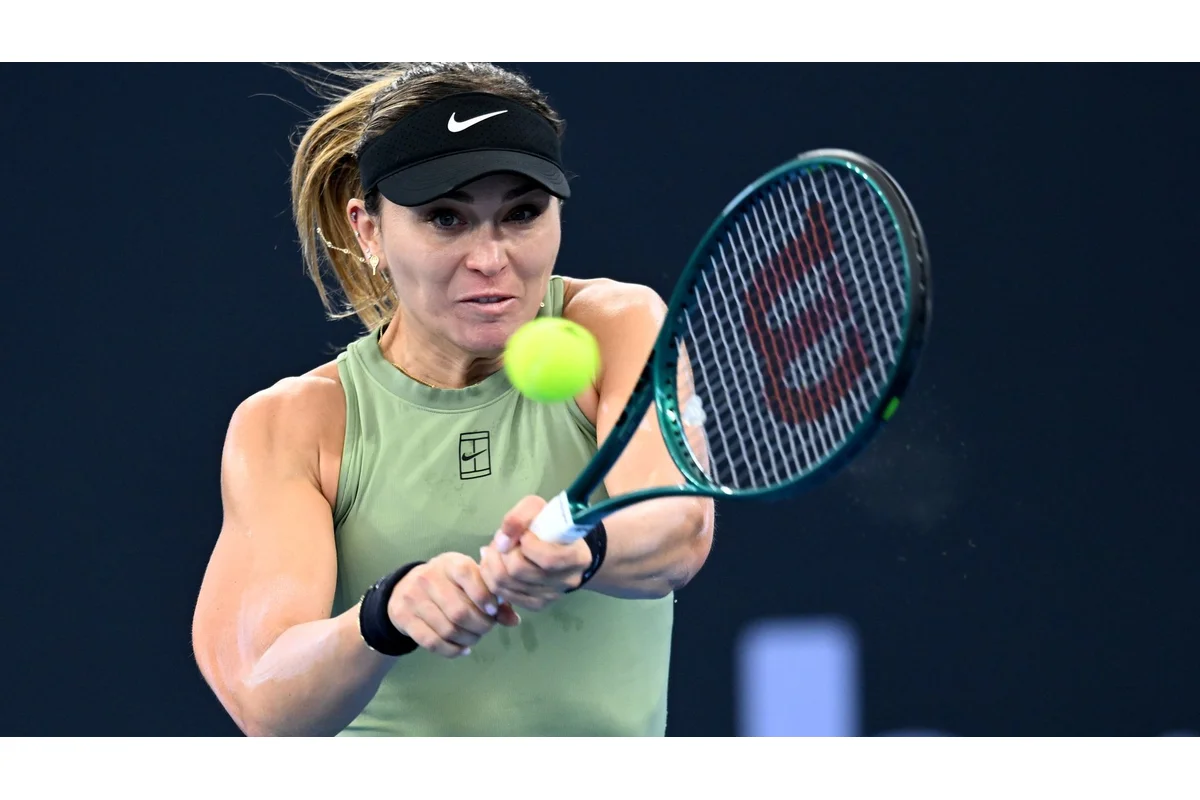
On February 17, 2026, Spanish tennis player Paula Badosa was forced to retire from her second-round match against Elina Svitolina at the Dubai Tennis Championships due to a right thigh injury. After facing criticism online, Badosa responded on February 18, defending her decision and reaffirming her commitment to continue her career despite persistent injuries. The incident highlights ongoing challenges athletes face with social media abuse amid physical setbacks.
Badosa’s Struggle with Injuries and Career Comeback Efforts
Paula Badosa, a former world No. 2, had battled multiple injuries throughout her career, including a chronic back condition that nearly led her to retirement in 2024. In 2025, she managed to climb back into the world’s top 10 rankings with strong performances. During the Dubai match, she initially took a 4-1 lead but lost momentum, eventually requesting treatment before retiring from the contest due to her thigh problem.
Strong Message Against Online Criticism of Her Retirement
After the match, Badosa addressed harsh comments accusing her of disrespecting the sport. She shared on social media,
“You have no idea what it’s like to live with a chronic injury and still choose to keep going,”
emphasizing the daily uncertainty of living with pain. Badosa expressed the emotional toll of her journey, describing the effort to find solutions as harrowing but ultimately worthwhile to continue playing tennis.
She further stated,
“It’s all about trying and that won’t change, I’ll always try one more time. I’m doing this for my passion… If there’s even a 1 per cent chance to keep going, I’ll take it. That’s just how I see and understand life.”
Broader Issues of Online Abuse and Mental Health in Tennis
Badosa’s remarks sparked renewed attention on the mental pressures female tennis players face due to abusive comments on social media. She condemned the toxic environment, stating,
“For me the only disrespect here is to open social media and read messages like this,”
and added,
“Then we complain if we see players suffering and having mental health issues, but I’m not surprised with the amount of hate and ‘experts’ we have here.”
The Women’s Tennis Association (WTA) affirmed its commitment to protecting players from harmful online behavior, highlighting it as a top priority. This issue has become more visible recently, with Australian player Destanee Aiava announcing her retirement in 2026, citing tennis culture as “racist, misogynistic, homophobic and hostile,” and pointing to the constant barrage of negativity she experienced online.
Ukrainian player Elina Svitolina revealed receiving death threats after a defeat at the Canadian Open, attributing the abuse to disgruntled bettors. A 2025 survey conducted by the WTA and the International Tennis Federation found that 40 percent of abuse targeting players was linked to gamblers upset by match outcomes.
Amanda Anisimova Highlights Cyberbullying Impact
American player Amanda Anisimova, ranked world No. 6, also spoke out on the widespread cyberbullying affecting athletes. She said,
“I’d say it’s not just betting, it’s overall cyberbullying all the time, commenting on everything, like my body all the time, every single day. It’s difficult.”
Anisimova added,
“I don’t think that people realise the extent of it, how much of an effect it can have on someone,”
underscoring the serious emotional consequences.
Additional Match Results from Dubai and Qatar
On February 18 in Dubai, Russian player Mirra Andreeva defeated Jaqueline Cristian of Romania 7-5, 6-3 to advance to the quarter-finals, where she will face Amanda Anisimova. Jessica Pegula, the fifth-ranked American, secured a quarter-final spot by beating countrywoman Iva Jovic 6-4, 6-2; she will next play Dane Clara Tauson.
Elena Rybakina of Kazakhstan, the tournament’s top seed and Australian Open champion, retired during her third set against Croatian Antonia Ruzic after losing the second set 6-4, despite winning the first 7-5. Ruzic will meet Elina Svitolina, who overcame Belinda Bencic of Switzerland 4-6, 6-1, 6-3 in a match described as a battle of tennis mothers.
Meanwhile, on the men’s circuit, Russian Karen Khachanov reached the last eight at the Qatar Open by edging Hungary’s Marton Fucsovics 6-2, 4-6, 6-4. Greek star Stefanos Tsitsipas advanced to his 84th Tour-level quarter-final after defeating Daniil Medvedev 6-3, 6-4. World No. 1 Carlos Alcaraz and second-ranked Jannik Sinner also competed on February 18, but their matches ended after press time.
Implications of the Ongoing Challenges in Tennis
Paula Badosa’s situation reflects the broader conflicts current athletes face, balancing injury comebacks with the emotional strain of online harassment. The persistence of cyberbullying and abusive messaging threatens players’ mental health and may influence career decisions. The WTA and other tennis bodies have intensified efforts to safeguard the sport’s community, but the problem remains widespread, involving issues from bettors’ frustrations to general hostility on social platforms.
Badosa’s vow to continue competing despite physical pain underscores her dedication but also signals how injury management and mental resilience will remain critical factors shaping professional tennis careers in the coming years.
