
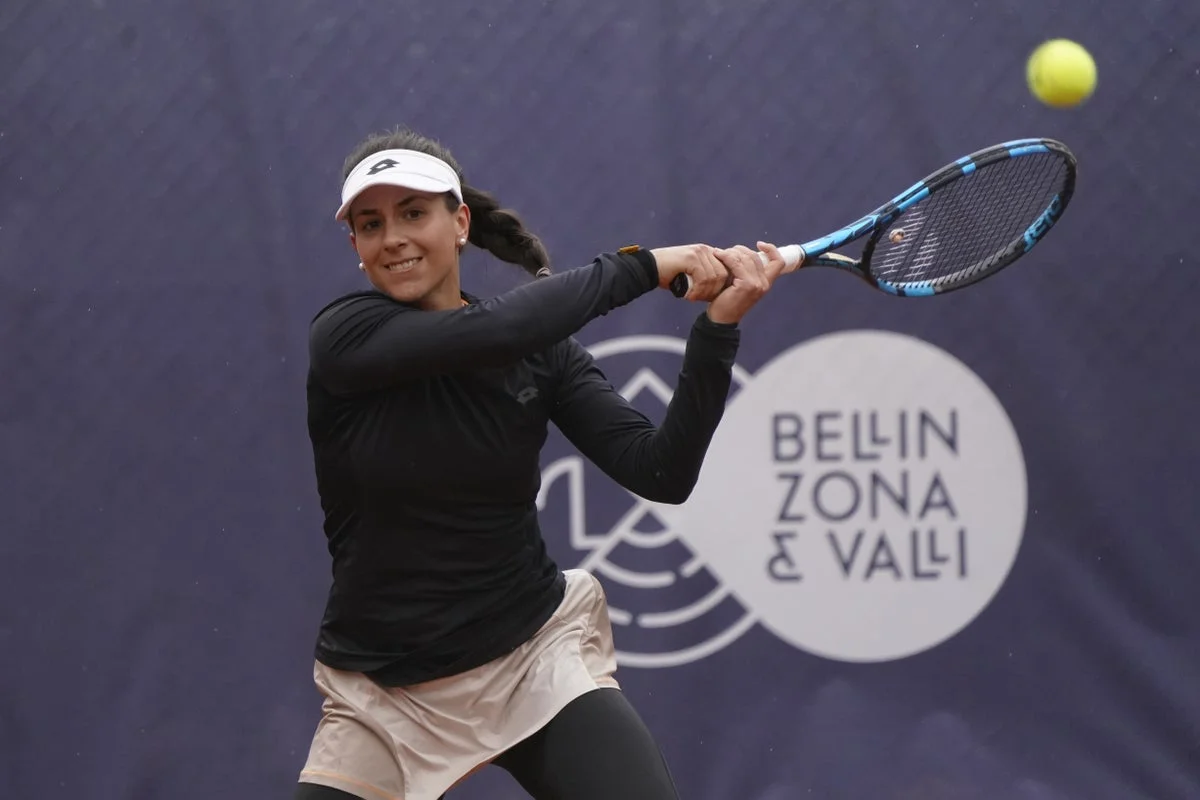
Italian tennis player Lucrezia Stefanini, ranked No. 138, revealed that she received explicit death threats on her private WhatsApp number ahead of her qualifying match at the BNP Paribas Open in Indian Wells. The messages appeared to be an attempt to pressure her into losing the match for betting schemes, causing immediate alarm for her safety and that of her family.
Details of the Threats and Security Response
In a video posted on Instagram on March 3, Stefanini described the messages she received in her native language. She explained:
“I received a WhatsApp message in which I was threatened over winning yesterday’s match. They threatened my family and me and named my parents, the place where I was born, and they sent me a photo of a gun. I’m making this video and explaining what happened because I don’t think it’s right to put me under this pressure and unease before a match.”
Following these threats, Stefanini promptly informed the Women’s Tennis Association (WTA), which responded by enhancing her security measures. The tournament officials also assigned an escort to accompany her to and from the venue, ensuring her safety throughout the event.
Stefanini’s Determination Amid Intimidation
Despite the fear and extreme pressure from the threats, Stefanini competed in her opening qualifying round against Victoria Jimenez Kasintseva. She lost the match in three sets with scores of 4-6, 6-4, 6-4 but emphasized her resilience:
“Despite it all, I fought until the end to try and win my match, because I can’t permit these people to intimidate me,”
Her stance reflects a refusal to let intimidation tactics dictate the outcome of her sporting efforts.
Official Condemnation and Wider Issues in Italian Tennis
The Italian Tennis and Padel Federation president, Angelo Binaghi, condemned the threats as a severe violation, calling it:
“an extremely serious and intolerable matter.”
He highlighted that the combination of weapon imagery, personal data exposure, and direct intimidation of an athlete signals a dangerous escalation far removed from the spirit of sportsmanship. This incident is not isolated—earlier in the year, Italian player Mattia Bellucci faced a barrage of hostile messages on social media, and Francesco Maestrelli has also publicly reported repeated attacks fueled by frustrations linked to betting problems during 2023.
Implications of Betting-Related Harassment in Tennis
The rise of gambling addiction represents a significant social challenge, and its impact on athletes brings troubling consequences to professional sports. Incidents like those faced by Stefanini underline the urgent need for governing bodies and authorities to identify and penalize those responsible for such criminal intimidation. Protecting players’ safety and preserving fair competition remain critical priorities moving forward.
