
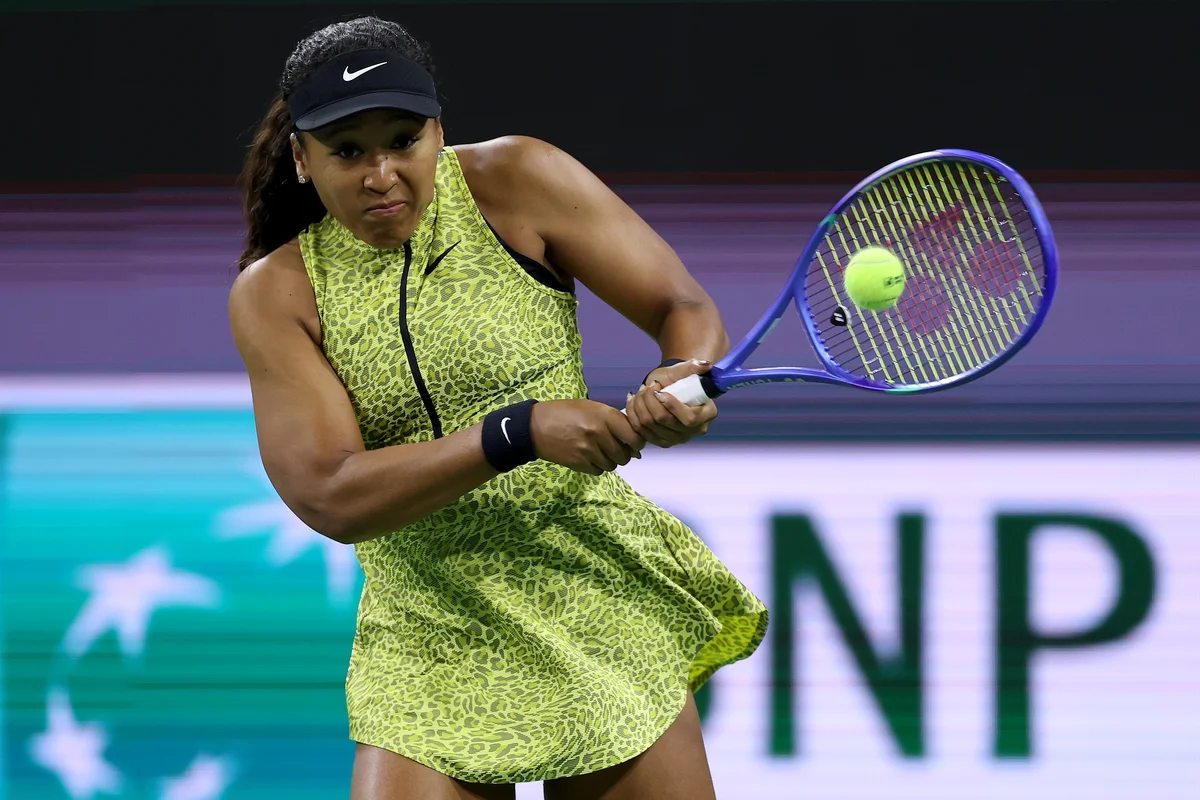
Naomi Osaka made a striking entrance at the BNP Paribas Open in Indian Wells, California, wearing a leopard-print ensemble that quickly captured the spotlight. Inspired by Naomi Campbell’s famed 2009 Harper’s Bazaar shoot, the outfit combined athletic performance with high fashion, signaling Osaka’s intent to use her appearance as a form of self-expression beyond tennis. Her choice stirred widespread conversation across social media, fueling interest not only in her but also in the sport itself.
Arriving on court adorned with gold facial jewelry and a leopard-patterned outfit, Osaka turned heads immediately, ensuring every camera was focused before the first serve. This deliberate styling was not merely a fashion choice; it was a statement crafted by Osaka herself, blending her athletic identity with artistic storytelling.
Osaka’s Inspiration Behind the Leopard Print Look
In her post-match press conference, Osaka explained the creative thinking behind her outfit. She credited Naomi Campbell’s iconic “Wild Things” Harper’s Bazaar shoot, where Campbell was photographed alongside cheetahs in South Africa, as a key influence. Osaka reflected deeply on the symbolism of leopard print in a desert setting and reimagined it through her own lens.
Okay, so get ready for my long spiel. So obviously the base of the outfit was leopard print. Then when I was kind of diving deeper into it, we were thinking, okay, leopard in the desert. Then there is that iconic photo of Naomi Campbell running with the cheetah, right? I was, like, okay, do I want to tell a story like this, but, like, obviously based on who I am, my leopard is more like a huntress, like I’m hunting something, there is something I want to go get.
— Naomi Osaka, Professional Tennis Player
Unlike a typical fashion statement from a designer, this explanation came directly from a four-time Grand Slam winner. For Osaka, fashion is deeply connected to her athletic persona, serving as a narrative tool that broadcasts her ambitions and cultural identity on the court.
The Immediate Impact of Osaka’s Look on Social Media
Soon after Osaka’s first-round match at Indian Wells, her leopard-print outfit had ignited social media platforms. Clips of her appearance circulated rapidly, sparking discussions among tennis fans and fashion enthusiasts alike. Even those who rarely follow tennis found themselves drawn into the conversations, driven by Osaka’s bold, unapologetic style that evoked the energy of high fashion runways rather than traditional sportswear.
This moment mirrors the path of other tennis icons who have used fashion to elevate their presence. Serena Williams, regarded as the greatest tennis player, spent years making daring fashion statements on court. Likewise, players such as Maria Sharapova and Coco Gauff have begun blending sport and style, carving unique spaces for themselves beyond tennis results.
How Osaka’s Off-Court Choices Influence Her Career
Since returning from maternity leave, Naomi Osaka has continued to build a compelling narrative not solely based on her tennis skills but also through her fashion statements. Earlier this year, she appeared at the Australian Open in a jellyfish-inspired outfit that sparked polarized reactions online, demonstrating her willingness to spark conversation and challenge norms.
Osaka openly embraces fashion as an extension of her personal and cultural story, intertwining elements of her Japanese and Haitian heritage alongside her passion for art and cultural expression. Her choice of leopard print at Indian Wells symbolized more than just style—it was a message about resilience, strength, and the courage to remain authentic in spaces that are often challenging to navigate.
In the broader context, Osaka’s fusion of sport and fashion signals an evolving era where athletes assert their identities on multiple fronts. Her distinctive look at Indian Wells not only spotlighted her individuality but also expanded the dialogue about the role of fashion within the world of tennis and beyond.
As Naomi Osaka continues to compete at high levels, her style choices will likely remain a topic of interest, representing both her athletic journey and her voice as a cultural influencer. This blend of performance and personal storytelling sets her apart and enriches the sport’s cultural landscape in lasting ways.
