
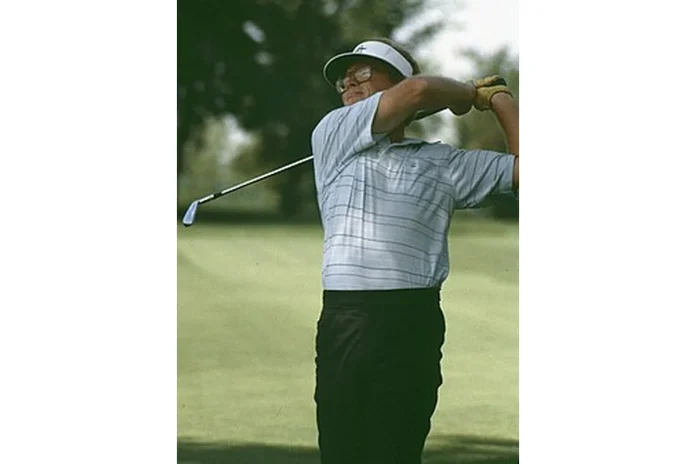
Tom Kite Bio
Thomas Oliver Kite Jr. (born December 9, 1949) is an American professional golfer and golf course architect. He won the U.S. Open in 1992 and spent 175 weeks in the top-10 of the Official World Golf Ranking between 1989 and 1994. Over a professional career that began in 1972, Kite became one of the most respected ball strikers of his generation and earned induction into the World Golf Hall of Fame in 2004.
A graduate of the University of Texas, Kite built his reputation on a steady, course-management style and an exceptional short-iron game. After his competitive playing days wound down, he transitioned into golf course design, applying decades of tour experience to projects across the country.
Early Life and Background
Thomas Oliver Kite Jr. was born on December 9, 1949, in McKinney, Texas. He grew up in the state and developed an early love for the game, beginning to play golf at the age of six. His talent surfaced quickly, and he won his first tournament at age 11.
Kite attended the University of Texas on a golf scholarship, where he was coached by the legendary Harvey Penick. The Texas program became a launching pad for some of the era’s most accomplished American golfers, and Kite thrived under Penick’s guidance while balancing academics with a demanding competitive schedule.
During his four years at Texas, Kite won nine collegiate tournaments and earned a reputation as one of the country’s top amateur players. He was a second-team All-American in 1970 and 1971 before being named a first-team All-American in 1972. He helped the Longhorns capture Southwest Conference Championships in 1970 and 1972, and he played on NCAA Championship-winning teams in 1971 and 1972.
Path to Golf
Kite’s amateur peak came in 1972, when he shared the individual NCAA Championship with teammate Ben Crenshaw. The shared title reflected the depth of talent in the Texas program and offered a fitting farewell to Kite’s amateur career.
That same year, Kite turned professional and began his climb through the ranks of the PGA Tour. His amateur résumé, combined with the discipline instilled by Penick, gave him a strong technical foundation as he adjusted to the demands of professional golf.
Kite’s early years on tour were defined by steady improvement rather than instant stardom. He gradually built a reputation as a player who rarely beat himself, relying on accurate ball striking and a sharp short game to grind out scores on difficult courses.
Tom Kite Career
Early Career (1972-1980)
Kite began his professional career in 1972 and quickly established himself as a consistent performer. He competed in his first major championship shortly after turning professional and developed a particular fondness for the U.S. Open, a tournament that would later define his career.
During the late 1970s, Kite earned his first significant honors, including the Bob Jones Award in 1979, given by the United States Golf Association in recognition of distinguished sportsmanship. He was also a regular on U.S. national amateur and early professional teams, building the international resume that would eventually lead to Ryder Cup selection.
PGA Tour Breakthrough (1981-1991)
Kite’s career reached a new level in 1981, when he was the PGA Tour’s leading money winner and captured both the Byron Nelson Award and the Vardon Trophy for adjusted scoring average. He repeated the Byron Nelson Award and Vardon Trophy in 1982, cementing his status among the tour’s elite.
Throughout the 1980s, Kite remained a fixture in contention. He tied for second at The Open Championship in 1978, finished second at the Masters Tournament in 1983 and 1986, and recorded top finishes at the PGA Championship in 1981 and 1988. His peers and rivals included the likes of Ben Crenshaw, his former Texas teammate, with whom he shared the 1972 NCAA title.
Known for his innovation, Kite was the first to add a third wedge to his bag, one of the first players to use a sports psychologist, and one of the first to emphasize physical fitness as a tool for game improvement. He also underwent laser eye surgery to address partial blindness in a bid to sharpen his performance late in his career.
Major Championship Triumph and Final PGA Tour Years (1989-1995)
Kite’s defining moment arrived in 1992, when he won the U.S. Open at Pebble Beach. The victory was the highlight of a career that included 19 PGA Tour wins and made him a national sports headline.
In 1989, Kite reached a career-high fifth in the Official World Golf Ranking on April 16, 1989, and was named both PGA Player of the Year and GWAA Male Player of the Year. He was the tour’s leading money winner for the second time and became the first player in PGA Tour history to reach $6 million, $7 million, $8 million, and $9 million in career earnings.
He competed on seven Ryder Cup squads in 1979, 1981, 1983, 1985, 1987, 1989, and 1993, and later served as the 1997 Ryder Cup captain. Kite also holds the unique record of making the cut for the first four U.S. Opens held at Pebble Beach, in 1972, 1982, 1992, and 2000.
Senior Career (2000-2020)
As Kite aged, he transitioned to the Champions Tour and remained competitive into his later years. In 2005, at the age of 55, he led the PGA Tour’s Booz Allen Classic by one shot going into the final round. A win would have broken Sam Snead’s record as the oldest winner on the PGA Tour by three years, but he finished tied for 13th, seven shots behind Sergio García.
On the Champions Tour, Kite claimed 10 victories, including a senior major at The Countrywide Tradition. At the 2012 U.S. Senior Open, he shot a front-nine 28, seven under par, in the first round, recording the lowest nine-hole score in any USGA championship. He played the Champions Tour until 2020.
Driving Style and Strengths
Kite was renowned for his precision with short irons and his disciplined course management. In 1993, broadcaster and former major champion Johnny Miller referred to Kite as the greatest short-iron player the game had seen, a testament to the accuracy and creativity that defined his approach play.
Notable Events and Milestones
Kite’s signature win came at the 1992 U.S. Open at Pebble Beach, the only major championship victory of his career. His record of making the cut at every U.S. Open held at Pebble Beach from 1972 through 2000 remains a unique mark in championship golf.
Tom Kite Career Wins
Tom Kite accumulated 37 professional wins across several tours. His 19 PGA Tour victories are the foundation of his resume and include the 1992 U.S. Open, while he added three European Tour wins, one PGA Tour of Australasia win, and ten PGA Tour Champions victories.
PGA Tour Highlights
Kite’s 19 PGA Tour wins spanned more than two decades, with his first significant triumphs coming in the early 1980s and his crowning achievement being the 1992 U.S. Open at Pebble Beach. He was the tour’s leading money winner in 1981 and again in 1989.
Other Wins and Performances
Beyond his PGA Tour success, Kite recorded three European Tour wins and one victory on the PGA Tour of Australasia. On the PGA Tour Champions, he earned 10 victories, including one senior major at The Countrywide Tradition.
| Series | Wins | Top Tens | Poles |
|---|---|---|---|
| PGA Tour | 19 | – | – |
| PGA Tour Champions | 10 | – | – |
| European Tour | 3 | – | – |
| PGA Tour of Australasia | 1 | – | – |
Tom Kite Family
Family Background and Racing Lineage
Public information about Tom Kite’s parents and extended family is limited. What is well documented is his deep Texas roots and the close bond he shares with his alma mater, the University of Texas, where he was a contemporary and teammate of fellow golf great Ben Crenshaw.
Personal Life
Kite resides in Austin, Texas. He has remained connected to his home state throughout his career and, in his later years, has focused on golf course architecture, applying his decades of competitive experience to design work.
2025 Season Outlook
Having played his final Champions Tour season in 2020, Tom Kite is no longer an active competitor on any major professional tour as of 2025. His playing days behind him, Kite’s professional attention has shifted toward his work as a golf course architect.
Kite’s legacy continues to shape the sport through his course designs and his long list of competitive accomplishments, including 19 PGA Tour victories, the 1992 U.S. Open, and induction into the World Golf Hall of Fame in 2004.
While fans will not see Tom Kite competing in tour events in 2025, his influence on American golf, from his Texas roots under Harvey Penick to his innovative approach on the PGA Tour and Champions Tour, remains a standard for modern professionals.