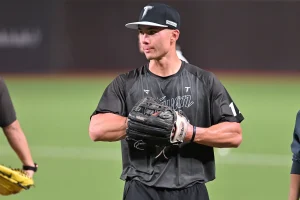
Arizona Diamondbacks Overview
The Arizona Diamondbacks are a professional baseball franchise based in Phoenix, Arizona, that competes in Major League Baseball as a member of the National League West Division. Founded on March 9, 1995, and beginning play in 1998, the franchise plays its home games at Chase Field and wears the colors Sedona red, teal, black, and white. The team is owned by Ken Kendrick, with Derrick Hall serving as President, Mike Hazen as General Manager and President of Baseball Operations, and Torey Lovullo as Manager. The Diamondbacks’ mascot, D. Baxter the Bobcat, is a longtime fan favorite, and the team’s social identity is reinforced by nicknames such as the D-backs, Los Serpientes, and the Answerbacks.
In a short period of existence, the Diamondbacks have built a competitive résumé that includes one World Series championship, two National League pennants, five National League West division titles, and two Wild Card berths. They remain, alongside the Tampa Bay Rays, one of the youngest franchises in Major League Baseball, and they are the youngest team ever to win a World Series title.
Founding and Organizational Origins
The Diamondbacks were established on March 9, 1995, when Phoenix was awarded an expansion franchise scheduled to begin play in 1998. Ownership paid a $130 million franchise fee to Major League Baseball as part of the expansion agreement. On January 16, 1997, owners of existing MLB clubs voted to place the new franchise in the National League, which set the course for its alignment in the NL West. Founding architect Jerry Colangelo, a longtime Phoenix sports figure, oversaw the building of the team’s first baseball operations staff and front office, including the hiring of Joe Garagiola Jr. as the first General Manager.
The franchise built its identity around a distinctive visual brand. Original colors were purple, black, teal, and copper, paired with an italicized block letter “A” logo accented with a diamond pattern and a snake’s tongue. Early uniform sets included cream home uniforms with purple pinstripes and gray road uniforms, along with purple and black alternates. The team’s name and snake imagery became a foundation for marketing, broadcasting identity, and fan engagement, helping establish the Diamondbacks as a recognizable brand from their very first season.
Growth Into Major League Baseball Competition
The Diamondbacks played their first official Major League game on March 31, 1998, against the Colorado Rockies at Bank One Ballpark. After a fifth-place finish in that inaugural season, the franchise accelerated its competitive build with significant off-season investments. The most consequential move was the acquisition of future Hall of Fame pitcher Randy Johnson, who went on to win four consecutive Cy Young Awards in his first four seasons with Arizona. The front office layered additional talent around Johnson, signing Curt Schilling and adding experienced hitters to form a club capable of contending almost immediately.
That aggressive roster construction paid off quickly. In 1999, the Diamondbacks won 100 games and captured their first National League West division title, signaling that the expansion franchise had arrived as a contender. The team’s early success was supported by a growing broadcast presence, with Thom Brennaman serving as the primary television play-by-play voice for the franchise’s first nine seasons of play. Bank One Ballpark, later renamed Chase Field in 2005 following Bank One’s merger with JPMorgan Chase, became one of the most modern and atmospheric ballparks in the league.
Arizona Diamondbacks Competitive Journey
The Diamondbacks’ competitive arc has moved from rapid rise to a championship peak, a long rebuilding period, and a return to pennant-winning form. In their first quarter-century of existence, the franchise captured a World Series title, multiple division championships, and a second National League pennant in 2023, demonstrating both the speed of their early success and the durability of their organization.
Early Seasons and Development (1998–2000)
After finishing fifth in the National League West in 1998, the Diamondbacks reshaped their major league roster in a single off-season. The arrival of Randy Johnson anchored a pitching staff that quickly became one of the league’s best, while the lineup was reinforced with proven veterans. The investment produced immediate results, as Arizona won 100 games in 1999 and clinched the franchise’s first National League West division title.
The team’s early identity was built around power pitching, aggressive base running, and a confident offensive approach. With Randy Johnson winning his first Cy Young Award in a Diamondbacks uniform and the organization pairing him with another ace-caliber arm, the club set the foundation for a perennial contender. The 2000 season added further depth, even as the franchise continued to refine its roster, coaching staff, and player development pipelines.
Breakthrough in Major League Baseball (2001–2007)
The defining breakthrough came in 2001, when the Diamondbacks defeated the three-time defending champion New York Yankees in the World Series, winning in seven games. The victory made Arizona the fastest expansion team in Major League Baseball history to win a World Series and the first and only men’s major professional sports team in Arizona to win a championship at that point. Randy Johnson and Curt Schilling were named co-Most Valuable Players of the World Series, cementing their legendary postseason performances in franchise lore.
Arizona captured additional division titles in 2001, 2002, and 2007, and returned to the National League Championship Series in 2007, where they were swept by the Colorado Rockies. The 2007 season also marked a visual reset for the franchise, as the Diamondbacks unveiled new uniforms and colors of Sedona red, Sonoran sand, and black on November 8, 2006. The redesigned palette, drawing inspiration from Red Rock State Park and the Sonoran Desert, became the foundation of the team’s modern visual identity.
Modern Program and Current Direction (2016–Present)
The Diamondbacks returned to championship contention in 2017, earning a Wild Card berth and reaching the National League Division Series, where they were swept by the Los Angeles Dodgers. Beginning with the 2016 season, the franchise reincorporated teal into its color scheme while keeping Sedona red, Sonoran sand, and black, and unveiled eight uniform combinations to refresh its on-field look. In 2021, the Diamondbacks became one of seven teams to wear Nike “City Connect” uniforms, introducing the “Serpientes” identity that quickly became popular with fans.
The franchise’s biggest modern moment came in 2023, when the Diamondbacks upset the Milwaukee Brewers in the Wild Card Series, swept the Dodgers in the National League Division Series, and beat the Philadelphia Phillies in seven games in the National League Championship Series to win their second NL pennant. Arizona then faced the Texas Rangers in the World Series, losing the series 4–1. The team unveiled refreshed uniform designs in 2024, with turquoise returning as a full-time accent color, and in 2025 released a second “City Connect” uniform recolored to the franchise’s original purple and teal.
Philosophy and Competitive Strengths
The Diamondbacks have built their identity around aggressive roster building, player development, and a willingness to invest in elite pitching. From the Randy Johnson era through the modern core, the franchise has emphasized power arms, athletic position players, and a clubhouse culture that values competitiveness and adaptability in the National League West.
Key Milestones and Major Moments
The franchise’s defining milestones include the 2001 World Series championship, the 2023 National League pennant, and the unveiling of a refreshed Sedona red, teal, black, and white identity. From Randy Johnson’s four consecutive Cy Young Awards in Diamondbacks uniform to the 2023 playoff run that featured series victories over the Brewers, Dodgers, and Phillies, the team’s history is marked by a series of dramatic postseason moments.
Arizona Diamondbacks Achievements and Results
The Diamondbacks’ trophy case includes one World Series title, two National League pennants, five National League West division championships, and two Wild Card berths. They are the fastest expansion team in Major League Baseball history to win a World Series, and they remain one of the youngest franchises in the league.
Major League Baseball Achievements
Arizona has captured one World Series title, winning the Fall Classic in 2001 with a seven-game victory over the New York Yankees. The franchise has also won two National League pennants, in 2001 and 2023, marking the team’s two appearances in the World Series. Their first pennant, won in only the fourth season of franchise history, remains one of the fastest ascents to a championship by any expansion team in Major League Baseball history.
Conference Achievements
The Diamondbacks have made two National League Championship Series appearances, in 2001 and 2023, winning both to claim the NL pennant. Their 2001 NLCS victory set up the World Series win over the Yankees, while their 2023 run included a dramatic seven-game win over the Philadelphia Phillies at Citizens Bank Park. Both pennants cemented Arizona’s place among the National League’s most successful postseason franchises since 1998.
Divisional Achievements
Arizona has won five National League West division titles, in 1999, 2001, 2002, 2007, and 2011. The 1999 title followed a 100-win regular season and marked the franchise’s first playoff appearance, while the 2001 championship served as a springboard to the World Series. Subsequent division titles in 2002, 2007, and 2011 demonstrated the franchise’s sustained ability to compete at the top of the National League West.
Series Achievements
The Diamondbacks have earned two Wild Card berths, in 2017 and 2023, and have won two Wild Card Series, including a 2023 upset victory over the Milwaukee Brewers. They have also posted a competitive postseason record against National League West rivals, including a 2023 National League Division Series sweep of the Los Angeles Dodgers that evened the all-time postseason record between the two clubs at three games apiece.