Chip Ganassi Racing Overview
Chip Ganassi Racing is one of the most accomplished American auto racing organizations in motorsport history. Founded in 1990 by businessman and former racecar driver Chip Ganassi and based in Indianapolis, Indiana, the team competes primarily in the NTT IndyCar Series with full Honda support. Chip Ganassi Racing has earned 22 drivers’ championships across multiple series, including the CART IndyCar World Series, IndyCar Series, and Grand-Am Rolex Sports Car Series. The organization has also competed in NASCAR, the IMSA WeatherTech SportsCar Championship, the FIA World Endurance Championship, Global RallyCross Championship, and Extreme E, establishing itself as a rare multi-discipline motorsport force in the United States.
Chip Ganassi Racing has secured six Indianapolis 500 victories, along with more than 200 wins across all categories. Scott Dixon remains the team’s most iconic driver, winning five of his seven career IndyCar Series championships behind the wheel of a Ganassi car. Álex Palou, Juan Pablo Montoya, and Dario Franchitti are other landmark drivers who have driven to championships with the team, and the operation continues to field competitive cars in Indy NXT as part of a broader driver development pipeline. The team’s defining characteristic across decades is a culture of steady technical improvement, driver loyalty, and refusal to pursue short-term results at the expense of long-term excellence.
Founding and Organizational Origins
Chip Ganassi Racing was formed in 1990 when Ganassi acquired the remaining assets of Patrick Racing, including a fleet of 1989 Penske chassis, to compete in the CART IndyCar World Series. Ganassi had previously joined Pat Patrick as co-owner of Emerson Fittipaldi’s Marlboro IndyCar team in 1989, and when Patrick chose to restart his own team rather than fully retire, Ganassi formally took over the assets and renamed the operation. He signed former Formula One driver Eddie Cheever as his lead driver, with the retail company Target serving as the primary sponsor for the new team’s cars.
The early organizational structure was built around Indianapolis, with crew chief Mike Hull playing a central role in the team’s operations from the earliest days. Hull has remained the principal of the organization for decades, providing continuity that is extremely rare at the highest levels of motorsport. The team’s original headquarters and race shop in Indianapolis became the operational heart of a program that would eventually field cars across multiple continents and disciplines.
Ganassi’s partnership with Felix Sabates began in 2001 when he purchased a majority stake in Sabates’ Team SABCO NASCAR operation, which had been competing since 1989. That acquisition doubled the footprint of the organization overnight, creating Chip Ganassi Racing with Felix Sabates and marking a significant expansion into stock car racing. The organization also began competing in the Grand-Am Rolex Sports Car Series during this period, and for several years operated as a genuinely multi-series motorsport concern, a rarity in American racing.
Growth Into IndyCar Competition
Chip Ganassi Racing made its first appearance in the Indianapolis 500 in 2000, becoming the first CART organization to return to the event after the open-wheel split between CART and the Indy Racing League in 1996. Juan Pablo Montoya’s dominant victory that year was one of the most impressive debut performances in the race’s history, and it foreshadowed the team’s permanent commitment to the IRL, now known as the IndyCar Series. The transition was not immediate, however, and Ganassi continued running selected CART events while gradually building an IndyCar infrastructure.
In 2002, the team made the leap to compete full-time in the IndyCar Series, fielding entries for Jeff Ward alongside Kenny Bräck and Bruno Junqueira at Indianapolis. The same year, Ganassi added Scott Dixon as a mid-season signing from the Champ Car program, and Dixon quickly became the foundation of the team’s long-term success in the series. Several driver changes followed in subsequent seasons as the team sought to find the right combination, but by 2006, with Dixon paired with 2005 Indianapolis 500 champion Dan Wheldon, the competitive direction of the operation became clear.
By 2006, the entire series had standardized on Honda engines and Dallara chassis, a configuration that Ganassi has continued to use and refine for nearly two decades. The team’s partnership with Honda evolved into a full-works factory alliance starting in 2017, providing a significant technical advantage and strengthening the engineering relationship between the racing team and engine manufacturer. That same year, the team expanded to a four-car effort for the first time since 2017, running Graham Rahal and Charlie Kimball out of the race shop formerly used by NHRA drag racer Kenny Bernstein.
Chip Ganassi Racing Competitive Journey
Chip Ganassi Racing’s competitive arc spans more than three decades across open-wheel cars, stock cars, and sports prototypes, moving from a fledgling CART startup to the most decorated IndyCar team in history. The team rose through CART in the 1990s, dominated the Indianapolis 500 after crossing over to the Indy Racing League in 2000, built the most consistent winning program in modern IndyCar through Scott Dixon, and diversified into sports car and electric off-road racing with major results in each discipline.
Early Seasons and Development (1990-1999)
Chip Ganassi Racing’s first season in 1990 established a foundation built around Eddie Cheever, a respected former Formula One driver who brought technical feedback that shaped the team’s early car development. By 1992, the operation expanded to a two-car entry for the Indianapolis 500 with Arie Luyendyk, and rookie Robby Gordon made appearances in selected events. Luyendyk moved to full-time status in 1993, scoring pole position at Indianapolis and finishing second in the race, and in 1994 Michael Andretti joined the team fresh from a difficult stint in Formula One.
The signing of Michael Andretti proved transformative, as he scored Chip Ganassi Racing’s first CART victory at Surfers Paradise in the opening race of the 1994 season. Andretti’s arrival elevated the competitive level of the entire organization, and Ganassi later reflected that if the team could not win races with a driver of Andretti’s caliber, perhaps team ownership was not the right path. The 1996 championship with Jimmy Vasser marked the team’s first title, and Alex Zanardi followed with back-to-back championships in 1997 and 1998, making Chip Ganassi Racing the first car owner to win three consecutive CART titles. Juan Pablo Montoya’s championship as a rookie in 1999 completed an unprecedented four consecutive CART titles and cemented Chip Ganassi Racing as the most dominant organization of the late 1990s open-wheel era.
Breakthrough in Indianapolis 500 and IndyCar Series (2000-2016)
The team’s 2000 Indianapolis 500 appearance with Juan Pablo Montoya was a watershed moment, as Montoya led 167 of 200 laps to win in dominant fashion. Montoya also became the first driver to win both the Indianapolis 500 and the Michigan 500 in the same year since Rick Mears in 1991, though Toyota engine reliability issues and double-digit DNFs prevented a championship defense. The 2002 full-time IndyCar entry with Scott Dixon delivered an immediate championship, with Dixon winning three races in his first season.
The team’s technical strength deepened when Dan Wheldon arrived in 2006, and the pair of Dixon and Wheldon combined for six wins in 2007 and six wins in 2008, with Dixon claiming his second championship in 2008. Dario Franchitti replaced Wheldon as Dixon’s teammate in 2009, and the Franchitti-Dixon pairing became one of the most formidable driver combinations in the sport. Franchitti delivered a landmark Indianapolis 500 win in 2010, a career-defining victory for the Scottish driver, and in 2012, Franchitti and Dixon finished first and second in the race, one of the most dominant team performances in Indianapolis Motor Speedway history.
Ganassi claimed back-to-back championships in 2012 and 2013, with Dixon winning a third title in 2013 despite losing Franchitti to injury following the Houston crash that ended Franchitti’s racing career. The team expanded to a four-car lineup in 2011, though by 2016 and 2018 the operation had downsized to focus its resources on fewer cars. Dixon’s fourth championship in 2015 and fifth championship in 2018, both achieved with Honda engines after the 2017 engine supplier switch, demonstrated the team’s remarkable consistency and resilience through multiple regulatory and technical cycles.
Modern Program and Current Direction (2017-Present)
The 2017 return to Honda as a full-works partner marked a new era for Chip Ganassi Racing, providing factory technical resources and a stable engineering alliance that supported multiple championship runs. The Target sponsorship, which had been a defining visual and financial presence since the team’s earliest CART years, concluded in 2017 as the retailer redirected its sports sponsorship strategy. Under the Honda alliance, the team has developed a reputation for extracting maximum performance from its cars across oval and road course competition.
Alex Palou joined the team for the 2021 season and immediately delivered an IndyCar Series championship, becoming the third Ganassi driver to win the title since the team entered the series full-time and the first other than Scott Dixon since 2011. Marcus Ericsson joined Palou and Dixon in 2020, adding another victory to the team’s total, and the current IndyCar lineup features Kyffin Simpson, Scott Dixon, and Álex Palou in the Nos. 8, 9, and 10 cars for 2026. The team operates the four-car Indy NXT program with James Roe, Bryce Aron, Niels Koolen, and Carson Etter, providing a development pathway that connects the team to the next generation of open-wheel talent.
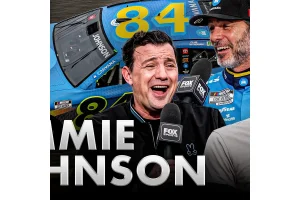
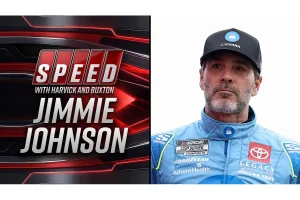
Chip Ganassi Racing also ran the No. 48 car for seven-time NASCAR Cup Series champion Jimmie Johnson during the 2021 season, running Johnson on road and street courses with Tony Kanaan on ovals, and the team continues to maintain facilities in Indianapolis that support its three-discipline operations. The organization has evolved from a single-series CART operation in 1990 into one of the most versatile and enduring motorsport organizations in American history, and its Indianapolis headquarters remains the nerve center for all of its programs.
Philosophy and Competitive Strengths
Chip Ganassi Racing’s identity is rooted in technical rigor, driver continuity, and strategic patience rather than high-risk gambles or short-term tactical moves. The team’s culture has traditionally prioritized execution over flash, and its strength across oval, road course, and street circuit formats reflects an engineering philosophy that seeks broad competitiveness rather than specialization. Scott Dixon’s five championships and the team’s ability to win with multiple drivers across different car generations reflect a program that places as much emphasis on car preparation and race strategy as it does on driver skill.
Key Milestones and Major Moments
Michael Andretti’s 1994 Surfers Paradise victory was the team’s first CART win, and four consecutive CART championships from 1996 through 1999 established a dynasty in open-wheel racing. Juan Pablo Montoya’s 2000 Indianapolis 500 win marked the first time a CART team returned to the race, and his victory in that event remains one of the most dominant debut performances in Speedway history. The 2012 Indianapolis 500 one-two finish, with Dario Franchitti and Scott Dixon crossing first and second, is one of the most celebrated team achievements in modern IndyCar history, and Alex Palou’s 2021 championship ended a decade-long run of Dixon titles to demonstrate the team’s ability to develop new championship-caliber drivers.
Chip Ganassi Racing Achievements and Results
Chip Ganassi Racing has accumulated one of the most comprehensive trophy cabinets in American motorsport, with victories in every discipline in which the team has competed. The organization’s total of 22 drivers’ championships across CART, IndyCar, and Grand-Am places it among the most decorated teams in open-wheel history, and its 279 career victories across all categories span open-wheel cars, stock cars, sports prototypes, rallycross, and electric off-road racing.
IndyCar Series Achievements
Chip Ganassi Racing has won 13 championships in the IndyCar Series, the most of any team in the modern era of the series. Scott Dixon claimed five championships with the team in 2008, 2013, 2015, 2018, and 2020, while Dario Franchitti won three consecutive titles in 2009, 2010, and 2011. Alex Palou added another championship in 2021, becoming only the third Ganassi driver to win the IndyCar Series title since the team joined the series full-time in 2002, and the team has recorded 109 career IndyCar Series race victories. The team has won the Indianapolis 500 six times, with victories by Juan Pablo Montoya in 2000, Dario Franchitti in 2008 and 2010, Scott Dixon in 2012, and additional wins in 2022 and 2025, making the Indianapolis 500 the most celebrated race on the team’s schedule.
Grand-Am Rolex Sports Car Series Achievements
Chip Ganassi Racing won five Grand-Am Rolex Sports Car Series championships, beginning with a dominant 2006 season. Scott Pruett and Memo Rojas were the centerpiece of the Grand-Am program, winning three consecutive 24 Hours of Daytona races from 2007 through 2009, and the team became the first racing team owner to win the Daytona 500, Indianapolis 500, Brickyard 400, and 24 Hours of Daytona within the same 12-month span. The 2010 season featured nine victories in twelve races, and Rojas became the first Mexican driver to win a major road racing title in North America. The 2011 Rolex 24 Hours of Daytona one-two finish delivered another Grand-Am championship and reinforced the team’s status as a benchmark in sports car competition.
IMSA WeatherTech SportsCar Championship Achievements
Chip Ganassi Racing has competed in the IMSA WeatherTech SportsCar Championship with notable results in both the Prototype and GTLM classes, winning the 12 Hours of Sebring and Petit Le Mans and accumulating 26 IMSA victories overall. The team fielded a Riley-Ford Daytona Prototype in the inaugural season of the merged United SportsCar Championship for Scott Pruett and Memo Rojas, winning three races, and transitioned to the Ford GT in the GTLM class in 2016. Ford’s return to international road racing under the Ford Chip Ganassi Racing banner included a class victory at the 24 Hours of Le Mans, adding one of the most prestigious wins in all of motorsport to the team’s trophy cabinet.
FIA World Endurance Championship Achievements
The Ford Chip Ganassi Team UK, campaigned in partnership with Multimatic Motorsports Europe, achieved podium finishes in the FIA World Endurance Championship GT manufacturers’ category in both 2016 and 2017, with a third-place finish in 2016 and a second-place finish in 2017. The program earned multiple pole positions and fastest laps across the 2016 and 2017 seasons, including the 2016 6 Hours of Fuji pole position and the 2017 6 Hours of Silverstone pole position, and highlighted Chip Ganassi Racing’s capability at the highest level of international endurance racing.