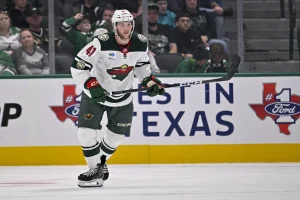
Texas Stars Overview
The Texas Stars are a professional ice hockey team based in Cedar Park, Texas, a suburb of Austin. The team competes in the American Hockey League (AHL) as the primary developmental affiliate of the National Hockey League’s (NHL) Dallas Stars, with a secondary affiliation to the ECHL’s Idaho Steelheads. Since their inaugural season, the Stars have played home games at the H-E-B Center at Cedar Park and have built an identity around developing future NHL contributors. The franchise has captured one Calder Cup championship in 2014, three Western Conference titles, and three division championships. Owned by Tom Gaglardi, the team operates in victory green, silver, black, and white, mirroring the visual identity of the parent Dallas Stars.
Founding and Organizational Origins
The Texas Stars franchise traces its origins to 1999, when the club was originally established as the Louisville Panthers. After the Panthers era, the franchise relocated and was rebranded as the Iowa Stars, operating in the AHL as the Dallas Stars’ top affiliate from 2005 to 2008. In April 2008, the Iowa Stars announced that they would no longer affiliate with Dallas, and the club was renamed the Iowa Chops for the 2008–09 season. With that separation, Dallas temporarily spread its prospects across several AHL teams, including the Hamilton Bulldogs, Manitoba Moose, Peoria Rivermen, and Grand Rapids Griffins.
On April 28, 2009, the AHL granted a provisional Austin-area franchise to Tom Hicks, owner of the NHL’s Dallas Stars, with the condition that an existing AHL franchise be purchased within one year. That requirement was met on May 4, 2010, when the AHL approved the Texas Stars ownership group’s purchase of the Iowa Chops franchise, which had been suspended for the 2009–10 season. With the purchase, the Texas Stars became the official AHL home for Dallas prospects beginning with their first competitive campaign.
Growth Into AHL Competition
The Stars launched their AHL operations in 2009 with the construction of an on-ice roster built around young Dallas prospects and experienced minor-league veterans. The early hockey operations staff was tasked with establishing standards for player development, scouting, and game preparation in a new market. The organization quickly built a working relationship with the ECHL’s Idaho Steelheads, which has served as a third-tier outlet for prospects needing additional playing time.
Beyond the ice, the Stars invested in business operations by selling season tickets, securing local sponsors, and forging media partnerships that have grown to include KBVO television coverage and AHL.TV streaming. The H-E-B Center at Cedar Park has been central to the team’s growth, giving the franchise a modern arena that serves both competitive and community purposes. Together, these hockey and business efforts laid the foundation for the team’s longer-term competitiveness in the AHL’s Western Conference.
Texas Stars Competitive Journey
From their inaugural season onward, the Texas Stars have developed into a consistent presence in the AHL’s Western Conference, regularly qualifying for the playoffs and producing NHL-caliber players. The team has won one Calder Cup, three conference championships, and three division titles while navigating coaching changes, ownership transitions, and rebranding efforts aligned with the parent club.
Early Seasons and Development (2009–2013)
The Stars’ inaugural season was a remarkable one. After finishing second in the West Division, the team swept Rockford in the first round of the playoffs, then claimed its first division championship by defeating Chicago four games to three. The Stars then captured their first Robert W. Clarke Trophy, becoming Western Conference champions with a seven-game win over Hamilton. Their run ended in game six of the 2010 Calder Cup Finals against Hershey, but the season established the franchise as a quick study in AHL competition.
Over the following years, the team refined its development systems and continued to build depth, leaning on its affiliation with Dallas and its pipeline through Idaho. That groundwork produced a second wave of success, including a regular-season title in 2013–14 and additional playoff runs that positioned the Stars among the Western Conference’s most reliable contenders.
Breakthrough in AHL (2010–2018)
The franchise’s signature moment arrived in 2013–14, when the Stars won the Calder Cup by defeating the St. John’s IceCaps in the finals, completing a playoff journey that also included a division title and a Western Conference championship. The victory was the first Calder Cup in team history and a defining achievement for a still-young franchise. Shortly after the title, head coach Willie Desjardins resigned to accept the head coaching position with the Vancouver Canucks, and Derek Laxdal, a former Kelly Cup champion with the Idaho Steelheads, was named his successor in July 2014.
The Stars returned to the Calder Cup Finals in 2018 but fell to the Toronto Marlies in a seven-game series, capping another deep run that reinforced the team’s reputation for postseason competitiveness. The following season brought further change, as Laxdal was promoted to the Dallas Stars as an assistant and Neil Graham was elevated to the Texas Stars’ head coaching position. In June 2015, the organization had also unveiled a new logo, color scheme, and jerseys designed to align more closely with the parent club’s visual identity, marking a clear evolution of the team’s brand.
Modern Program and Current Direction (2019–Present)
Under Neil Graham, the Stars remained a steady developer of NHL talent while competing in a challenging Western Conference. The 2022–23 season produced another division title, the franchise’s third, signaling a return to top-of-the-standings form. In 2023–24, despite a 33-33-4 regular-season record, the Stars featured the AHL’s leading scorer in Mavrik Bourque, who was named the league’s regular-season MVP after posting 26 goals and 51 assists for 77 points in 71 games, underscoring the team’s continued strength in developing premier offensive talent.
At the conclusion of the 2024–25 season, the Stars announced that Graham would be promoted to the Dallas Stars and that former Texas player and AHL assistant coach Toby Petersen would become the new head coach. General manager Scott White continues to oversee the hockey operations staff as the team prepares for the next competitive cycle. The H-E-B Center remains the home of the program, and the Stars’ identity continues to mirror that of the parent club in victory green, silver, black, and white.
Philosophy and Competitive Strengths
The Texas Stars’ identity centers on player development within a structured NHL pipeline, with an emphasis on speed, two-way responsibility, and disciplined special teams. The organization benefits from a close working relationship with the Dallas Stars, allowing prospects to move seamlessly between affiliates while maintaining consistent playing and coaching philosophies. The team has historically excelled in developing forwards and versatile defensemen, and it has built a reputation for long playoff runs when its goaltending and depth align.
Key Milestones and Major Moments
Among the franchise’s most important moments are the 2010 Western Conference championship in its inaugural season, the 2013–14 regular-season title, the 2014 Calder Cup championship, the 2018 run to the Calder Cup Finals, and the 2022–23 division championship. Additional milestones include the 2015 rebrand aligning the team’s look with Dallas, the 2024 AHL MVP award for Mavrik Bourque, and the 2025 leadership transition that elevated Toby Petersen to head coach.
Texas Stars Achievements and Results
The Texas Stars have compiled a steady record of competitive success in the AHL since 2009, highlighted by one Calder Cup, three Western Conference titles, three division championships, and one regular-season title. Their trophy case reflects a franchise built for sustained playoff contention and forward-looking player development.
AHL Achievements
The Texas Stars have won one Calder Cup championship, earned one regular-season title in 2013–14, and qualified for the Calder Cup Finals on two occasions, in 2010 and 2014. The 2014 title, won over the St. John’s IceCaps, remains the franchise’s signature accomplishment. The 2018 appearance in the Finals against the Toronto Marlies reinforced the team’s standing among the AHL’s elite programs and showcased a deep, balanced roster.
Conference Achievements
The Stars have captured the Robert W. Clarke Trophy as Western Conference champions three times, in 2010, 2014, and 2018. Each of those conference titles came with a trip to the Calder Cup Finals, demonstrating a clear link between conference-level success and championship contention. The 2010 and 2014 runs were particularly notable for their seven-game battles, reflecting the team’s ability to perform in tight postseason matchups.
Divisional Achievements
Texas has claimed three division championships, in 2012–13, 2013–14, and 2022–23, establishing itself as a frequent contender within its grouping. The back-to-back titles in 2012–13 and 2013–14 coincided with the franchise’s first Calder Cup, while the 2022–23 crown signaled a return to divisional dominance after several transitional seasons. These titles have helped anchor the Stars’ reputation as a model AHL development program.
Series Achievements
Across their AHL tenure, the Stars have produced deep playoff series wins, including a first-round sweep of Rockford in 2010 and a hard-fought four-games-to-three victory over Chicago that same postseason. The team has consistently developed NHL-bound talent, with graduates reaching the 100-game mark in both Texas and the NHL, underscoring the franchise’s role as a reliable producer of major-league players.