




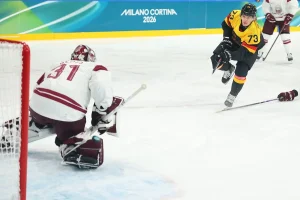

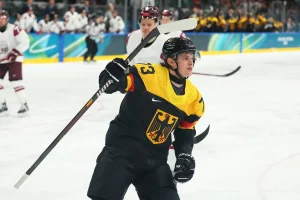


The National Hockey League (NHL) is the premier professional ice hockey league in North America and one of the most storied major‑league sports organizations in the world. The league currently consists of 32 teams—25 in the United States and 7 in Canada— divided into Eastern and Western Conferences, with a total of four divisions: Atlantic, Metropolitan (East), and Central, Pacific (West). Every team plays an 82‑game regular season from October to April, followed by a 16‑team playoff bracket that culminates in the Stanley Cup Final, with the champion crowned in late June. The NHL sits at the top of the international hockey pyramid, shaping the sport’s rules, player development, and culture across North America, Europe, and Asia. Its intense games, tight‑knit fan bases, and Stanley Cup‑centric narrative make it the emotional and commercial center of professional hockey worldwide.
Origins and Early History
The NHL traces its roots to ice hockey’s early 20th‑century professional scene in Canada and the northeastern United States. The league was founded on November 26, 1917, in Montreal, after the National Hockey Association (NHA) suspended operations amid a dispute with Toronto owner Eddie Livingstone, who clashed with other owners over league control and franchise rights.
Charter members included:
-
Montreal Wanderers
-
Toronto Arenas (later Toronto Maple Leafs)
-
Quebec Bulldogs
The first NHL games were played on December 19, 1917, launching a new era of organized, cross‑border, professional competition. The league quickly absorbed Stanley Cup‑challenge responsibilities, with the Toronto Arenas winning the first Stanley Cup for the NHL in 1918. By 1926, rival leagues such as the Western Canada Hockey League (WCHL) had folded, giving the NHL exclusive control of the Stanley Cup, a status it has held ever since.
Over the next two decades, the league expanded beyond central Canada into other Canadian cities (e.g., Vancouver, Edmonton, Winnipeg, Calgary) and into the United States, building the foundation for its modern North American footprint and its cross‑border rivalries (e.g., Toronto–Detroit, Montreal–Buffalo, New York–New Jersey).
Early U.S. Entry and the Original Six
The first major U.S. addition was the Boston Bruins, who joined the NHL in 1924, opening the door to the American market and validating the league’s push beyond Montreal, Toronto, Ottawa, and Quebec. Through the Great Depression and World War II, the league contracted and regrouped, eventually settling into what is now known as the Original Six era (1942–1967):
-
Boston Bruins
-
Montreal Canadiens
-
Toronto Maple Leafs
This compact, six‑team structure created a tight, heated rivalry environment, especially in Cup‑winning cities such as Montreal, Toronto, Detroit, Chicago, Boston, and New York. The Original Six franchises became the core of NHL lore, with multiple dynasties and generation‑spanning fan bases. The Original Six era gave rise to legendary stars such as Maurice “Rocket” Richard, Gordie Howe, Bobby Orr, Jacques Plante, Red Kelly, Jean Béliveau, Ted Lindsay, Doug Harvey, and Jean‑Paul Bouchard, whose names still define the league’s historical consciousness.
Expansion and the WHA Merger
After the 1967 season, the NHL doubled from 6 to 12 teams in a major expansion:
-
California Seals (later transitioned through Cleveland Barons and other identities)
-
Minnesota North Stars (now Dallas Stars)
The league then continued to grow through the 1970s–1990s, adding franchises in:
-
Buffalo, Vancouver, Atlanta, Washington, Hartford, Winnipeg, Colorado (relocated from Quebec), San Jose, Ottawa, Tampa Bay, Anaheim, Florida, Carolina, Nashville, Columbus, Minnesota (Wild), Arizona, Vegas, Seattle, and Utah (via the Arizona Coyotes’ assets).
In 1979, the rival World Hockey Association (WHA) folded, and the NHL absorbed four WHA teams:
-
Winnipeg Jets (later moved to Phoenix/Arizona, then re‑established as Winnipeg Jets)
-
Quebec Nordiques (now Colorado Avalanche)
-
Hartford Whalers (now Carolina Hurricanes)
This injection of stars—including Wayne Gretzky, Mark Messier, Paul Coffey, Mats Näslund, Marc Tardif, Ron Francis, and other WHA‑era talents—transformed the NHL into a more offensive, high‑scoring, star‑driven league and pushed the sport into the “run‑and‑gun” 1980s and 1990s.
Several franchises have built long‑term dynasties or mini‑dynasties:
-
Montreal Canadiens – 25 Stanley Cups, the most in NHL history, anchored by eras such as the Rocket Richard‑1950s, Henri Richard‑1960s–70s, and Patrick Roy‑early 1970s–1993 runs.
-
Toronto Maple Leafs – 13 Cups, mostly won before the 1970s, with a long, frustrating drought that has become a core part of the team’s narrative.
-
Detroit Red Wings – 11 Cups, including late‑1940s triumphs, 1950s, 1990s, and early‑2000s (1997–2008) dynasty.
Other multi‑cup franchises include:
-
Boston Bruins
-
Chicago Blackhawks
-
New York Rangers
-
Pittsburgh Penguins
-
Colorado Avalanche
-
Los Angeles Kings
-
St. Louis Blues
These teams and their rivalries—e.g., Canadiens–Leafs, Blackhawks–Red Wings, Penguins–Senators, Lightning–Panthers, Florida–Carolina, Vegas–Colorado, and New York Rangers–New York Islanders—anchor the league’s historical and emotional spine, driving fan loyalties and media narratives across decades.
Expansion to 32 Teams
The NHL has grown incrementally from the Original Six concept:
-
24 teams by the late 1990s.
-
30 teams by the early 2000s, with franchises in Miami (Panthers), Tampa (Lightning), Columbus (Blue Jackets), Nashville (Predators), Minnesota (Wild), Dallas, Carolina, Arizona, Las Vegas, Seattle, and Utah.
-
Vegas Golden Knights added in 2017, becoming the 31st team and the fastest‑to‑advance‑to‑Finals expansion team in NHL history.
-
Seattle Kraken entered in 2021, bringing the total to 32.
-
Utah Mammoth, taking over the Arizona Coyotes’ franchise and assets in 2024, completed the current 32‑team structure, with franchises now spread from Miami/Florida through Los Angeles, Seattle, Utah, Colorado, Dallas, Tampa, Minnesota, Winnipeg, Ottawa, Toronto, Buffalo, New Jersey, and New York.
This 32‑team, four‑division structure allows for geographic balance and natural rivalry corridors, while also stretching the league’s reach deep into the American West and Southeast.
Lockouts and the Salary‑Cap Era
Between 1992–1994, 1994–1995, 2004–2005, and 2012–2013, the NHL and the NHL Players’ Association (NHLPA) endured major labor disputes over revenue sharing, free agency, and roster sizes:
-
The 2004–05 season was canceled entirely, a watershed moment that forced the league to reappraise the business model.
-
After the 2005 lockout, the NHL introduced a hard salary cap tied to league revenue, with a salary floor to prevent teams from dropping to minimal rosters.
-
The cap and floor are updated annually based on league‑wide revenue, with a set percentage of revenue going to player salaries.
The salary‑cap system has:
-
Prevented small‑market teams from being outspent into irrelevance.
-
Forced roster‑construction and player‑movement strategies built around value, not just unrestricted‑money‑spending.
-
Encouraged arb‑and‑trade strategies, long‑term contract‑backloading, and buy‑outs to manage team‑for‑team‑up‑front‑savings.
Rule Changes and Style of Play
Over the last two decades, the NHL has tweaked rules to:
-
Speed up the game.
-
Reduce abusive hitting and boarding.
-
Minimize board‑blogging corners, and
-
Make hockey more watchable on television.
Key modern‑era rules include:
-
Hybrid icing (2013):
-
Officials can blow a play dead for icing if a defending player reaches the face‑off dot first, dramatically reducing race‑to‑the‑boards collisions.
-
-
3‑on‑3 overtime and shootouts:
-
Regular‑season overtime is 5 minutes of 3‑on‑3 ice hockey, often leading to game‑winning goals due to gaps in coverage.
-
If the game remains tied, a shootout decides the winner, with one‑on‑one player‑vs‑goaltender attempts.
-
-
Power‑play and penalty‑kill changes:
-
The league has experimented with hybrid catch‑and‑shoot tripping rules, goalie‑coverage tweaks, and retrieval‑face‑off adjustments to keep special‑teams action exciting but not stuck in low‑score regulatory back‑halves.
-
-
Video replay, coach’s challenge, and expanded reviews:
-
Rink‑side cameras and overhead replay help officials in:
-
High‑sticking calls, goaltender interference, off‑sides, and goal‑confirmation.
-
-
Coaches can use one challenge per game (sometimes with a second if successful) for off‑sides, goaltender interference, or “more‑than‑one puck” situations, with the trade‑off of losing a timeout if the challenge fails.
-
The rink dimensions are standardized at 200 feet by 85 feet, smaller than Olympic rinks, which encourages tight, physical forechecking and quick transitions, as well as high‑danger chance‑creation rather than pure wide‑ice open‑style hockey.
Analytics and Player Development
Modern NHL teams:
-
Use tracking data and advanced analytics (e.g., Corsi, Fenwick, high‑danger chance percentages, expected‑goals (xG) models inspired by soccer, and on‑ice‑offensive‑pressure metrics) to:
-
Optimize line combinations, power‑play units, and defensive pairings.
-
Assess zone‑entry efficiency, shot‑quality, and matchup advantages.
-
-
Prioritize:
-
Speed and puck‑retrieval over pure muscle.
-
Slot‑area and crease‑presence scoring.
-
Transition hockey and structured pressing forechecks.
-
These philosophies, combined with American‑style hybrid programs (e.g., NCAA‑to‑NHL) and European‑style edge‑work and skating, have turned the NHL into a true North American–global talent pipeline, where players such as Connor McDavid, Auston Matthews, Sidney Crosby, Alex Ovechkin, Nathan MacKinnon, John Tavares, Auston Matthews, and Mikko Rantanen exemplify mixed‑style, skills‑centric development.
International Games and Global Reach
The NHL has increasingly looked beyond its core North American markets:
-
Regular‑season games in Europe have been held in:
-
Prague, Stockholm, Gothenburg, and other cities, often between American and Canadian teams.
-
-
The league has explored games in Asia (e.g., Tokyo, Beijing, Dubai‑style showcases) and is in long‑running discussions with Olympic organizers about sending NHL players to the Winter Games after present‑membership brakes and health‑safety/log‑scheduling concerns.
NHL players now come from over 18 countries, including:
-
Canada and the United States as the core talent reservoirs.
-
Sweden, Finland, Russia, Czechia, Slovakia, Germany, Switzerland, Austria, Norway, Latvia, Ukraine, Belarus, Kazakhstan, France, the Netherlands, the UK, Ireland, and others.
Television and streaming deals in the U.S. and Canada now share the stage with global partners, including ESPN/ABC, TNT, NHL Network, Sportsnet, TSN, and newer streaming‑only services aggregating national‑ and team‑specific rights. The league’s global footprint continues to grow even as lockouts and expansion pressures have caused temporary turbulence.
Stanley Cup Winners by Year (NHL Era)
1910s
-
1918 — Toronto Arenas
-
1919 — No champion (series canceled due to influenza pandemic)
1920s
-
1920 — Ottawa Senators
-
1921 — Ottawa Senators
-
1922 — Toronto St. Patricks
-
1923 — Ottawa Senators
-
1924 — Montreal Canadiens
-
1925 — Victoria Cougars
-
1926 — Montreal Maroons
-
1927 — Ottawa Senators
-
1928 — New York Rangers
-
1929 — Boston Bruins
1930s
-
1930 — Montreal Canadiens
-
1931 — Montreal Canadiens
-
1932 — Toronto Maple Leafs
-
1933 — New York Rangers
-
1934 — Chicago Blackhawks
-
1935 — Montreal Maroons
-
1936 — Detroit Red Wings
-
1937 — Detroit Red Wings
-
1938 — Chicago Blackhawks
-
1939 — Boston Bruins
1940s
-
1940 — New York Rangers
-
1941 — Boston Bruins
-
1942 — Toronto Maple Leafs
-
1943 — Detroit Red Wings
-
1944 — Montreal Canadiens
-
1945 — Toronto Maple Leafs
-
1946 — Montreal Canadiens
-
1947 — Toronto Maple Leafs
-
1948 — Toronto Maple Leafs
-
1949 — Toronto Maple Leafs
1950s
-
1950 — Detroit Red Wings
-
1951 — Toronto Maple Leafs
-
1952 — Detroit Red Wings
-
1953 — Montreal Canadiens
-
1954 — Detroit Red Wings
-
1955 — Detroit Red Wings
-
1956 — Montreal Canadiens
-
1957 — Montreal Canadiens
-
1958 — Montreal Canadiens
-
1959 — Montreal Canadiens
1960s
-
1960 — Montreal Canadiens
-
1961 — Chicago Blackhawks
-
1962 — Toronto Maple Leafs
-
1963 — Toronto Maple Leafs
-
1964 — Toronto Maple Leafs
-
1965 — Montreal Canadiens
-
1966 — Montreal Canadiens
-
1967 — Toronto Maple Leafs
-
1968 — Montreal Canadiens
-
1969 — Montreal Canadiens
1970s
-
1970 — Boston Bruins
-
1971 — Montreal Canadiens
-
1972 — Boston Bruins
-
1973 — Montreal Canadiens
-
1974 — Philadelphia Flyers
-
1975 — Philadelphia Flyers
-
1976 — Montreal Canadiens
-
1977 — Montreal Canadiens
-
1978 — Montreal Canadiens
-
1979 — Montreal Canadiens
1980s
-
1980 — New York Islanders
-
1981 — New York Islanders
-
1982 — New York Islanders
-
1983 — New York Islanders
-
1984 — Edmonton Oilers
-
1985 — Edmonton Oilers
-
1986 — Montreal Canadiens
-
1987 — Edmonton Oilers
-
1988 — Edmonton Oilers
-
1989 — Calgary Flames
1990s
-
1990 — Edmonton Oilers
-
1991 — Pittsburgh Penguins
-
1992 — Pittsburgh Penguins
-
1993 — Montreal Canadiens
-
1994 — New York Rangers
-
1995 — New Jersey Devils
-
1996 — Colorado Avalanche
-
1997 — Detroit Red Wings
-
1998 — Detroit Red Wings
-
1999 — Dallas Stars
2000s
-
2000 — New Jersey Devils
-
2001 — Colorado Avalanche
-
2002 — Detroit Red Wings
-
2003 — New Jersey Devils
-
2004 — Tampa Bay Lightning
-
2005 — No champion (lockout)
-
2006 — Carolina Hurricanes
-
2007 — Anaheim Ducks
-
2008 — Detroit Red Wings
-
2009 — Pittsburgh Penguins
2010s
-
2010 — Chicago Blackhawks
-
2011 — Boston Bruins
-
2012 — Los Angeles Kings
-
2013 — Chicago Blackhawks
-
2014 — Los Angeles Kings
-
2015 — Chicago Blackhawks
-
2016 — Pittsburgh Penguins
-
2017 — Pittsburgh Penguins
-
2018 — Washington Capitals
-
2019 — St. Louis Blues
2020s
-
2020 — Tampa Bay Lightning
-
2021 — Tampa Bay Lightning
-
2022 — Colorado Avalanche
-
2023 — Vegas Golden Knights
-
2024 — Florida Panthers
-
2025 — Florida Panthers
Teams with the Most Stanley Cup Championships
The most successful franchises in NHL history include:
-
Montreal Canadiens — 24 championships
-
Toronto Maple Leafs — 13 championships
-
Detroit Red Wings — 11 championships
-
Boston Bruins — 6 championships
-
Chicago Blackhawks — 6 championships
-
Edmonton Oilers — 5 championships
-
Pittsburgh Penguins — 5 championships