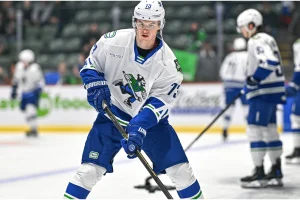
Boston Bruins Overview
The Boston Bruins are a professional ice hockey team based in Boston, Massachusetts. Founded in 1924, the Boston Bruins are the third-oldest active team in the National Hockey League and the oldest team in the league based in the United States. They are one of the six teams that make up the “Original Six,” competing in the Eastern Conference’s Atlantic Division.
The Boston Bruins have won six Stanley Cup championships in franchise history, with titles coming in 1929, 1939, 1941, 1970, 1972, and 2011. The team has also captured four Presidents’ Trophies, twenty-seven division titles, and five conference championships. Home games are played at TD Garden, and the team’s colors are black, gold, and white. Ownership is held by Delaware North, with Jeremy Jacobs serving as chairman and Charlie Jacobs as chief executive officer. The current general manager is Don Sweeney, and Marco Sturm serves as head coach. The team’s official mascot is Blades the Bruin.
Founding and Organizational Origins
The Boston Bruins were established in 1924, when the National Hockey League made the decision to expand into the United States. The previous year, sports promoter Thomas Duggan received options on three American franchises and sold one to Boston grocery magnate Charles Adams. Adams became the founding owner, making the Boston Bruins the first NHL team based in the United States. His first major move was hiring Art Ross, a former player and noted innovator, as the team’s general manager.
Ross is credited with creating the “Bruins” nickname, supported by a small staff that included his personal secretary. The team’s original brown and gold uniform colors were drawn directly from Adams’ grocery chain, First National Stores. The franchise played its first three seasons at the Boston Arena before becoming the primary tenant of the Boston Garden in 1928. From the beginning, the organization focused on building a competitive roster, hiring experienced hockey minds, and creating a strong identity that connected with Boston’s sports culture.
Growth Into National Hockey League Competition
The Boston Bruins quickly grew into one of the National Hockey League’s most competitive franchises. The team won its first Stanley Cup in 1929, just five years after being founded, behind goaltender Tiny Thompson. Over the next decade, the franchise built around stars like Eddie Shore, Dit Clapper, Bill Cowley, and the “Kraut Line” of Milt Schmidt, Bobby Bauer, and Woody Dumart, adding Stanley Cup titles in 1939 and 1941.
Following World War II, the Boston Bruins continued to develop through the Original Six era, with ownership eventually passing to Walter A. Brown and later to the Jacobs family. The acquisition of Bobby Orr in 1966, followed by the additions of Phil Esposito, Ken Hodge, and Fred Stanfield, turned the Boston Bruins into one of the league’s most dominant teams. The growth of the team’s scouting, coaching, and player development efforts helped establish the Boston Bruins as a model Original Six franchise, with consistent playoff appearances and sustained on-ice success throughout the latter half of the twentieth century.
Boston Bruins Competitive Journey
The Boston Bruins’ competitive journey spans more than a century, marked by six Stanley Cup championships, twenty-seven division titles, five conference championships, and four Presidents’ Trophies. From their early dynasty years to the Original Six era and into the modern NHL, the Boston Bruins have remained a consistent presence in the league’s upper ranks, punctuated by periods of dominance and rebuilding.
Early Seasons and Development (1924–1942)
The Boston Bruins’ first season in 1924–25 was difficult, as the team posted a 6–24–0 record and finished last in the league. However, the franchise rebounded quickly, improving to a winning 17–15–4 mark the next season. The arrival of defenseman Eddie Shore in 1926 transformed the team, and the Boston Bruins reached the Stanley Cup Final in 1927–28, where they lost to the Ottawa Senators. One year later, the Boston Bruins won their first Stanley Cup in 1929, sweeping the New York Rangers.
The late 1920s and 1930s were a defining period. In 1929–30, the Boston Bruins posted a .875 winning percentage, still a league record. Goaltender Frank Brimsek joined in 1938 and helped the team win the Stanley Cup in 1939 and 1941, earning the nickname “Mr. Zero” for his shutout performances. Stars like Shore, Cowley, Clapper, and the Kraut Line made the Boston Bruins one of the most respected teams in the league before World War II disrupted the roster.
Breakthrough in the NHL (1924–2024)
The Boston Bruins’ first breakthrough came in 1928–29, when the team won its inaugural Stanley Cup. The second and third breakthroughs followed in 1938–39 and 1940–41, powered by Brimsek and the Kraut Line, giving the Boston Bruins three championships before World War II. After the war, the team reached the Stanley Cup Final in 1945, 1953, 1957, and 1958 but did not win another title for nearly three decades.
The third breakthrough began with the arrival of Bobby Orr in 1966. The Boston Bruins won the Stanley Cup in 1970, ending a twenty-nine-year drought, and captured a fourth title in 1972. Both championships were built on a deep roster that included Orr, Esposito, Johnny Bucyk, Ken Hodge, Wayne Cashman, and goaltender Gerry Cheevers. The fourth breakthrough came in 2010–11, when the Boston Bruins, led by goaltender Tim Thomas, won their sixth Stanley Cup by defeating the Vancouver Canucks in seven games. Thomas set an NHL record with 798 saves in a single postseason. Conference championships followed in 1987–88, 1989–90, 2010–11, 2012–13, and 2018–19, reinforcing the Boston Bruins’ status as a perennial contender.
Modern Program and Current Direction (2015–Present)
Since naming Don Sweeney as general manager in 2015, the Boston Bruins have maintained one of the most consistent rosters in the league. Under head coaches Bruce Cassidy and later Jim Montgomery, the team remained a playoff staple. The 2022–23 season was historic, as the Boston Bruins set NHL records for most wins (65) and points (135) in a single season. Despite being eliminated in the first round, the campaign cemented the franchise’s modern identity.
In 2025, after parting ways with Jim Montgomery, the Boston Bruins named Joe Sacco interim head coach and later hired Marco Sturm as the thirtieth head coach in franchise history. The team traded longtime captain Brad Marchand to the Florida Panthers and entered 2025–26 without a captain, naming David Pastrnak, Charlie McAvoy, and Hampus Lindholm as alternates. On April 11, 2026, the Boston Bruins clinched a playoff berth, returning to the postseason after a one-year absence.
Philosophy and Competitive Strengths
The Boston Bruins have long been defined by a hard-working, defensively responsible, and physically imposing style of play. From the “Big Bad Bruins” era of the 1970s to the disciplined, puck-possession teams of the 2010s, the franchise has consistently prioritized structure, goaltending, and team defense. Modern Boston Bruins teams have excelled in five-on-five play, shot suppression, and special teams, especially during the record-setting 2022–23 season.
Key Milestones and Major Moments
The Boston Bruins’ key milestones include six Stanley Cup championships, four Presidents’ Trophies, twenty-seven division titles, and five conference titles. Notable moments include Bobby Orr’s 1970 Cup-winning goal, Cam Neely and Ray Bourque leading the 1988 and 1990 Cup runs, Tim Thomas’s record-setting 2011 playoff performance, and the 2022–23 record-breaking regular season. The franchise’s 1924 founding and 2024 centennial season stand as defining historical milestones.
Boston Bruins Achievements and Results
The Boston Bruins rank among the most decorated franchises in NHL history. With six Stanley Cup championships, four Presidents’ Trophies, twenty-seven division titles, and five conference championships, the team has built a consistent record of competitive success across multiple eras.
National Hockey League Achievements
The Boston Bruins have won six Stanley Cup championships: 1928–29, 1938–39, 1940–41, 1969–70, 1971–72, and 2010–11. The 1970 title ended a twenty-nine-year drought, while the 2011 championship, led by Tim Thomas, brought the franchise its sixth Cup. The Boston Bruins have also captured four Presidents’ Trophies, awarded for the best regular-season record, in 1989–90, 2013–14, 2019–20, and 2022–23. The 2022–23 Presidents’ Trophy came during a record-setting 65-win, 135-point campaign.
Conference Achievements
The Boston Bruins have won five conference championships, in 1987–88, 1989–90, 2010–11, 2012–13, and 2018–19. The 1988 conference title ended a long stretch of playoff losses to the Montreal Canadiens, while the 2010–11 and 2012–13 runs established the Boston Bruins as a dominant Eastern Conference force. The 2018–19 conference championship led to a Stanley Cup Final appearance against the St. Louis Blues.
Divisional Achievements
The Boston Bruins have won twenty-seven division championships, the most recent in 2022–23. The franchise’s divisional success has been especially strong in the modern era, capturing Atlantic Division titles in 2013–14, 2019–20, 2022–23, and others. Earlier divisional titles in the 1920s, 1930s, and 1970s helped establish the Boston Bruins as a consistent contender in every era of NHL play.
Series Achievements
The Boston Bruins have made the Stanley Cup playoffs in most seasons since 1967–68, including a 29-consecutive-season streak that remains an NHL record. The team has reached the Stanley Cup Final twenty times, with its most recent appearance in 2019. The Boston Bruins have also posted multiple 100-point seasons and 50-win campaigns, and in 2015–16 became only the second franchise in NHL history to reach 3,000 regular-season wins.