St. Louis Blues Overview
The St. Louis Blues are a professional ice hockey team based in St. Louis, Missouri, competing in the National Hockey League (NHL) as a member of the Central Division in the Western Conference. Founded in 1967 as one of six teams added during the 1967 NHL expansion, the franchise takes its name from the W. C. Handy song “Saint Louis Blues.” The team plays its home games at the 18,096-seat Enterprise Center in downtown St. Louis.
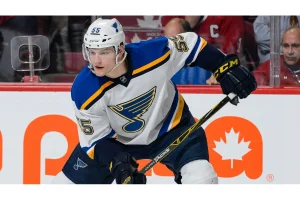
After decades of playoff heartbreak that included three consecutive Stanley Cup Final losses in their first three seasons, the Blues captured their first Stanley Cup championship in 2019. The team wears blue, yellow, and white colors and is supported by the polar bear mascot Louie, who was introduced in 2007. The franchise is owned by SLB Acquisition Holdings LLC, with Tom Stillman serving as chairman and governor, and is led by general manager Doug Armstrong and head coach Jim Montgomery.
Founding and Organizational Origins
Hockey had a long but uneven history in St. Louis before the Blues arrived. The St. Louis Arena, which opened in 1929, hosted the minor league St. Louis Flyers and later served as the temporary home of the relocated Ottawa Senators, who played one season as the St. Louis Eagles in 1934–35. The city spent decades on the NHL’s peripheral vision until the 1967 expansion offered an opening.
The Blues were the last of the six expansion teams granted a franchise, selected over Baltimore largely at the insistence of Chicago Black Hawks owners James D. Norris and Arthur Wirtz. The team’s first owners were insurance executive Sid Salomon Jr., his son Sid Salomon III, and Robert L. Wolfson, who received the franchise in 1966. Baseball legend Stan Musial and his business partner Julius “Biggie” Garagnani were part of the original 16-man investment group. Upon acquiring the franchise, Salomon spent several million dollars expanding the St. Louis Arena from 12,000 to 15,000 seats to meet NHL standards.
Lynn Patrick served as the first general manager and head coach, but resigned in late November 1967 after a slow start. Scotty Bowman stepped in as head coach and quickly turned the team’s fortunes around. Under Bowman’s leadership, the Blues qualified for the playoffs in their inaugural season, defeating the Philadelphia Flyers and Minnesota North Stars to reach the 1968 Stanley Cup Final.
Growth Into NHL Competition
The Blues grew into a credible NHL contender through the late 1960s, reaching the Stanley Cup Final in each of their first three seasons. Bowman built a competitive roster around veteran goaltenders Glenn Hall and Jacques Plante, captain Al Arbour, and a deep defensive corps that included the Plager brothers. Although the Canadiens and Bruins swept those early Finals, the team established itself as a model expansion franchise and built one of the loudest home atmospheres in the league.
By the mid-1970s, financial pressures threatened the team’s future. Deferred contracts from the Salomon era came due as the team’s performance slipped, leading Ralston Purina to purchase the franchise, arena, and $8.8 million debt in 1977. After a franchise-worst 18–50–12 season in 1979, the Blues returned to the playoffs in 1980 and began a 25-year postseason streak that stood as the third-longest in North American professional sports history.
St. Louis Blues Competitive Journey
From a founding-era contender to a financially fragile franchise to a modern Stanley Cup champion, the Blues’ competitive journey has spanned nearly six decades. The team has made more Stanley Cup playoff appearances than any non-Original Six franchise, with highlights including Presidents’ Trophy-winning seasons, multiple division championships, and the long-awaited 2019 championship.
Early Seasons and Development (1967–1979)
The Blues entered the NHL as part of the new West Division, an arrangement designed to give the expansion teams an equal shot at the playoffs. They reached the Stanley Cup Final in 1968, 1969, and 1970, losing each time in a sweep. By 1970–71, the team had lost Bowman, Hall, Plante, and top center Red Berenson through trades and retirements, but remained competitive under Al Arbour and later through disciplined rosters that included Garry Unger and the Plager brothers.
Off the ice, however, the franchise teetered. The Salomons’ financial structures collapsed, and the team nearly folded during a turbulent 1977–83 stretch that included the attempted sale to Bill Hunter’s Saskatoon-based group. The NHL Board of Governors rejected the move, and a local group led by Harry Ornest ultimately purchased the team in 1983, preserving professional hockey in St. Louis.
Breakthrough in NHL (1980–2004)
The 1980s marked the team’s first sustained run of postseason success. Behind Bernie Federko, Brian Sutter, and goaltender Mike Liut, the Blues posted a then-franchise-best 107 points in 1980–81. Although regular season excellence did not always translate to playoff success, the team reached the Campbell Conference finals in 1986 in a series remembered for the “Monday Night Miracle,” a furious comeback capped by Doug Wickenheiser’s overtime goal in game 6.
The Brett Hull era elevated the franchise further. Hull scored 86 goals in 1990–91 to win the Hart Trophy as league MVP, and general manager Ron Caron assembled a star-studded roster that included Adam Oates, Brendan Shanahan, Al MacInnis, and Curtis Joseph. In 1999–2000, the team won the Presidents’ Trophy with a franchise-record 114 points, though the decade ended without a Stanley Cup Final appearance. The team’s 25-year playoff streak finally ended in 2004.
Modern Program and Current Direction (2005–Present)
A series of ownership changes and disappointing seasons followed the 2004–05 lockout. After the Lauries sold the team to SCP Worldwide and TowerBrook Capital Partners in 2006, the Blues launched a multi-year rebuild. The hiring of Craig Berube as interim head coach in November 2018 and the emergence of rookie goaltender Jordan Binnington sparked a dramatic turnaround. On June 12, 2019, the Blues defeated the Boston Bruins 4–1 in game 7 of the Stanley Cup Final to claim their first championship, with Ryan O’Reilly winning the Conn Smythe Trophy as playoff MVP.
The modern program continues to build on that foundation. Under Tom Stillman’s ownership group and Doug Armstrong’s management, the team has invested in player development, scouting, and facility upgrades at the Enterprise Center. The current direction emphasizes a balanced roster approach, strong goaltending, and a commitment to homegrown talent through the draft. The Blues’ affiliation with the Springfield Thunderbirds (AHL) and Florida Everblades (ECHL) supports a steady pipeline of prospects into the NHL lineup.
Philosophy and Competitive Strengths
The Blues have historically been defined by disciplined defensive play, strong goaltending, and physical two-way hockey. From the Plager brothers’ hard-rock defending to the modern Binnington-led championship run, the team has consistently prioritized structure and resilience. The franchise’s commitment to drafting and developing players through a robust scouting department has been a defining competitive strength.
Key Milestones and Major Moments
The 2019 Stanley Cup victory stands as the franchise’s defining achievement, ending 49 years of postseason frustration. Other landmark moments include the 1986 “Monday Night Miracle,” Brett Hull’s 86-goal 1990–91 season, the Presidents’ Trophy-winning 1999–2000 campaign, and the league’s near-dissolution drama of 1983. The team’s 25 consecutive playoff appearances from 1980 to 2004 remain one of the longest postseason streaks in professional sports history.
St. Louis Blues Achievements and Results
The Blues’ verified accomplishments include one Stanley Cup championship, one Presidents’ Trophy, ten division titles, and a playoff streak that placed them among the most consistent postseason franchises of their era. The franchise has produced numerous individual award winners and Hall of Fame inductees.
NHL Achievements
The Blues won their first and only Stanley Cup in 2018–19, defeating the Boston Bruins in seven games. Ryan O’Reilly was named Conn Smythe Trophy winner as playoff MVP. The team also captured the Presidents’ Trophy in 1999–2000 after posting a franchise-record 114 points. Individual NHL award winners during the Blues’ history include Hart Trophy winner Brett Hull, Conn Smythe winner O’Reilly, and multiple Jack Adams and Lady Byng winners.
The Blues won the Clarence S. Campbell Bowl as Western Conference champions in 2019 on their way to the Stanley Cup. They also captured ten division championships across multiple decades, beginning with their first in 1969 and most recently in 2020.
Conference Achievements
The Blues reached the Stanley Cup Final four times in franchise history, including three appearances in their first three seasons and a long-awaited return in 2019. Their 2018–19 conference championship run featured victories over the San Jose Sharks in six games. The franchise has made more Stanley Cup playoff appearances than any non-Original Six team.
Divisional Achievements
The Blues have won ten division championships, including titles in 1969, 1970, 1977, 1981, 1985, 1987, 2000, 2012, 2015, and 2020. These divisional crowns reflect consistent regular season performance across multiple eras and League realignments.
Series Achievements
Across their playoff history, the Blues have produced some of the most memorable series in NHL postseason play. The 1986 Campbell Conference finals against the Calgary Flames featured the legendary “Monday Night Miracle,” while the 2016 second-round victory over the Dallas Stars ended a long stretch of early-round exits. The 2019 Stanley Cup Final remains the franchise’s crowning achievement.