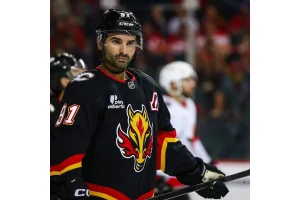
Calgary Flames Overview
The Calgary Flames are a professional ice hockey team based in Calgary, Alberta, Canada. The Flames compete in the National Hockey League (NHL) as a member of the Pacific Division in the Western Conference, and they are one of two NHL franchises in the province, alongside the Edmonton Oilers. The team plays its home games at the Scotiabank Saddledome and wears red, yellow, and white uniforms anchored by the iconic flaming C logo.
Founded in 1972 as the Atlanta Flames before relocating to Calgary in 1980, the franchise has built a tradition defined by competitive drive and loyal support. The Flames have won one Stanley Cup championship in 1989, two Presidents’ Trophies, three conference titles, and eight division titles. Seventeen people associated with the Flames have been inducted into the Hockey Hall of Fame, and the team’s mascot, Harvey the Hound, became the first mascot in NHL history when he was introduced in 1983.
Founding and Organizational Origins
The Flames originated in Atlanta in 1972, created as part of the NHL’s first expansion effort to compete with the upstart World Hockey Association. Owner Tom Cousins chose the name Flames to honor Atlanta’s Civil War history, when General William Tecumseh Sherman’s troops burned much of the city. Under early head coaches Bernie Geoffrion, Fred Creighton, and Al MacNeil, the Atlanta Flames reached the playoffs in six of eight seasons but won only two postseason series during that span.
By 1980, Cousins faced serious financial pressure and sold the team to Canadian entrepreneur Nelson Skalbania, who relocated the franchise to Calgary. Skalbania kept the Flames name, feeling it suited an oil-driven city, while replacing the flaming A logo with a flaming C. Skalbania sold his interest in 1981, and the team has since been locally owned, first under the Calgary Flames Limited Partnership and later under Calgary Sports and Entertainment, which was established in 2012.
Growth Into NHL Competition
The Flames were quickly embraced by Calgary, selling 10,000 full- and half-season ticket packages in the 7,000-seat Stampede Corral during their first season. They qualified for the playoffs in that debut campaign and won their first two series before falling to the Minnesota North Stars. General manager Cliff Fletcher rebuilt the roster, drafted Swedish forward Hakan Loob, and became one of the first NHL executives to draft Soviet players, including CSKA Moscow’s Sergei Makarov in 1983.
In 1983, the Flames moved into the Olympic Saddledome, a venue built for the 1988 Winter Olympics. New acquisitions such as Lanny McDonald, Al MacInnis, Doug Risebrough, and Mike Vernon turned the team into a consistent playoff contender. By the mid-1980s, the Flames had developed a fierce rivalry with the Edmonton Oilers, an intraprovincial clash known as the Battle of Alberta.
Calgary Flames Competitive Journey
The Flames’ competitive journey stretches from their playoff appearances in Atlanta, through their 1989 Stanley Cup triumph in Calgary, and into a modern era defined by star players such as Jarome Iginla, Miikka Kiprusoff, Johnny Gaudreau, and Sean Monahan. Along the way, the franchise has captured multiple division titles, two Presidents’ Trophies, and a passionate fan identity known as the C of Red.
Early Seasons and Development (1980-1985)
After arriving in Calgary, the Flames posted a 39-27-14 record in 1980-81, third in the Patrick Division, and immediately built a strong ticket base. A losing season in 1981-82 prompted Fletcher to reshape the roster, trading several Atlanta holdovers and adding European talent. The improved Flames pushed the Oilers to seven games during the 1984 playoffs, signaling the arrival of a new contender in the Smythe Division.
The Flames played their first three seasons in Calgary at the Stampede Corral before moving into the Olympic Saddledome in 1983. By the mid-1980s, the team had assembled a deep lineup that included Al MacInnis, Mike Vernon, Joe Nieuwendyk, and Lanny McDonald, setting the stage for a run at the Stanley Cup.
Breakthrough in NHL (1986-2004)
In 1985-86, the Flames reached the Stanley Cup Final for the first time as a Calgary franchise, dispatching the Winnipeg Jets, toppling the Oilers in seven games, and sweeping past the St. Louis Blues before losing to the Montreal Canadiens. Two seasons later, under coach Terry Crisp, the Flames posted 105 points and captured their first Presidents’ Trophy. Joe Nieuwendyk became the second rookie in NHL history to score 50 goals, winning the Calder Memorial Trophy.
In 1988-89, the Flames set a franchise record with 117 points and their second consecutive Presidents’ Trophy. After eliminating the Vancouver Canucks, Los Angeles Kings, and Chicago Blackhawks, the Flames defeated the Montreal Canadiens to win their first and only Stanley Cup. Al MacInnis captured the Conn Smythe Trophy as playoff MVP, and Lanny McDonald retired as a champion. The Flames added two more division titles in 1989-90 and reached the 2004 Stanley Cup Final before falling to the Tampa Bay Lightning in seven games.
After the 2004-05 lockout, the Flames earned 103 points in 2005-06 and captured their first division title in 12 years. Miikka Kiprusoff won both the William M. Jennings and Vezina Trophies, and Dion Phaneuf finished third among rookie defensemen with 20 goals. Jarome Iginla emerged as the offensive centerpiece, eventually becoming the franchise leader in games played, goals, and points.
Modern Program and Current Direction (2010-Present)
The Flames have rebuilt their roster several times since Iginla’s 2013 departure. Johnny Gaudreau, Sean Monahan, and Mark Giordano led a return to the playoffs in 2014-15, when coach Bob Hartley won the Jack Adams Award. After missing the postseason in 2017-18, the Flames added Dougie Hamilton and drafted Matthew Tkachuk in 2016, building toward a 2018-19 division title and a Norris Trophy for Giordano.
The 2022 off-season reshaped the franchise again, as Gaudreau signed with Columbus, Tkachuk was traded to Florida for Jonathan Huberdeau and MacKenzie Weegar, and Sean Monahan was sent to Montreal. Nazem Kadri signed a long-term deal to anchor the new core. General manager Craig Conroy, named in 2023, and head coach Ryan Huska, appointed the same year, lead the current program alongside captain Mikael Backlund.
Philosophy and Competitive Strengths
The Flames have long emphasized strong goaltending, structured defensive play, and a hardworking team identity shaped by the Battle of Alberta rivalry. Under coaches such as Darryl Sutter, the team built its game around physicality and disciplined systems. Modern versions of the Flames blend skilled forwards with responsible two-way players, reflecting a blend of toughness and creativity that defines the franchise’s culture.
Key Milestones and Major Moments
Among the franchise’s landmark moments are the 1989 Stanley Cup victory, the introduction of the C of Red tradition in 1986, the 2004 playoff run that inspired the Red Mile celebrations, and the 2011 Heritage Classic shutout of the Montreal Canadiens. The franchise has also celebrated record-setting careers from Iginla, Kiprusoff, and Gaudreau, and has hosted several outdoor games at McMahon Stadium and Regina’s Mosaic Stadium.
Calgary Flames Achievements and Results
The Flames have earned one Stanley Cup championship, two Presidents’ Trophies, three conference titles, and eight division titles across their history in Atlanta and Calgary. The franchise has also retired the numbers of Lanny McDonald, Mike Vernon, Jarome Iginla, Miikka Kiprusoff, and Wayne Gretzky (league-wide), while honoring Al MacInnis and Joe Nieuwendyk through the Forever a Flame program.
NHL Achievements
The Flames’ 1989 Stanley Cup championship remains the defining achievement in franchise history, capped by a six-game series win over the Montreal Canadiens. They also reached the Stanley Cup Final in 1986 and 2004 and won Presidents’ Trophies in 1987-88 and 1988-89. Twelve former Flames players have been inducted into the Hockey Hall of Fame, joined by builders such as Cliff Fletcher, Harley Hotchkiss, and Doc Seaman.
Conference Achievements
The Flames have captured three Campbell or Western Conference championships, advancing to the Stanley Cup Final in 1985-86, 1988-89, and 2003-04. The 1989 run produced a Conn Smythe Trophy for Al MacInnis and a championship that remains the high-water mark in modern Calgary history. The 2004 run, highlighted by upsets of three division champions, produced the Red Mile phenomenon on 17th Avenue SW.
Divisional Achievements
The Flames have won eight division championships, including titles in 1988, 1989, 1990, 1994, 1995, 2006, 2019, and 2022. Several of those titles coincided with 100-point seasons and deep playoff pushes, while the 1995 and 2006 championships bookended a turbulent period in the franchise’s history. The 2021-22 title earned home-ice advantage for the first round and set up the franchise’s first Battle of Alberta playoff series since 1991.
Series Achievements
Calgary’s most memorable playoff series include the 1986 upset of the Edmonton Oilers, decided by Steve Smith’s overtime own goal, and the 1989 championship run that featured series wins over Vancouver, Los Angeles, and Chicago. In 2015, the Flames eliminated the Vancouver Canucks in the first round for their first playoff series win since 2004, and in 2022, they ousted the Dallas Stars in seven games before falling to the Oilers.