
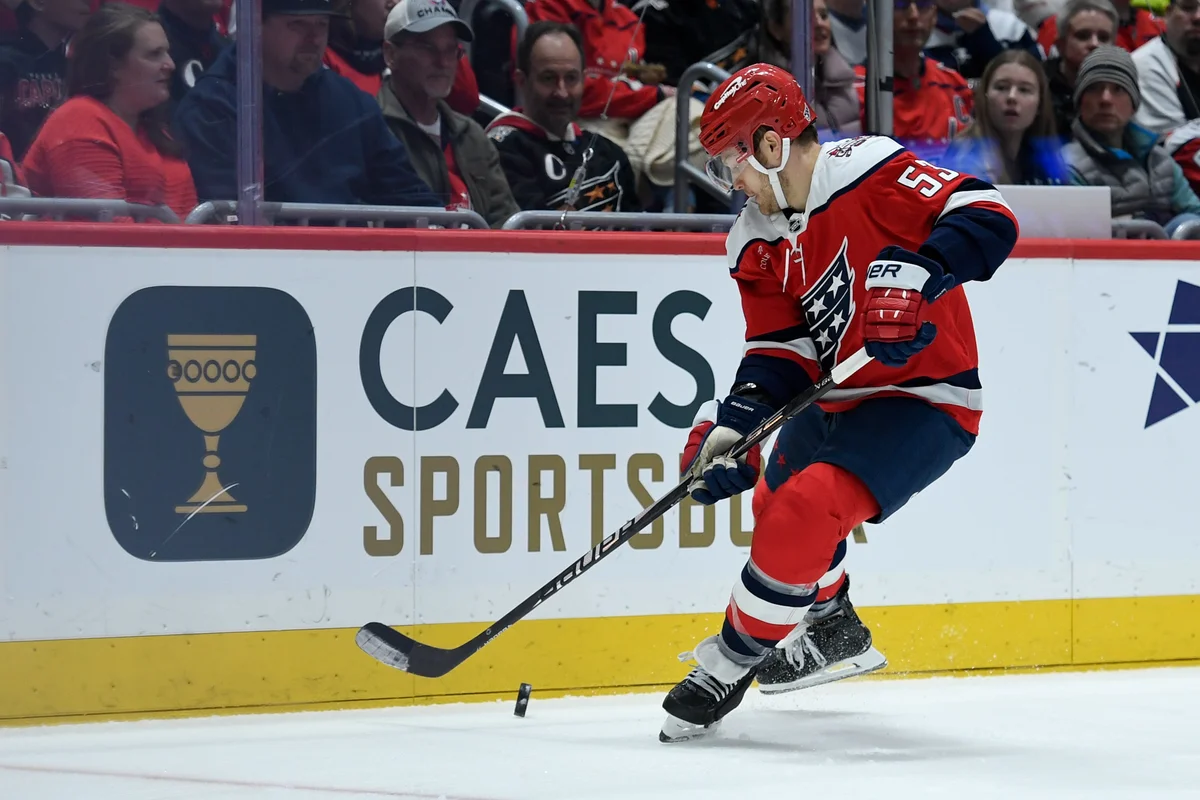
As the 2026 NHL Trade Deadline approaches, significant uncertainty surrounds Vincent Trocheck‘s status with the New York Rangers, with only one day remaining until Friday’s 3 p.m. ET cutoff. Trocheck’s potential trade has become a key topic due to his 12-team no-trade list and reluctance to move to the West Coast, raising anxious questions about his future in the league during this tense deadline period.
Vincent Trocheck’s Uncertain Status with the New York Rangers
Vincent Trocheck remains a game-time decision for the Rangers as they prepare to host the Toronto Maple Leafs at Madison Square Garden on Thursday evening. The 32-year-old center confirmed on Tuesday that he is open to being traded but has expressed clear preferences, including avoiding teams located on the West Coast. Trocheck is currently in the third season of a seven-year contract worth $39.375 million, with an average annual value of $5.625 million, signed in mid-2022. So far this season, he has compiled 39 points over 46 games, combining 12 goals with 27 assists.
Rangers head coach Mike Sullivan emphasized the uncertainty around lineup decisions, stating,
“Right now, everybody is a game-time decision. Obviously there’s uncertainty around this week, but everybody is a game-time decision.”
The Rangers find themselves near the bottom of the Metropolitan Division at 23-29-8, trailing the Boston Bruins by 19 points for the second wild card spot in the Eastern Conference playoffs, intensifying pressure for roster moves.

Challenges Faced by the Utah Mammoth in Deadline Negotiations
In the Western Conference, the Utah Mammoth are navigating complexities brought by widespread no-move and no-trade clauses. General Manager Bill Armstrong highlighted how these contractual protections complicate trade talks, especially for a relatively new franchise seeking to improve.
Recently, Utah acquired defenseman MacKenzie Weegar from the Calgary Flames in exchange for Olli Maatta, forward prospect Jonathan Castagna, and three future second-round draft picks. Armstrong explained the delicate process involved due to Weegar’s trade clause:
“That’s the new normal of the NHL, that when you’re making deals, a lot of them have trade protection so you have to go through, explain a little bit about our team, a little bit about Utah.”
He noted the importance of convincing players by illustrating the team’s direction and culture, adding that Weegar had familiarity with Utah, having visited the franchise previously and witnessed what Armstrong called
“the loudest building in the National Hockey League.”
The Mammoth, presently fourth in the Central Division with a 32-25-4 record, hold the first wild card position in the Western Conference, just a point ahead of the Seattle Kraken. Armstrong asserted the team’s daily commitment to improvement:
“We wake up every morning trying to improve the team. That’s our biggest thing; via trade, via waivers, watching our young players play in Tucson (American Hockey League) and their improvement and when they’re ready to take that step we’re trying to put them into our lineup. This is a club right now that is pushing to get into the playoffs, take that next step, and we’re hungry to make it better every single day.”
Potential Moves Alongside Recent Player Trades by Chicago Blackhawks
The Chicago Blackhawks have already made notable roster changes, trading defenseman Connor Murphy to the Edmonton Oilers, and sending forwards Jason Dickinson and Colton Dach to Edmonton in exchange for Andrew Mangiapane. Amid these moves, attention has turned to whether team captain Nick Foligno might be next to leave before the deadline.
Foligno, who is 38 years old and in the final year of a two-year, $9 million contract, has openly discussed the emotional struggle of facing potential trade talks.
“I’ve made it no surprise how much I care about this group, especially as a guy who’s led this group for a few years,”
Foligno said after a recent practice.
“You feel weird when you have those hard conversations (with the general manager), but it’s the reality of where we’re sitting and when you have expiring contracts or the age I’m at.”
He expressed his determination to continue contributing to the team:
“There’s always a personal thing that you go through, too, where you want to still compete and battle and win. So that’s the fight that you have. I believe in this group so much. It’s been an absolute honor to be the captain here, so I’m still fully committed to that until told otherwise, but there’s a competitor inside you too that wants to play meaningful games.”
The Blackhawks currently stand at 23-28-10, eleven points behind the Seattle Kraken for the second wild card in the Western Conference, reflecting the urgency to finalize moves that could impact the team’s playoff chances.
Edmonton Oilers Seem to Have Completed Their Deadline Activity
The Edmonton Oilers, led by General Manager Stan Bowman, appear to have concluded their business as the NHL Trade Deadline nears. With recent acquisitions including Jason Dickinson and Colton Dach from Chicago, swapped for Andrew Mangiapane and a conditional first-round pick in the 2027 draft, coupled with acquiring Connor Murphy for a future second-round pick, the Oilers have reshaped their roster.
Bowman indicated that further trades are unlikely at this stage:
“I would imagine that we’re done, I don’t expect to make other moves. Part of our job is to see what’s out there, but if I’m looking at where we’re at, I think any further addition wouldn’t be a significant one, if it is, it’s in a depth role. Something that made sense, certainly we would look at it, but likely I would say this is our team.”
At 30-24-8, Edmonton is positioned third in the Pacific Division, trailing the Anaheim Ducks by three points and the Vegas Golden Knights by four. The Oilers will face the Carolina Hurricanes at Rogers Place on Friday evening, a matchup that could influence their postseason positioning.
Bowman described this trade deadline as particularly unusual, affected by the ongoing trade freeze during the 2026 Olympic Winter Games in Milano Cortina, new salary cap rules for the playoffs, and limited options for salary retention agreements.
“There wasn’t a lot of games from the restart of the Olympics and the deadline,”
he said.
“I think some teams were deciding, are they going to sell or are they going to buy, based on a few games. I could be proven wrong tomorrow, but I don’t think there will end up being as many trades, maybe quantity-wise as there was and it’s probably due to those [factors].”
Deadline Pressure Reflects Broader NHL Trade Trends and Player Sentiments
The approaching deadline has intensified an atmosphere of caution and alert among teams across the NHL. No-move clauses continue to introduce challenges into negotiations, forcing general managers to not only consider on-ice fit but also player willingness to relocate to unfamiliar markets. This tension is evident in the cases of Trocheck’s hesitation and Utah’s efforts to recruit players to a newer franchise.
Meanwhile, veteran players like Nick Foligno confront the emotional toll of uncertain futures amid rebuilding rosters, balancing their commitment to current teams with a personal desire to compete meaningfully. Trades involving established players like Andrew Mangiapane and prospects reflect teams’ strategies to either push for playoff contention or build for long-term success.
With the Trade Deadline set at 3 p.m. ET on Friday, all eyes are on key figures like Trocheck and decision-makers such as Bill Armstrong and Stan Bowman as they navigate this complex period. How these final hours unfold may significantly shape the makeup of teams entering the final stretch of the 2026 NHL season and the Stanley Cup Playoffs.
