Philadelphia Flyers Overview
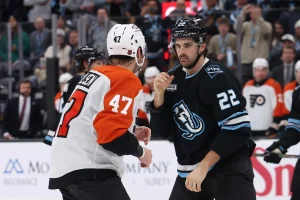
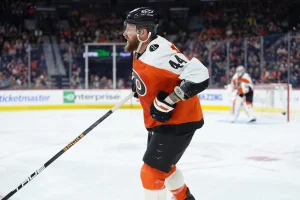
The Philadelphia Flyers are a professional ice hockey team based in Philadelphia, Pennsylvania. Founded in 1967 as part of the National Hockey League (NHL) expansion, the Flyers compete in the Metropolitan Division of the Eastern Conference and play their home games at the Xfinity Mobile Arena in South Philadelphia. The franchise is owned by Comcast Spectacor and is led by general manager Daniel Briere, president Paul Holmgren, and head coach Rick Tocchet. Known for their burnt orange, black, and white colors, the Flyers are one of the most historic teams in professional hockey, with a legacy defined by two Stanley Cup championships and decades of competitive play.
As the first expansion team of the post-Original Six era to win the Stanley Cup, the Philadelphia Flyers have built a strong identity rooted in toughness, skill, and tradition. The team shares its arena with the Philadelphia 76ers of the National Basketball Association and the Philadelphia Wings of the National Lacrosse League. With a passionate fan base and a fierce rivalry with the Pittsburgh Penguins, the Flyers remain a central part of Philadelphia’s rich sports culture.
Founding and Organizational Origins
The Philadelphia Flyers were established in 1967 when the NHL expanded from six to twelve teams. The franchise was created by a Philadelphia-based ownership group that included Ed Snider, Bill Putnam, Jerome Schiff, and Philadelphia Eagles owner Jerry Wolman. Ed Snider, who served as vice-president of the Eagles at the time, became the driving force behind the team’s creation after attending a Boston Bruins game and witnessing the enthusiasm of hockey fans in that city. His proposal to bring NHL hockey to Philadelphia was approved by the league over a competing bid from Baltimore.
The team’s name, colors, and identity were developed through a deliberate public process. Bill Putnam announced a name-the-team contest in April 1966, with burnt orange, black, and white chosen as the team colors. Putnam’s choice of colors was influenced by the University of Texas at Austin and Philadelphia’s previous NHL team, the Quakers. Ultimately, Ed Snider’s sister Phyllis suggested the name “Flyers,” which captured the speed of the game and complemented the city name phonetically. The team was formally announced on August 3, 1966, and made its NHL debut on October 11, 1967.
Growth Into NHL Competition
Like all expansion teams of 1967, the Flyers were limited in their initial player acquisitions by NHL rules that protected the talent of the Original Six franchises. In the 1967 NHL expansion draft, Philadelphia selected a mix of aging veterans and career minor-leaguers, including goaltender Bernie Parent. To strengthen their developmental pipeline, the organization purchased the Quebec Aces of the American Hockey League, giving the team a distinct francophone flavor in its early years.
The Flyers quickly established themselves as a competitive franchise, winning the West Division in their inaugural 1967–68 season with a sub-.500 record. Under the leadership of head coach Fred Shero and general manager Keith Allen, the team developed a physical, aggressive style of play that would later define the franchise. The selection of Bobby Clarke with the 17th overall pick in the 1969 NHL amateur draft marked the beginning of a new era, as Clarke became the cornerstone of the team’s championship runs in the mid-1970s.
Philadelphia Flyers Competitive Journey
The Philadelphia Flyers’ competitive journey spans nearly six decades, encompassing two Stanley Cup championships, eight conference titles, and 16 division championships. From their emergence as the “Broad Street Bullies” in the 1970s to their modern rebuilding efforts, the franchise has experienced both historic triumphs and prolonged periods of struggle. The team’s all-time points percentage ranks among the highest in the NHL, reflecting a consistent standard of competitive performance across generations.
Early Seasons and Development (1967–1971)
The Flyers’ first NHL season in 1967–68 ended with a division title but a first-round playoff loss to the St. Louis Blues. Lou Angotti became the franchise’s first captain, and Leon Rochefort led the team with 21 goals. The following two seasons brought continued growth, with the team making the playoffs in 1968–69 before missing them in 1969–70 with a franchise-low 17 wins.
Under Ed Snider’s mandate to build a tougher roster, the Flyers began acquiring more physical players. The 1969 draft brought both Bobby Clarke, a talented center from Flin Flon, Manitoba, and enforcer Dave Schultz. The team’s introduction of Kate Smith’s recording of “God Bless America” before important games in December 1969 became one of the franchise’s most enduring traditions. By 1970–71, the Flyers had returned to the playoffs, setting the stage for their transformation into one of the most dominant teams of the era.
Breakthrough in NHL (1971–1981)
The Flyers’ breakthrough began in 1971–72, when Bobby Clarke won the Bill Masterton Memorial Trophy, and culminated in the 1973–74 season with the franchise’s first Stanley Cup championship. Coined the “Broad Street Bullies” by Philadelphia Bulletin journalists Jack Chevalier and Pete Cafone in January 1973, the team embraced a physical, intimidating style of play that overwhelmed opponents. The arrival of goaltender Bernie Parent from the Toronto Maple Leafs transformed the team into legitimate contenders.
In 1973–74, the Flyers posted a 50–16–12 record and swept the Atlanta Flames before defeating the New York Rangers to reach the Stanley Cup Final. Facing the Boston Bruins, the Flyers won the series in six games, becoming the first expansion team to defeat an Original Six franchise in the playoffs. Parent’s shutout in the decisive game earned him the Conn Smythe Trophy as playoff MVP. The Flyers repeated as champions in 1974–75, defeating the Buffalo Sabres in six games in a series that included the memorable “Fog Game.” The era also featured the team’s famous 4–1 exhibition victory over Soviet Central Red Army in 1976, a result that cemented the Spectrum’s reputation as one of hockey’s most intimidating venues.
Modern Program and Current Direction (2023–Present)
Following the 2022–23 season, the Flyers underwent a comprehensive front-office overhaul. Keith Jones was named president of hockey operations, and Daniel Briere was appointed permanent general manager. The organization embraced a “New Era of Orange” branding, accompanied by uniform changes that returned the team to the burnt orange shade of their 1984–2007 uniforms. A key moment came in the 2023 NHL Entry Draft, when the Flyers selected Russian prospect Matvei Michkov with the seventh overall pick.
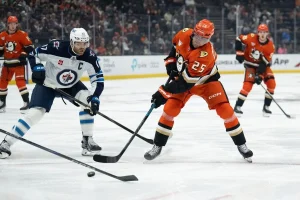
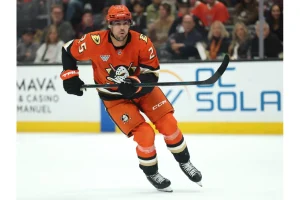
The 2025 off-season brought significant change, beginning with the hiring of Rick Tocchet as the 25th head coach in franchise history. The team acquired center Trevor Zegras from the Anaheim Ducks and selected winger Porter Martone with the sixth overall pick in the 2025 NHL Entry Draft. The 2025–26 season saw the Flyers return to the playoffs for the first time since the 2019–20 season, defeating the Pittsburgh Penguins in six games in the first round before being swept by the Carolina Hurricanes in the second round.
Philosophy and Competitive Strengths
The Philadelphia Flyers’ identity has long been defined by physical play, resilience, and a never-surrender mentality. From the Broad Street Bullies era to their historic 2010 playoff comeback against the Boston Bruins, the franchise has built a reputation for thriving under pressure. The team emphasizes strong goaltending, structured defense, and the ability to capitalize on scoring opportunities through balanced line combinations.
Key Milestones and Major Moments
Key milestones in Flyers history include the 1974 and 1975 Stanley Cup championships, the franchise-record 35-game undefeated streak in 1979–80, and the 2010 playoff series win over Boston after trailing 3–0. The introduction of Kate Smith’s “God Bless America” tradition, the unveiling of the iconic winged “P” logo, and the debut of mascot Gritty in 2018 all stand as defining cultural moments for the organization.
Philadelphia Flyers Achievements and Results
The Philadelphia Flyers’ verified accomplishments include two Stanley Cup championships, eight conference championships, and 16 division titles. The franchise has made 41 playoff appearances in 59 seasons, the second-most among NHL expansion teams, and holds an all-time points percentage of 56.7 percent, ranking fourth in league history.
NHL Achievements
The Flyers’ two Stanley Cup championships came in 1973–74 and 1974–75, both times under head coach Fred Shero and behind the goaltending of Bernie Parent. The 1974 victory made the Flyers the first expansion team to win the Stanley Cup, while the 1975 repeat established them as a dynasty of the era. The franchise has reached the Stanley Cup Final on eight occasions, with their most recent appearance coming in 2009–10, when they lost to the Chicago Blackhawks in six games.
Conference Achievements
The Philadelphia Flyers have won the Eastern Conference championship eight times, in 1973–74, 1975–76, 1976–77, 1979–80, 1984–85, 1986–87, 1996–97, and 2009–10. These conference titles reflect the franchise’s sustained competitiveness across multiple eras, from the Broad Street Bullies dynasty to the Legion of Doom years of the late 1990s and the Resurgence era of the early 2010s. The Flyers’ 16 conference final appearances are the most of any NHL expansion team.
Divisional Achievements
The Flyers have captured 16 division championships throughout their history, including titles in 1967–68, 1973–74, 1974–75, 1975–76, 1976–77, 1979–80, 1982–83, 1984–85, 1985–86, 1986–87, 1994–95, 1995–96, 1999–2000, 2001–02, 2003–04, and 2010–11. These division crowns span the Patrick Division and Atlantic Division eras, demonstrating the franchise’s ability to consistently finish atop its grouping across multiple decades.
Series Achievements
The Flyers have developed numerous star players throughout their history, including Hockey Hall of Famers Bobby Clarke, Bernie Parent, Reggie Leach, Bill Barber, Mark Howe, and Eric Lindros. The franchise has retired six jersey numbers, including No. 1 for Parent, No. 2 for Howe, No. 4 for Barry Ashbee, No. 7 for Barber, No. 16 for Clarke, and No. 88 for Lindros. The team also honors the memory of Pelle Lindbergh by keeping his No. 31 out of circulation.