

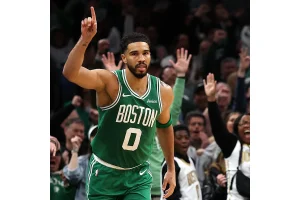







The National Basketball Association is the premier men’s professional basketball league in North America and widely regarded as the most influential basketball competition in the world. The league represents the highest level of organized professional basketball and serves as the primary destination for elite players from the United States and international basketball programs.
The NBA currently consists of 30 teams, including 29 teams located in the United States and one team based in Canada, the Toronto Raptors in Toronto. The teams are divided into two conferences, the Eastern Conference and the Western Conference. Each conference contains three divisions, and each division includes five teams, creating a balanced organizational structure used for scheduling and competition.
Every franchise participates in an 82-game regular season, typically beginning in October and concluding in April. Following the regular season, the league organizes the NBA Playoffs, an elimination tournament featuring the top teams from each conference. The postseason ends with the NBA Finals, played in June, where the champions of the Eastern and Western conferences compete in a best-of-seven series to determine the league champion.
Beyond competition, the NBA operates as a major global sports enterprise. The league shapes modern basketball tactics, influences youth development programs, and generates billions of dollars annually through broadcasting rights, sponsorship agreements, merchandise sales, and international partnerships. Because of its worldwide reach, the NBA is considered a central driver of basketball culture and business worldwide.
Teams and League Structure
Conferences and Divisions
The NBA’s 30 teams are organized into two conferences with three divisions each.
Eastern Conference
Atlantic Division
- Boston Celtics
- Brooklyn Nets
- New York Knicks
- Philadelphia 76ers
- Toronto Raptors
Central Division
Southeast Division
Western Conference
Northwest Division
Pacific Division
Southwest Division
Regular-Season Format
Each NBA team plays 82 games during the regular season, making it one of the longest competitive schedules among major professional sports leagues.
Teams play multiple games against divisional opponents, which helps maintain traditional rivalries and geographic competition. Teams also play multiple games against other teams in the same conference, which is important for determining playoff qualification.
In addition, each franchise plays at least one home game and one away game against every team from the opposite conference.
Standings are determined by overall win–loss record. When teams finish with identical records, the league applies a set of tiebreaker procedures to determine playoff seeding.
Common tiebreakers include:
- Head-to-head results
- Division record
- Conference record
- Point differential
- Additional statistical measures if required
Origins and Early History
The development of the NBA can be traced to the growing popularity of basketball in North America after the end of World War II.
BAA and NBL
Two major professional basketball leagues existed before the NBA was formed.
The first was the Basketball Association of America, which began operations in 1946 and placed teams in large metropolitan arenas. The BAA sought to establish basketball in major markets and attract large urban audiences.
Another league was the National Basketball League, which operated primarily in Midwestern industrial cities. The NBL included several company-sponsored teams and had established a competitive structure before the BAA’s creation.
Formation of the NBA (1949)
On August 3, 1949, the BAA and NBL officially merged to form the modern National Basketball Association. This merger unified the professional basketball landscape in North America and created a single league that could expand nationally.
Although the merger occurred in 1949, the NBA later adopted June 6, 1946, the founding date of the BAA, as the official starting point of the league’s history.
Early Dynasties and Innovations
The early NBA featured dominant teams that helped establish the league’s competitive identity.
The Minneapolis Lakers became the league’s first major dynasty. Led by star center George Mikan, the team won five championships between 1949 and 1954.
During the early years of professional basketball, teams often slowed the pace of play by holding the ball for extended periods. To address this problem, the league introduced the 24-second shot clock in 1954, which required teams to attempt a shot within 24 seconds of gaining possession. The rule dramatically increased scoring and transformed the style of play.
The Boston Celtics soon emerged as another dominant franchise. Under coach Red Auerbach and led by players such as Bill Russell and Bob Cousy, the Celtics won 11 championships in 13 seasons, establishing one of the most successful dynasties in professional sports history.
Growth, Expansion, and Classic Franchises
Expansion and ABA Merger
During the 1960s and 1970s, the NBA expanded to new cities and markets across the United States. Several franchises relocated to larger metropolitan areas to increase television exposure and fan attendance.
In 1976, the NBA merged with the rival American Basketball Association. As part of the merger, four ABA teams joined the NBA:
- Indiana Pacers
- San Antonio Spurs
- Denver Nuggets
- New York Nets (now the Brooklyn Nets)
The ABA introduced innovations that changed professional basketball, including the three-point shot, a faster offensive style, and a focus on high-flying athletic play.
Classic Franchises and Rivalries
Several franchises developed long-term success and historic rivalries.
The Boston Celtics lead the league with 18 championships, followed closely by the Los Angeles Lakers with 17 titles.
The Lakers’ success spans multiple eras, including the “Showtime” period led by Magic Johnson and Kareem Abdul‑Jabbar, the early-2000s dynasty featuring Shaquille O’Neal and Kobe Bryant, and later championship teams led by LeBron James and Anthony Davis.
The Golden State Warriors have also become a major modern dynasty, winning multiple championships with stars including Stephen Curry, Klay Thompson, and Draymond Green.
One of the league’s most historic rivalries is between the Celtics and Lakers, which defined several championship eras. Other notable rivalries include the Chicago Bulls versus the Detroit Pistons during the late 1980s and the Golden State Warriors versus the Cleveland Cavaliers during the late 2010s.
Complete List of NBA Champions (1947–2025)
1940s
-
1947 — Philadelphia Warriors
-
1948 — Baltimore Bullets
-
1949 — Minneapolis Lakers
1950s
-
1950 — Minneapolis Lakers
-
1951 — Rochester Royals (now Sacramento Kings)
-
1952 — Minneapolis Lakers
-
1953 — Minneapolis Lakers
-
1954 — Minneapolis Lakers
-
1955 — Syracuse Nationals (now Philadelphia 76ers)
-
1956 — Philadelphia Warriors
-
1957 — Boston Celtics
-
1958 — St. Louis Hawks (now Atlanta Hawks)
-
1959 — Boston Celtics
1960s
-
1960 — Boston Celtics
-
1961 — Boston Celtics
-
1962 — Boston Celtics
-
1963 — Boston Celtics
-
1964 — Boston Celtics
-
1965 — Boston Celtics
-
1966 — Boston Celtics
-
1967 — Philadelphia 76ers
-
1968 — Boston Celtics
-
1969 — Boston Celtics
1970s
-
1970 — New York Knicks
-
1971 — Milwaukee Bucks
-
1972 — Los Angeles Lakers
-
1973 — New York Knicks
-
1974 — Boston Celtics
-
1975 — Golden State Warriors
-
1976 — Boston Celtics
-
1977 — Portland Trail Blazers
-
1978 — Washington Bullets (now Washington Wizards)
-
1979 — Seattle SuperSonics (now Oklahoma City Thunder)
1980s
-
1980 — Los Angeles Lakers
-
1981 — Boston Celtics
-
1982 — Los Angeles Lakers
-
1983 — Philadelphia 76ers
-
1984 — Boston Celtics
-
1985 — Los Angeles Lakers
-
1986 — Boston Celtics
-
1987 — Los Angeles Lakers
-
1988 — Los Angeles Lakers
-
1989 — Detroit Pistons
1990s
-
1990 — Detroit Pistons
-
1991 — Chicago Bulls
-
1992 — Chicago Bulls
-
1993 — Chicago Bulls
-
1994 — Houston Rockets
-
1995 — Houston Rockets
-
1996 — Chicago Bulls
-
1997 — Chicago Bulls
-
1998 — Chicago Bulls
-
1999 — San Antonio Spurs
2000s
-
2000 — Los Angeles Lakers
-
2001 — Los Angeles Lakers
-
2002 — Los Angeles Lakers
-
2003 — San Antonio Spurs
-
2004 — Detroit Pistons
-
2005 — San Antonio Spurs
-
2006 — Miami Heat
-
2007 — San Antonio Spurs
-
2008 — Boston Celtics
-
2009 — Los Angeles Lakers
2010s
-
2010 — Los Angeles Lakers
-
2011 — Dallas Mavericks
-
2012 — Miami Heat
-
2013 — Miami Heat
-
2014 — San Antonio Spurs
-
2015 — Golden State Warriors
-
2016 — Cleveland Cavaliers
-
2017 — Golden State Warriors
-
2018 — Golden State Warriors
-
2019 — Toronto Raptors
2020s
-
2020 — Los Angeles Lakers
-
2021 — Milwaukee Bucks
-
2022 — Golden State Warriors
-
2023 — Denver Nuggets
-
2024 — Boston Celtics
-
2025 — Oklahoma City Thunder
Modern Era: Rules, Analytics, Globalization, and Economics
Key Rules and Competition Framework
NBA games consist of four 12-minute quarters, creating a 48-minute regulation game. If the score is tied at the end of regulation, the teams play five-minute overtime periods until a winner is determined.
The 24-second shot clock requires teams to attempt a shot within 24 seconds of gaining possession. If an offensive rebound occurs, the shot clock may reset to 14 seconds.
Field goals scored from beyond the three-point line are worth three points, encouraging teams to spread the floor and emphasize long-range shooting.
Players accumulate personal fouls during the game, and once a player reaches six fouls, they are disqualified from the remainder of the game. Teams that exceed the team foul limit in a quarter send opposing players to the free-throw line.
The NBA also uses instant replay and coach’s challenges to review certain officiating decisions.
Salary Cap, Luxury Tax, and Player Movement
The NBA uses a soft salary cap system designed to maintain competitive balance while allowing teams flexibility to retain players.
Teams may exceed the salary cap using certain exceptions, including:
- Bird Rights, allowing teams to re-sign their own players above the cap
- Mid-Level Exception
- Minimum salary contracts
A luxury tax system penalizes teams that significantly exceed the salary cap threshold by requiring them to pay additional financial penalties.
Players may change teams through free agency, trades, or the NBA Draft. The draft includes two rounds, allowing teams to select young players from colleges, international leagues, and developmental programs.
The NBA Draft Lottery determines the order of top draft picks among teams that did not qualify for the playoffs.
Analytics and Style of Play
Modern NBA teams rely heavily on statistical analysis and advanced metrics.
Teams analyze shot efficiency, lineup combinations, player tracking data, and defensive matchups to optimize strategy.
Shot selection increasingly prioritizes:
- Three-point attempts
- Shots near the basket
- Free throws
Advanced metrics such as Player Efficiency Rating (PER) and lineup net rating help teams evaluate player performance and game strategy.
Globalization and Media
The NBA has become a global sports product. Games are broadcast in more than 200 countries and territories, and the league features players from many regions of the world.
Major broadcasting partners include ESPN, ABC, and TNT. Digital services such as League Pass allow fans to stream games internationally.
Related Leagues and Development Systems
The NBA supports several associated leagues that contribute to player development.
The Women’s National Basketball Association was founded in 1996 as the leading professional women’s basketball league in North America.
The NBA G League operates as the official developmental league for the NBA, providing opportunities for players, coaches, and referees to develop within the professional system.
NBA Finals Champions and Franchise Success
The NBA Finals have been held annually since the late 1940s to determine the league champion.
Historically, the Boston Celtics hold the record with 18 championships, followed by the Los Angeles Lakers with 17 titles.
Other successful franchises include:
- Golden State Warriors – 7 championships
- Chicago Bulls – 6 championships
- San Antonio Spurs – 5 championships
Between 2000 and 2002, the Lakers won three consecutive championships led by Kobe Bryant and Shaquille O’Neal.
During the 2000s and 2010s, multiple teams captured titles, including the Spurs, Heat, Warriors, and Cavaliers. More recently, franchises such as the Toronto Raptors, Milwaukee Bucks, Denver Nuggets, Boston Celtics, and Oklahoma City Thunder have won championships, demonstrating increasing competitive balance in the league.
Current Playoff and Tournament Structure
Play-In Tournament
The NBA introduced a Play-In Tournament to determine the final playoff seeds in each conference.
Teams ranked 7th through 10th participate in the event. The winner of the 7th vs 8th game secures the 7th seed, while the loser faces the winner of the 9th vs 10th game to determine the 8th seed.
Playoffs
After the play-in tournament, eight teams from each conference advance to the NBA Playoffs.
All playoff rounds are played as best-of-seven series, with a 2-2-1-1-1 home-court format. The higher-seeded team receives home-court advantage.
The champions of the Eastern and Western conferences meet in the NBA Finals, also played in a best-of-seven series.
In-Season Tournament
Beginning in 2023, the NBA introduced an in-season tournament designed to increase early-season competition.
The tournament includes group stage games that count toward the regular-season standings. The top teams advance to knockout rounds, culminating in a championship game played at a neutral site.
Why the NBA Matters
The NBA has become one of the most influential sports leagues in the world.
Financially, the league generates more than $10 billion in annual revenue through broadcasting rights, sponsorship agreements, ticket sales, and merchandise.
The NBA also has significant cultural influence. Many players are global celebrities who impact fashion, entertainment, and social media culture.
From a business perspective, the league has introduced major innovations in professional sports, including advanced revenue-sharing models, modern free-agency systems, and global marketing initiatives.
In recent years, several different teams have won championships, including the Toronto Raptors, Los Angeles Lakers, Milwaukee Bucks, Golden State Warriors, Denver Nuggets, and Boston Celtics. This competitive balance has increased fan interest and maintained high levels of engagement across the league.
As a result, the NBA continues to shape the future of basketball through its global reach, economic influence, and ongoing innovation in professional sports management.