
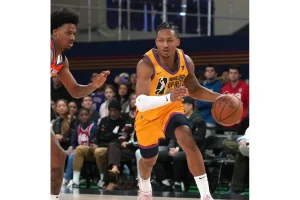
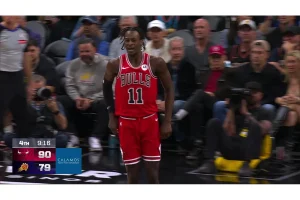
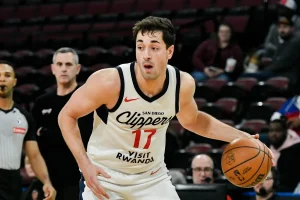
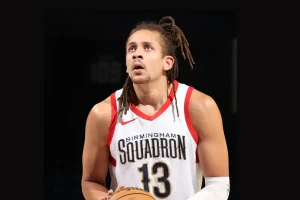
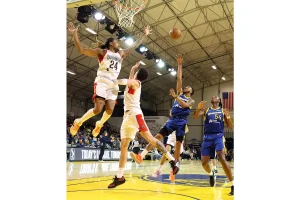
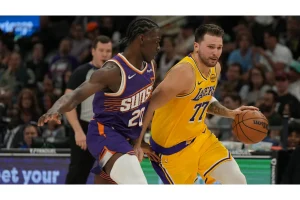
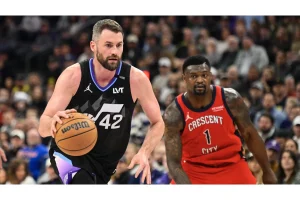
NBA G League stands as the National Basketball Association’s premier minor league system, officially launched in 2001 to cultivate elite talent, refine coaching tactics, train officials, and test innovative rules before they reach NBA courts. With 31 teams—30 directly affiliated with NBA franchises and one independent squad, Mexico City Capitanes—it operates as a high-stakes development pipeline where prospects sharpen skills through intense competition, mirroring NBA intensity in smaller 3,000–10,000-seat arenas nationwide and abroad.
Origins and Evolution
The league debuted as the National Basketball Development League (NBDL) on November 1, 2001, with just eight teams in a regional footprint, filling the void left by defunct predecessors like the Continental Basketball Association (CBA). The NBA fully acquired control in 2005, rebranding it the NBA Development League (D-League) to emphasize its farm-system role; the inaugural champions, Asheville Altitude (now Oklahoma City Blue), triumphed in 2004–05. Rapid growth followed: by 2017, Gatorade sponsorship prompted the NBA G League name, expanding to 31 teams for the 2025–26 season with additions like Rip City Remix (Portland Trail Blazers affiliate) and Mexico City’s trailblazing entry in 2023–24, marking the league’s first non-U.S. team and pushing toward globalization.
Complete Champions List (2002–2025)
All-Time Leaders: Rio Grande Valley Vipers (4 titles), Oklahoma City Blue (3), Asheville Altitude/Austin Toros/Santa Cruz Warriors (2 each).
Current Structure and Playoffs
The 31 teams divide into Eastern (16) and Western (15) Conferences for scheduling but compete in a unified 50-game regular season from late October to mid-March, balancing home/away matchups with affiliates often sharing NBA practice facilities. Average attendance hovers at 3,500+, bolstered by family-friendly pricing (~$20/ticket) and NBA TV+ streaming.
Playoff Format (expanded since 2023):
-
Top 6 per conference (by record) + 2 wild cards (next-best records league-wide) advance, seeded 1–8 per conference.
-
Conference Semifinals: Best-of-3 series (higher seed hosts Games 1/3).
-
Conference Finals: Best-of-3 series.
-
G League Finals: Single elimination game in April (neutral site, e.g., host team’s arena).
Tiebreakers prioritize head-to-head, point differential, division record.
Rosters feature 12 standard contracts (~$40K–$45K salary), plus two-way deals (split NBA/G League time, up to 50 NBA games), Exhibit 10 contracts (training camp invites), and undrafted free agents.
NBA G League follows NBA-aligned rules with adaptations for development, governed by its CBA (2025–29 term) and annual operations manual. Key rules emphasize roster flexibility, player movement, and competitive balance across 31 teams.
Complete NBA G League Teams (2025–26 Season, 31 Total)
All 30 NBA affiliates plus 1 independent. Listed by conference/pod where applicable.
Eastern Conference
Central Division (East)
Western Conference
Matches use NBA rules with tweaks:
-
4 quarters × 12 minutes (vs NBA 12-min).
-
14-second shot clock reset after offensive rebound (NBA-tested here).
-
FIBA ball size optional in some games.
-
No replay review except coach’s challenge (2/team, NBA-tested 2019).
-
Overtime: 5 minutes, unlimited until winner.
Uniforms, fouls, timeouts mirror NBA; ejections trigger fines/suspensions.
Roster Rules (2026)
Active Roster: 12–15 players/game day.
Training Camp: Up to 20.
Composition:
-
Standard Contracts: Up to 12 (~$45K/season 2025–26, +3%/yr).
-
Affiliate Players: Up to 5 (NBA teams designate post-training camp cuts).
-
Two-Way Players: Up to 3/team (NBA/G League split; ineligible for playoffs).
-
Exhibit 10: Camp invites (convertible to standard).
-
Draft Rights: NBA G League Draft (2 rounds, June) holds rights 1–2 years.
Returning Rights: 1 year (2026+) for veterans.
Buyouts: $30K (2026+ for 5+ yr pros).
Injured List: Salary continuation; Enhanced Minimum ($5K if no NBA pay).
Salary and Contracts (2025–26 CBA)
Standard Scale:
-
Base: $45,000 (full season, 5–6 months).
-
Enhanced Min Payment: $5K bonus if full roster/no NBA comp (+3%/yr).
-
Per Diem: +15% ($110/day), +3%/yr.
Two-Way (NBA teams): -
Salary: 50% rookie min (~$318K prorated).
-
Limit: 50 NBA regular-season games; 0–4 NBA service yrs eligible.
-
2-yr max; no cap hit.
Bonuses: Call-up ($5K–$50K), All-Star, championship shares.
Benefits: Full health insurance (veterans), mental health access, injury protections.
Regular Season Rules
-
36 games (Dec–Mar 28 post-Tip-Off).
-
Conferences: East (16), West (15) for scheduling/standings.
-
Tiebreakers:
-
Head-to-head winning %.
-
Division record.
-
Conference record.
-
Point differential.
-
Random draw.
Tip-Off Tournament: Nov–Dec regional pods; top 12 to Winter Showcase (Orlando, Dec 19–22).
-
Playoff Rules (2026 Expanded)
-
16 teams: Top 8/conference (win %).
-
Conference Quarterfinals: Single-elim (higher seed hosts).
-
Semifinals/Finals: Best-of-3 (higher hosts 1/3).
-
G League Finals: Single game, Apr ~13 (neutral).
Seeding: Conference records; wild cards possible.
Eligibility: No two-way players; standard contracts only.
Player Movement and Transactions
-
Waivers: 48-hr claim period.
-
Trades: Anytime (roster players).
-
Assignments: NBA to G League (no limit).
-
10-Day Contracts: NBA recall (3 max/team/season).
-
Discipline: Fines ($2K–$50K), suspensions (1–30 games).
International: Mexico City follows same; visa rules apply.
Additional Regulations
-
Draft: June 30, 2 rounds (40 picks); undrafted free agency.
-
Suspensions: Drugs (10–100 games), betting bans.
-
Health/Safety: Concussion protocols, load management CBA-mandated.
These rules (CBA through 2028–29) promote fluidity, with 2026 focusing on affiliate expansions and salary hikes for retention.
Modern Innovations and Player Pathways
Post-2017 innovations drive relevance:
-
Two-Way Contracts (since 2017): Up to three per NBA team for shuttling talent (e.g., Luka Garza, Bones Hyland).
-
NBA G League Ignite (2020–24): Draftless team for high school/AAU prospects like Jalen Green, Jonathan Kuminga, Scoot Henderson; disbanded for direct-to-NBA path.
-
Showcase Cup: Midseason tournament (December–February) at MGM Grand Garden Arena, Las Vegas, crowning an interim champ.
-
Next Up Games: Highlight top prospects weekly.
-
Rule Testing Lab: Trials like extended 3PT line (2018), coach’s challenge (2019), play clock tweaks—many adopted NBA-wide.
Over 500 players called up since 2017; ~50% of NBA rookies (e.g., Mac McClung, Immanuel Quickley) hail from G League, bridging college, overseas, and G League Ignite paths amid name/image/likeness (NIL) shifts.
Why NBA G League Matters
Beyond talent incubation—producing stars like Pascal Siakam (Raptors 905), Fred VanVleet (Raptors 905), and 2021 No. 1 pick Cade Cunningham (Ignite)—it fosters parity through analytics integration, video review, and sports science mirroring NBA standards. Affordable entertainment draws communities, while Mexico City’s 2023 debut eyes Latin American expansion. Financially stable via NBA subsidies (~$8M/team), it evolves as the proving ground where overlooked gems become legends, ensuring the NBA’s talent pipeline thrives in an era of global competition.