Santa Cruz Warriors Overview
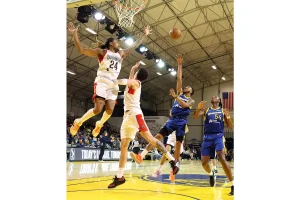
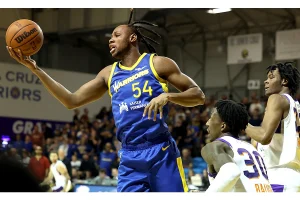
The Santa Cruz Warriors are a professional basketball team based in Santa Cruz, California, competing in the NBA G League’s Western Conference. The team serves as the official affiliate of the Golden State Warriors and plays its home games at the Kaiser Permanente Arena. Founded in 1995, the franchise has a storied history spanning multiple leagues, having won championships in the International Basketball Association, Continental Basketball Association, and the NBA Development/G League. The Santa Cruz Warriors are uniquely recognized as the only NBA G League team to reach the championship finals in three consecutive seasons, establishing a legacy of sustained competitive excellence in minor league basketball.
Founding and Organizational Origins
The franchise began its journey in 1995 under the name Dakota Wizards, competing in the International Basketball Association. Based in Bismarck, North Dakota, the organization built its foundation in the regional IBA circuit with the goal of providing high-level professional basketball in the Upper Midwest. Dave Joerger, who would become a significant figure in the team’s history, took the helm as head coach during the team’s inaugural IBA seasons.
The Wizards quickly established themselves as contenders in the IBA, capturing back-to-back division championships in 2000 and 2001. In their final season in the IBA, the team achieved its first league championship under Joerger’s leadership. Following the 2000-01 season, the IBA merged with several teams from the Continental Basketball Association, propelling the Wizards into a higher level of competition.
Growth Into NBA G League Competition
After establishing dominance in the IBA, the Wizards transitioned to the CBA in 2001. Joerger continued his tenure as head coach and guided the team to immediate success, winning the CBA championship in just their first year in the league. The Wizards defeated the Rockford Lightning in the title series, marking the beginning of a championship tradition that would define the franchise.
The organization continued its winning ways in the CBA, capturing another championship in 2004 over the Idaho Stampede. Joerger accumulated three titles as the Wizards’ head coach during this era. Following his departure after the 2003-04 season, the team made the semifinals in 2004-05 but missed the playoffs the following season.
Prior to the 2006-07 season, the Wizards joined the NBA Development League as one of its founding members. Joerger returned to coach the team in this new chapter, and the Wizards claimed the D-League championship in their first season in the league. Forward Darius Rice delivered a record-setting performance in the championship game, scoring 52 points including 11 three-pointers, leading the Wizards to a 129-121 overtime victory over the Colorado 14ers.
Santa Cruz Warriors Competitive Journey
The franchise’s competitive trajectory spans nearly three decades across multiple developmental basketball leagues, evolving from a regional IBA operation to a premier NBA G League affiliate. The team has consistently demonstrated the ability to build winning programs, reaching postseason play in the majority of its seasons while developing players who have advanced to the NBA.
Early Seasons and Development (1995–2006)
The Dakota Wizards established a winning culture from the beginning, compiling an impressive record in their first decade of operation. Under Joerger’s guidance, the organization demonstrated a commitment to player development and competitive excellence that would become organizational trademarks. The early IBA championships showcased the team’s ability to perform under pressure in high-stakes situations.
The transition to the CBA presented new challenges, but the Wizards adapted quickly, winning two championships in their five seasons in the league. These early successes built a foundation of organizational stability and a winning mentality that would carry through future league transitions.
Breakthrough in the D-League (2006–2012)
Joining the NBA Development League in 2006 marked a significant milestone for the franchise. The D-League provided a direct pathway to NBA affiliation and increased visibility in the basketball community. The Wizards’ championship victory in their inaugural D-League season validated the organization’s ability to compete at the highest level of minor league basketball.
From 2007-08 through 2009-10, the Wizards made the playoffs every season but could not return to the Finals. This period of consistent postseason appearances demonstrated organizational stability despite falling short of championship glory. The 2010-11 season saw the Wizards miss postseason action for the first time since 2006, creating motivation for ownership change.
On June 28, 2011, the Golden State Warriors, led by Co-Executive Chairmen Joe Lacob and Peter Guber, purchased the Wizards franchise from Bismarck Professional Basketball LLC. The Warriors became the fourth NBA team to own and operate their own NBA D-League affiliate. This acquisition marked the beginning of the franchise’s transition to Northern California and a new era of resources and NBA connections.
Santa Cruz Warriors Era (2012–Present)
On October 10, 2012, the Golden State Warriors announced the relocation of the Dakota Wizards to Santa Cruz beginning with the 2012-13 season. The team was subsequently renamed the Santa Cruz Warriors. In their inaugural draft, the Warriors selected Travis Leslie with their first pick, and Leslie became a star for the team during that season. On December 23, 2012, the Warriors played their first home game at the Kaiser Permanente Arena after beginning their campaign with seven straight road games.
The Warriors reached the D-League Finals in their first Santa Cruz season but were defeated 2-0 by the Rio Grande Valley Vipers. Santa Cruz embraced the team immediately, placing first in the D-League for overall revenue. The team sold 1.2 million dollars in tickets and had the highest average ticket revenue per game in the 16-team league. The fan support demonstrated the community’s appetite for professional basketball.
In 2013-14, the Warriors again reached the Finals despite finishing with only the sixth best record in the G-League standings. They lost to the Fort Wayne Mad Ants in the best-of-three Finals series. Highlights included the Santa Cruz Warriors’ G-League Splash Brothers, Seth Curry and Mychel Thompson, who emulated their NBA siblings Stephen Curry and Klay Thompson.
Championship Season and Modern Program (2015–Present)
The 2014-15 season proved historic for the franchise. The Warriors finished with a 35-15 record, the best in the Western Conference. Guard Aaron Craft was named the NBA D League Defensive Player of the Year, leading the league with 2.5 steals per game. The Warriors made it through to the Finals for the third consecutive year and swept the Fort Wayne Mad Ants to claim their first G-League championship since 2007. Finals MVP Elliot Williams led the way with a game-high 23 points in Game 2.
Following their 2015 championship, the Warriors struggled in 2015-16 with a 19-31 record but returned strong in 2016-17 with a 31-9 record. The Warriors missed the postseason in 2017-18 but led the league with an efficient 50.1 percent team field goal percentage. In 2018-19, the Warriors finished first in the Pacific division with a 34-16 record and reached the conference finals before falling to the eventual champion Rio Grande Valley Vipers.
The COVID-19 pandemic canceled the 2019-20 season, and the 2020-21 schedule was reduced with games played in the NBA G League bubble at Walt Disney World. Santa Cruz finished second in the league with an 11-4 record and reached the conference semifinals. The Warriors returned to traditional scheduling in 2021-22, finishing 15-17 and securing a postseason berth with an overtime victory over the Austin Spurs.
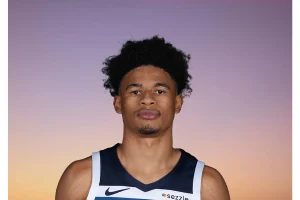
In 2022-23, the Warriors finished 18-14 and missed the postseason. Rookie guard Lester Quinones was named the NBA G League Most Improved Player and earned a spot on the All-Rookie Team, averaging 21.8 points, 7.0 rebounds, and 4.8 assists. In the 2023 NBA G League Winter Showcase, the Warriors scored a franchise-high 153 points versus the G League Ignite.
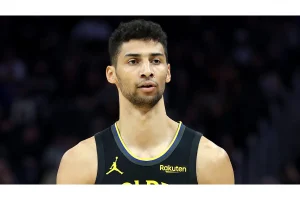
The Warriors returned to the postseason in 2023-24, finishing 20-14 and advancing to the conference semifinals. Rookie guard Kendric Davis was named to the All-Rookie Team, averaging 18.7 points, 4.6 rebounds, and 8.8 assists.
Philosophy and Competitive Strengths
The Santa Cruz Warriors maintain a philosophy centered on player development, offensive efficiency, and team-first basketball. The organization benefits from its Golden State Warriors affiliation, implementing similar ball-movement and shooting-focused offensive systems. Defensive intensity, particularly in forcing turnovers and transition opportunities, has been a consistent priority across the franchise’s history.
Key Milestones and Major Moments
The franchise’s championship history spans three different leagues, a unique achievement in professional basketball. The three consecutive Finals appearances from 2013-15 cemented the organization’s status as a premier destination for developing players. The 2015 championship sweep over Fort Wayne represented the pinnacle of the team’s accomplishments. Legacy players including Seth Curry, Aaron Craft, and Elliot Williams have used their Santa Cruz experiences as springboards in their professional careers.
Santa Cruz Warriors Achievements and Results
The Santa Cruz Warriors organization has compiled an impressive championship record across multiple leagues, demonstrating consistent competitive excellence throughout its history. The franchise’s trophy case reflects success at the IBA, CBA, and D-League/G-League levels, with a total of five league championships and numerous conference and division titles.
NBA G League Achievements
The Warriors have won two NBA G League championships, first capturing the title in 2007 as the Dakota Wizards and again in 2015 as the Santa Cruz Warriors. The 2015 championship came via a Finals sweep of the Fort Wayne Mad Ants, with Elliot Williams earning Finals MVP honors. The organization reached the Finals in three consecutive seasons from 2013-15, a feat unmatched by any other G League team.
Conference Achievements
Conference championship success includes three CBA titles in 2002, 2003, and 2005, plus one D-League/G-League Conference championship in 2015. The Warriors have been consistent contenders in the Western Conference, reaching postseason play in the majority of their seasons in Santa Cruz.
Divisional Achievements
The franchise has captured four D-League/G-League division titles in 2007, 2008, 2015, and 2019. Combined with two IBA division championships in 2000 and 2001, the organization has demonstrated the ability to dominate its competition at the conference level throughout its history.
League Championships
The Warriors’ championship record spans three leagues: one IBA title in 2001, two CBA championships in 2002 and 2004, and two D-League/G-League championships in 2007 and 2015. This multi-league success reflects the organization’s sustained commitment to winning at the highest levels of minor league basketball.