Portland Trail Blazers Overview
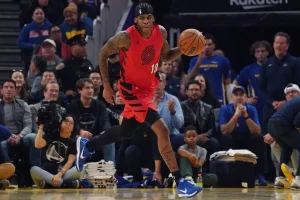
The Portland Trail Blazers, often shortened to the Blazers, are a professional basketball team based in Portland, Oregon, competing in the National Basketball Association (NBA). The franchise plays in the Northwest Division of the Western Conference and has been a member of the league since 1970. The Trail Blazers captured the 1977 NBA Championship and remain the only NBA team based in the Pacific Northwest. The organization is owned by Tom Dundon and is chaired by Jody Allen, while the team is led by president Dewayne Hankins, general manager Joe Cronin, and head coach Chauncey Billups, with Tiago Splitter serving as interim head coach. The Trail Blazers wear black, university red, and white, play at the Moda Center in Portland, and are supported by a passionate fanbase known for the rallying cry “Rip City.”
The Trail Blazers have a loyal and historically strong fanbase, often referred to through the phrase “Blazermania.” The team’s mascot, Blaze the Trail Cat, has represented the organization since 2002. Brightside Windows currently serves as a main sponsor, and the Rip City Remix functions as the team’s NBA G League affiliate. Six Basketball Hall of Fame players have worn the Trail Blazers uniform, including Bill Walton, Clyde Drexler, and Scottie Pippen.
Founding and Organizational Origins
Sports promoter Harry Glickman pursued an NBA franchise for Portland as early as 1955. After the Memorial Coliseum opened in 1960, Glickman continued his efforts, and on February 6, 1970, the NBA board of governors granted him the rights to a Portland franchise. To fund the $3.7 million admission fee, Glickman partnered with real estate magnates Robert Schmertz of New Jersey, Larry Weinberg of Los Angeles, and Herman Sarkowsky of Seattle. The group formally entered the league in 1970 alongside the Cleveland Cavaliers and Buffalo Braves as part of an expansion.
On February 24, 1970, team management held a public contest to select the team’s name, receiving more than 10,000 entries. While “Pioneers” was the most popular suggestion, it was rejected because of its use by Lewis and Clark College. The name “Trail Blazers,” receiving 172 entries, was chosen and revealed on March 13, 1970, during the halftime of a Seattle SuperSonics game. Glickman described the name as reflecting the ruggedness of the Pacific Northwest and the start of a major league era in Oregon.
Growth Into NBA Competition
The Trail Blazers began NBA play in 1970 under coach Rolland Todd. Early contributors included guard Geoff Petrie and forward Sidney Wicks, both of whom won the NBA Rookie of the Year award. The team failed to reach the playoffs in its first six seasons and used three head coaches during that period, including future Hall of Famer Lenny Wilkens. The franchise also held the number one overall pick in 1972, selecting LaRue Martin.
The organization underwent a major transformation in 1974 when it selected center Bill Walton from UCLA with the first overall pick. After the ABA-NBA merger in 1976, the Trail Blazers added Maurice Lucas through the dispersal draft and hired Jack Ramsay as head coach. These moves, combined with Walton’s arrival, led to the team’s first winning record, first playoff appearance, and ultimately the 1977 NBA Championship. Beginning on April 5, 1977, the team started a sellout streak of 814 consecutive home games, which became the longest in American major professional sports at that time.
Portland Trail Blazers Competitive Journey
Across five decades, the Portland Trail Blazers have built a competitive arc that includes three NBA Finals appearances, six division titles, and 37 playoff seasons. After the 1977 championship, the team navigated periods of transition before reaching the NBA Finals again in 1990 and 1992. The Trail Blazers later endured a difficult stretch known as the “Jail Blazers” era before rebuilding around young talent in the late 2000s and around Damian Lillard in the 2010s. Following Lillard’s trade in 2023, the franchise entered a new rebuilding phase under new ownership.
Early Seasons and Development (1970–1974)
The Trail Blazers’ first seasons in the NBA were marked by growing pains as the team built its foundation. With Petrie and Wicks leading the way, the franchise gradually developed its identity while searching for the right leadership combination. The hiring of Hall of Fame coach Lenny Wilkens and the development of front-office executive Stu Inman helped stabilize the organization during this period.
Despite holding the number one overall pick in 1972 and selecting LaRue Martin, the team struggled to find consistent success. The franchise’s early years laid the groundwork for future growth, providing the front office with valuable experience in roster building and organizational structure that would pay dividends in subsequent seasons.
Breakthrough in NBA (1974–1979)
The selection of Bill Walton in 1974 marked the turning point in franchise history. Walton’s arrival, combined with the acquisition of Maurice Lucas and the hiring of Jack Ramsay, transformed the Trail Blazers into championship contenders. In 1976-77, the team posted a 49-33 record, made its first playoff appearance, and won the NBA Championship by defeating the Philadelphia 76ers. Walton was named NBA Finals Most Valuable Player, and the championship sparked a phenomenon known as “Blazermania” in Portland.
Following the title, the team opened the 1977-78 season with a 50-10 record, leading many to predict a dynasty. However, Walton suffered a foot injury that derailed the season, and the team finished 58-24 before losing in the conference semifinals. After ongoing disputes over his medical treatment, Walton demanded a trade and ultimately left the team as a free agent following the 1978-79 season. The departure of Lucas in 1980 signaled the end of the championship era and the beginning of a new transitional period.
Modern Program and Current Direction (2012–Present)
The Trail Blazers’ modern era began with the selection of Damian Lillard in 2012. Lillard immediately became the franchise cornerstone, winning NBA Rookie of the Year unanimously in 2013. Alongside LaMarcus Aldridge, the team returned to the playoffs and posted 54-28 records in 2013-14 and 2018-19, reaching the Western Conference Finals in 2019. Lillard became known for his deep three-pointers, most notably a series-winning shot against the Oklahoma City Thunder in 2019.
Following Lillard’s trade to the Milwaukee Bucks in 2023, the team embarked on a rebuild, selecting Scoot Henderson third overall in the 2023 NBA Draft and Donovan Clingan seventh overall in 2024. On August 23, 2025, Tom Dundon purchased the team for approximately $4.2 billion, with the NBA Board of Governors approving the sale on March 30, 2026. Damian Lillard returned to Portland after being waived by Milwaukee in July 2025, though he was expected to miss the season recovering from a torn Achilles tendon. In October 2025, head coach Chauncey Billups was placed on administrative leave following an FBI announcement related to illegal gambling cases, and Tiago Splitter was named interim head coach.
Philosophy and Competitive Strengths
The Trail Blazers have historically been built around strong guard play and versatile big men, with an emphasis on team basketball and fan connection. The franchise has prioritized drafting and developing talent, often selecting players who fit its culture and long-term vision. The “Rip City” identity reflects a blue-collar, resilient mentality that has come to define the team’s approach.
Key Milestones and Major Moments
Key milestones include the 1977 NBA Championship, the 814-game sellout streak, and the selection of Damian Lillard in 2012. The 2019 playoff series win over the Oklahoma City Thunder, highlighted by Lillard’s series-ending three-pointer, stands as one of the most memorable moments in franchise history. The team’s move to the Moda Center in 1995 marked the beginning of a new era, and the recent ownership transition to Tom Dundon signals another significant chapter.
Portland Trail Blazers Achievements and Results
The Portland Trail Blazers have accumulated a rich history of competitive achievements, highlighted by one NBA Championship, three NBA Finals appearances, and six division titles. The franchise has qualified for the playoffs in 37 seasons and has retired 12 numbers in honor of its greatest players. The organization’s commitment to excellence has been recognized through numerous individual awards, including four NBA Rookie of the Year winners and three NBA Coach of the Year selections.
NBA Achievements
The Trail Blazers have won one NBA Championship, capturing the title in 1977 by defeating the Philadelphia 76ers in the Finals. The franchise has appeared in the NBA Finals three times, with additional appearances in 1990 and 1992, losing to the Detroit Pistons and Chicago Bulls, respectively. The 1977 championship remains the pinnacle of the franchise’s accomplishments and the foundation of “Blazermania.”
Conference Achievements
The Trail Blazers have won three Western Conference Championships, advancing to the NBA Finals in 1977, 1990, and 1992. The 1990 and 1992 Finals runs were led by Clyde Drexler, Terry Porter, and Buck Williams, with the team posting a league-best 63-19 record in 1990-91. Despite reaching the conference’s pinnacle, the franchise was unable to secure a second NBA title during this era.
Divisional Achievements
The Trail Blazers have won six Northwest Division titles, claiming the division crown in 1978, 1991, 1992, 1999, 2015, and 2018. The 1991 and 1992 titles coincided with the Drexler-led era, while the 2015 division championship marked the team’s return to prominence behind LaMarcus Aldridge and Damian Lillard. These divisional successes reflect periods of sustained competitive excellence throughout the franchise’s history.
Series Achievements
The Trail Blazers have qualified for the NBA playoffs in 37 of their 55 seasons, including a streak of 21 consecutive appearances from 1983 to 2003, tied for the second-longest streak in NBA history. The franchise’s 37 playoff appearances rank fourth in the NBA since 1970, behind the Los Angeles Lakers, Boston Celtics, and San Antonio Spurs. This consistent postseason presence underscores the organization’s long-term commitment to competitive basketball.