Minnesota Timberwolves Overview
The Minnesota Timberwolves are a professional basketball team based in Minneapolis, Minnesota. The Timberwolves compete in the National Basketball Association (NBA) as a member of the Western Conference’s Northwest Division. Founded in 1989 as an expansion franchise, the team plays its home games at the Target Center in Minneapolis. The franchise is currently owned by Alex Rodriguez and Marc Lore, with Matthew Caldwell serving as chief executive officer, Tim Connelly as president of basketball operations, Matt Lloyd as general manager, and Chris Finch as head coach. The team is affiliated with the Iowa Wolves of the NBA G League and plays with the colors midnight blue, lake blue, aurora green, moonlight grey, and frost white. The official mascot, Crunch the Wolf, reflects the state’s deep connection to its wilderness heritage.
Throughout their history, the Timberwolves have captured one division title and developed some of the most recognizable players in NBA history, including Kevin Garnett and Kevin Love. Despite long stretches of rebuilding, the franchise experienced a resurgence in the 2020s with the arrival of Anthony Edwards, the hiring of head coach Chris Finch, and the trade for Rudy Gobert. This new core has produced consecutive Western Conference Finals appearances and reignited the team’s competitive identity within the league.
Founding and Organizational Origins
The Minnesota Timberwolves were officially named on January 23, 1987, after the NBA granted one of its four 1989 expansion franchises to original owners Harvey Ratner and Marv Wolfenson. The team was created to bring professional basketball back to the Twin Cities for the first time since the Minneapolis Lakers relocated to Los Angeles in 1960. The franchise chose the name “Timberwolves” following a statewide vote involving Minnesota’s 842 city councils, with the name prevailing by nearly a two-to-one margin over “Polars.” Minnesota is home to the largest population of timberwolves in the contiguous 48 states, making the name a natural fit for the region’s identity.
The Timberwolves built their initial roster through the 1989 NBA expansion draft, selecting Rick Mahorn of the Detroit Pistons with their first pick. Mahorn refused to report and was traded to the Philadelphia 76ers before the season began. The team debuted on November 3, 1989, losing to the Seattle SuperSonics on the road. Despite a 22–60 record in their inaugural season, the franchise set an NBA attendance record by drawing more than one million fans to their home games at the Hubert H. Humphrey Metrodome.
Growth Into NBA Competition
Early struggles defined the Timberwolves’ first seasons as they adjusted to NBA competition. After moving into the Target Center in 1990, the team cycled through several head coaches and front-office leaders. The franchise nearly relocated to New Orleans in 1994 before local investor Edward Villaume raised $88.5 million in a single week to keep the team in Minnesota. Glen Taylor was named the lead investor in the ownership group, and Kevin McHale was brought in as general manager.
The Timberwolves’ first true leap into competitiveness came with the selection of Kevin Garnett in the 1995 NBA draft. The high school standout from Mauldin, South Carolina was taken fifth overall and immediately became the franchise’s cornerstone. The arrival of Garnett, paired with the addition of Stephon Marbury through the 1996 draft, transformed the Timberwolves into a playoff team by 1997. This period laid the foundation for the team’s eventual breakthrough as a Western Conference contender.
Minnesota Timberwolves Competitive Journey
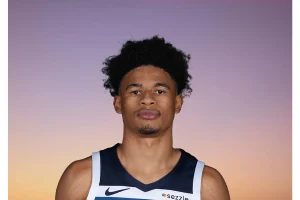
The Timberwolves’ competitive journey reflects one of the NBA’s most dramatic arcs, rising from perennial cellar-dweller to Western Conference finalist within a decade. After years of rebuilding, the team reached its first conference finals in 2004 behind Kevin Garnett’s MVP season. Following a long postseason drought, the franchise rebuilt around Karl-Anthony Towns and Andrew Wiggins before launching a new era with Anthony Edwards, Rudy Gobert, and Jaden McDaniels. Today, the Timberwolves are established as one of the Western Conference’s premier defensive teams.
Early Seasons and Development (1989–1995)
The Timberwolves’ early years were marked by significant on-court struggles but strong fan support. The team opened play at the Hubert H. Humphrey Metrodome before moving into the Target Center in 1990. Early head coaches Bill Musselman and Jimmy Rodgers led the franchise through difficult seasons, including a 15–67 finish in 1991–92 that was the worst record in the NBA. The Timberwolves hosted the 1994 NBA All-Star Game, where Isaiah Rider won the Slam Dunk Contest.
Despite drafting Christian Laettner and Isaiah Rider in the first round of the 1992 draft, the Timberwolves struggled to find consistent winning basketball. The franchise’s perseverance through these years was rewarded when Kevin McHale was hired as general manager, setting the stage for the Kevin Garnett era. The 1994–95 season ended with a 21–61 record, but the foundation for future success had been quietly built.
Breakthrough in the NBA (1995–2004)
The Timberwolves selected Kevin Garnett fifth overall in the 1995 NBA draft, marking the true beginning of the team’s competitive era. With Garnett leading the way, Minnesota made its first playoff appearance in 1997, ending an eight-year postseason drought. After early first-round exits, the team added veteran talent and surrounded Garnett with playmakers like Sam Cassell and Latrell Sprewell.
The 2003–04 season represented the pinnacle of the Garnett era. The Timberwolves finished with a 58–24 record, earning the top seed in the Western Conference. Garnett won his first MVP award after averaging 24.2 points, 13.9 rebounds, and 5.0 assists per game. The team won its first-ever playoff series against the Denver Nuggets before defeating the Sacramento Kings in seven games to reach the Western Conference Finals. There, Minnesota fell to the Los Angeles Lakers in five games, ending one of the most memorable playoff runs in franchise history.
Modern Program and Current Direction (2007–Present)
After trading Kevin Garnett to the Boston Celtics in 2007, the Timberwolves entered a lengthy rebuilding phase. The team cycled through multiple head coaches and accumulated young talent, including Kevin Love, Ricky Rubio, and Andrew Wiggins. Wiggins was named NBA Rookie of the Year in 2015, and Karl-Anthony Towns was selected first overall in the same year’s draft. The franchise also welcomed back Kevin Garnett in 2015, where he finished his career before retiring in 2016.
The Timberwolves’ modern era has been defined by the emergence of Anthony Edwards, drafted first overall in 2020. Following the hiring of head coach Chris Finch in 2021 and the blockbuster acquisition of Rudy Gobert in 2022, Minnesota transformed into one of the NBA’s top defensive teams. The franchise also entered a new ownership era in 2025, when longtime owner Glen Taylor finalized the sale to Alex Rodriguez and Marc Lore after winning an arbitration case earlier in the year. Today, the Timberwolves compete as perennial Western Conference contenders with a young core built around Edwards, Gobert, Jaden McDaniels, and Naz Reid.
Philosophy and Competitive Strengths
The Timberwolves have built their modern identity around elite defense, physicality, and depth. Anchored by Rudy Gobert and supported by versatile defenders like Jaden McDaniels, Minnesota led the NBA in defensive rating during the 2023–24 season. Offensively, the team relies on the explosive scoring of Anthony Edwards, the perimeter shooting of role players, and the rebounding and rim protection of Gobert. This balanced approach has positioned the Timberwolves as a serious threat in the Western Conference.
Key Milestones and Major Moments
The Timberwolves’ most significant milestone remains their 2004 Western Conference Finals appearance, fueled by Kevin Garnett’s MVP campaign. The franchise recorded its first playoff series win in two decades during the 2024 playoffs, sweeping the Phoenix Suns before eliminating the Denver Nuggets in a dramatic Game 7 comeback. That victory sent Minnesota to its second consecutive Western Conference Finals, cementing the team’s resurgence. The franchise has retired one jersey number, Malik Sealy’s No. 2, in honor of his memory following his tragic death in 2000.
Minnesota Timberwolves Achievements and Results
The Minnesota Timberwolves have compiled a diverse list of accomplishments since joining the NBA in 1989, including division championships, playoff runs, and individual awards. While the franchise has yet to capture an NBA Championship, it has earned one division title and reached two Western Conference Finals appearances. The Timberwolves have also produced an NBA MVP, multiple All-Stars, and a Defensive Player of the Year during their history.
NBA Achievements
The Timberwolves have yet to win an NBA Championship but reached the Western Conference Finals on two occasions. Their deepest run came in 2004, when Kevin Garnett’s MVP season carried the team to within four wins of the NBA Finals. Twenty years later, Minnesota returned to the conference finals in 2024 and again in 2025, signaling a return to championship contention. The franchise has produced one MVP (Kevin Garnett, 2004), one Defensive Player of the Year (Rudy Gobert, 2024), one Sixth Man of the Year (Naz Reid, 2024), and one Rookie of the Year (Andrew Wiggins, 2015).
Conference Achievements
The Timberwolves have yet to capture a Western Conference title but have qualified for the conference finals on three occasions. Their first appearance in 2004 remains a defining moment in franchise history, while their back-to-back trips in 2024 and 2025 reflect the team’s emergence as a consistent Western Conference contender. Minnesota has earned multiple top seeds and playoff berths during its modern era under head coach Chris Finch.
Divisional Achievements
The Timberwolves have won one Northwest Division title, capturing the crown in 2003–04 with a 58–24 record. The franchise has regularly competed in the Northwest Division since its realignment into the Western Conference structure. Minnesota has built a strong divisional rivalry with the Denver Nuggets, Oklahoma City Thunder, Portland Trail Blazers, and Utah Jazz.
Series Achievements
The Timberwolves’ most recent playoff success includes a four-game sweep of the Phoenix Suns in the first round of the 2024 NBA Playoffs, marking the franchise’s first series win since 2004. The team followed that victory with a Game 7 comeback win over the Denver Nuggets in the conference semifinals. In 2025, Minnesota defeated the Los Angeles Lakers in five games and the Golden State Warriors in five games to reach its second straight Western Conference Finals.