Pittsburgh Penguins Overview
The Pittsburgh Penguins are a professional ice hockey team based in Pittsburgh, Pennsylvania. Established in 1967 as part of the National Hockey League (NHL) expansion, the Penguins compete in the Metropolitan Division of the Eastern Conference. The franchise has won five Stanley Cup championships, in 1991, 1992, 2009, 2016, and 2017, tying the Edmonton Oilers for the most titles among non-Original Six teams. The Penguins play home games at PPG Paints Arena and are owned by Fenway Sports Group, with franchise legend Mario Lemieux holding a minority stake.
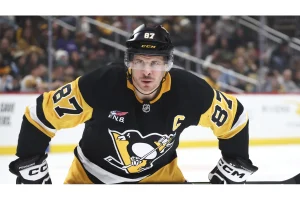
Known for their black, Pittsburgh gold, and white colors, the Penguins have developed a long list of star players, including Mario Lemieux, Jaromir Jagr, Sidney Crosby, and Evgeni Malkin. The team maintains affiliations with the Wilkes-Barre/Scranton Penguins of the American Hockey League (AHL) and the Wheeling Nailers of the ECHL. Under the leadership of president of hockey operations and general manager Kyle Dubas and head coach Dan Muse, the Penguins continue to operate as one of the NHL’s most recognized franchises.
Founding and Organizational Origins
The Penguins were created as part of the NHL’s 1967 expansion, returning top-level professional hockey to Pittsburgh after a long absence. The city’s previous NHL team, the Pittsburgh Pirates, had folded in 1930, and the American Hockey League’s Pittsburgh Hornets had left in 1967. Pennsylvania state senator Jack McGregor led the effort to bring a new franchise to the city, organizing a group of investors that included H. J. Heinz III, Pittsburgh Steelers owner Art Rooney, and Richard Mellon Scaife. The group framed the franchise as part of an urban renewal plan for downtown Pittsburgh.
On February 8, 1966, the NHL formally awarded an expansion franchise to Pittsburgh for the 1967–68 season. The Penguins paid a $2.5 million entry fee along with $750,000 in start-up costs. The Civic Arena was expanded from 10,732 to 12,500 seats to meet NHL requirements. McGregor was named president and chief executive officer, and Jack Riley became the team’s first general manager. A fan contest chose the name “Penguins,” inspired by the Civic Arena’s nickname, the Igloo, while the original logo placed a penguin in front of a triangle representing Pittsburgh’s Golden Triangle.
The Penguins opened their first pre-season camp in Brantford, Ontario, on September 13, 1967, and played their first exhibition game against the Philadelphia Flyers on September 23, 1967. George Sullivan was named the club’s first head coach, and Ab McDonald became the first captain. The team’s first home game took place on October 11, 1967, against the Montreal Canadiens, with NHL president Clarence Campbell dropping the ceremonial first puck.
Growth Into NHL Competition
The Penguins’ early years were difficult, as expansion rules kept most major talent with the established Original Six franchises. The team struggled in its first two seasons, posting the league’s worst record in 1968–69. Progress came with the arrival of young players such as Michel Briere, who led Pittsburgh to its first playoff berth in 1970, where the Penguins defeated the Oakland Seals before losing to the St. Louis Blues. The 1970s saw a mid-decade bankruptcy scare that was resolved when shopping mall magnate Edward J. DeBartolo Sr. purchased the team.
Under general manager Baz Bastien, the franchise tried to build through the draft, but questionable trades slowed progress. The team briefly considered relocation in the mid-1970s before stabilizing in Pittsburgh. In January 1980, the Penguins changed their colors from blue and white to black and gold, honoring Pittsburgh’s other professional teams. That same year, the team drafted Michel Plante and built around players like Randy Carlyle, Paul Gardner, and Mike Bullard, although playoff success remained elusive.
The franchise’s fortunes changed dramatically with the 1984 NHL Entry Draft, when the Penguins selected Mario Lemieux with the first overall pick. Lemieux scored on his first NHL shot and quickly became the face of the franchise. The team later added Paul Coffey, Kevin Stevens, Tom Barrasso, and, in 1990, Jaromir Jagr. With these players in place, the Penguins reached the playoffs consistently and won back-to-back Stanley Cups in 1991 and 1992.
Pittsburgh Penguins Competitive Journey
The Penguins’ competitive journey has unfolded in three distinct eras, beginning with the expansion years of the late 1960s and 1970s, followed by the Lemieux–Jagr era that produced the first two Stanley Cups, and continuing with the Crosby–Malkin era that delivered three more titles. Across more than five decades, the franchise has remained a fixture in the Eastern Conference, balancing periods of rebuilding with extended runs of championship contention.
Early Seasons and Development (1967–1984)
The Penguins’ first season ended with a 27–34–13 record, leaving them out of the playoffs. Improvement came in 1969–70, when the franchise reached the postseason for the first time since the 1928 Pittsburgh Pirates. The early 1970s saw Pittsburgh qualify for the playoffs in 1972 and again in 1975, when the “Century Line” of Syl Apps, Lowell MacDonald, and Jean Pronovost powered the offense. The team nearly reached the semifinals that year, falling to the New York Islanders after losing a series in which they once held a 3–0 lead.
Financial troubles emerged in 1975, when creditors forced the Penguins into bankruptcy. Edward J. DeBartolo Sr. purchased the team and stabilized its operations. The late 1970s brought modest playoff appearances, but questionable trades by general manager Baz Bastien weakened the roster. The 1980 introduction of black and gold uniforms aligned the Penguins with Pittsburgh’s other professional teams and gave the franchise a new visual identity. However, on-ice results lagged, and the team posted the league’s worst record in both 1982–83 and 1983–84.
Breakthrough in the NHL (1984–Present)
The 1984 draft of Mario Lemieux transformed the Penguins into a contender. After missing the playoffs for four more years, Pittsburgh returned to the postseason in 1989 behind Lemieux’s scoring title. The arrival of Jaromir Jagr in 1990 and trades for veterans such as Joe Mullen, Larry Murphy, and Ron Francis built a roster capable of winning. In 1991, the Penguins captured their first Stanley Cup by sweeping the Minnesota North Stars, highlighted by an 8–0 victory in the deciding game. They repeated as champions in 1992 under coach Scotty Bowman.
After winning the Presidents’ Trophy in 1993, the Penguins faced financial collapse, filing for Chapter 11 bankruptcy in 1998. Mario Lemieux returned as both owner and player in 2000, leading the franchise back to stability. The 2005 draft lottery brought Sidney Crosby to Pittsburgh, and the team gradually returned to championship form. In 2009, the Penguins won their third Stanley Cup, defeating the Detroit Red Wings in seven games. Four years later, they captured consecutive titles in 2016 and 2017, becoming the first back-to-back champions of the salary cap era.
The late 2010s and early 2020s saw roster turnover and a focus on maintaining competitiveness around Crosby and Malkin. Fenway Sports Group acquired a controlling interest in 2021, marking a new chapter of ownership. The Penguins reached the playoffs for 16 straight seasons between 2006 and 2022, an accomplishment unmatched in North American professional sports during that span. In 2023, Kyle Dubas was named president of hockey operations, ushering in another phase of team building.
Modern Program and Current Direction (2023–Present)
Since 2023, the Penguins have worked to balance competitive urgency with long-term planning. Kyle Dubas serves as both president of hockey operations and general manager, while Dan Muse became head coach in June 2025 after Mike Sullivan’s departure. The team has invested in veteran talent, including the acquisition of defenseman Erik Karlsson in 2023 and the signing of Sidney Crosby to a two-year extension in 2024. In February 2024, the Penguins retired Jaromir Jagr’s No. 68, honoring one of the franchise’s all-time greats.
Despite the 2024 and 2025 seasons ending without playoff appearances, the Penguins remain focused on building around their core veterans. The franchise continues to benefit from strong fan support and a stable ownership structure under Fenway Sports Group. With a new practice facility at the UPMC Lemieux Sports Complex and an established presence at PPG Paints Arena, the Penguins have positioned themselves for sustained competitiveness as they move into the next phase of team development.
Philosophy and Competitive Strengths
The Penguins have historically emphasized skilled offensive hockey, built around franchise-changing centers such as Mario Lemieux, Sidney Crosby, and Evgeni Malkin. Their identity is rooted in creativity, puck possession, and depth at center ice, paired with a willingness to adjust defensive and goaltending approaches as needed. This blend of star power and tactical flexibility has allowed the franchise to remain competitive across multiple eras.
Key Milestones and Major Moments
Among the Penguins’ most celebrated milestones are the back-to-back Stanley Cup wins of 1991 and 1992, the franchise-saving ownership return of Mario Lemieux in 1999, the 2005 draft of Sidney Crosby, and the consecutive championships of 2016 and 2017. The retirement of Jaromir Jagr’s No. 68 in 2024 and the 1,000th NHL games played by Crosby, Malkin, and Kris Letang further underscore the team’s modern legacy.
Pittsburgh Penguins Achievements and Results
The Penguins have built one of the most accomplished résumés in the NHL, highlighted by five Stanley Cup championships, six conference titles, and nine division titles. The franchise has also earned one Presidents’ Trophy and produced numerous individual award winners, including Hart Memorial Trophy recipients Mario Lemieux, Jaromir Jagr, Sidney Crosby, and Evgeni Malkin.
NHL Achievements
The Penguins have qualified for six Stanley Cup Finals, winning the championship five times. Their first two titles came in 1991 and 1992 under coaches Bob Johnson and Scotty Bowman. After a long stretch without a championship, the team returned to the top in 2009 with a seven-game victory over the Detroit Red Wings, earning Evgeni Malkin the Conn Smythe Trophy. Pittsburgh then won back-to-back titles in 2016 and 2017, with Sidney Crosby earning the Conn Smythe Trophy in 2016.
Beyond the Stanley Cup, the Penguins won the Presidents’ Trophy in 1992–93 after posting a franchise-best 56–21–7 record. Several of the franchise’s players have claimed major NHL awards, including multiple Art Ross Trophies for Lemieux, Malkin, and Crosby, as well as Calder Memorial Trophies for Malkin and Jordan Staal. The Penguins have also retired six jersey numbers, honoring the contributions of franchise legends.
Conference Achievements
The Penguins have won six Eastern Conference championships, advancing to the Stanley Cup Final in 1991, 1992, 2008, 2009, 2016, and 2017. Their conference runs during the Crosby–Malkin era featured dominant series victories over teams like the Philadelphia Flyers, Carolina Hurricanes, and Tampa Bay Lightning. These conference titles have defined the franchise’s modern identity as a perennial contender in the Eastern Conference.
Divisional Achievements
The Penguins have claimed nine division titles, capturing the Atlantic Division in 1990–91 and later the Metropolitan Division following the 2012–13 NHL realignment. Their divisional success includes titles in 1992–93, 1993–94, 1995–96, 1997–98, 2007–08, 2012–13, 2013–14, and 2020–21. These division crowns have frequently translated into strong playoff seeding and home-ice advantage during postseason play.
Series Achievements
The Penguins have built several notable rivalries throughout their history, particularly with the Philadelphia Flyers and Washington Capitals. The Penguins and Flyers have met seven times in the playoffs, with the Flyers leading the all-time regular season series 153–98–30. Against the Capitals, Pittsburgh holds a 9–2 advantage in playoff series, including multiple series-clinching Game 7 victories. These rivalries have shaped many of the franchise’s most memorable postseason moments.