Pittsburgh Steelers Overview
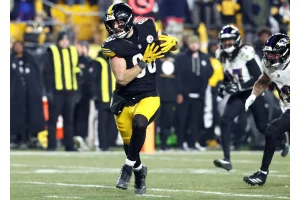
The Pittsburgh Steelers are a professional American football team based in Pittsburgh, Pennsylvania. Founded on July 8, 1933, the franchise is the seventh-oldest in the National Football League and the oldest in the American Football Conference. The Steelers compete in the AFC North division and play their home games at Acrisure Stadium. Their official team colors are black and gold, and their mascot is Steely McBeam. Ownership of the franchise has remained with the Rooney family since its founding in 1933.
The Steelers are tied with the New England Patriots for the most Super Bowl championships in NFL history, with six titles earned in 1974, 1975, 1978, 1979, 2005, and 2008. They are recognized for a dominant defense, a passionate national fan base known as Steeler Nation, and a long record of organizational stability. Over the decades, the team has cultivated an identity built on toughness, consistency, and championship-level competition.
Founding and Organizational Origins
The Pittsburgh Steelers trace their origins to Art Rooney, a Pittsburgh native and accomplished multi-sport athlete. As a teenager, Rooney founded the semi-professional Hope-Harvey Football Club, which is widely considered the precursor to the Steelers. In May 1933, he was awarded an NFL franchise for a $2,500 fee, establishing the Pittsburgh Professional Football Club. The team began play that same year as the Pittsburgh Pirates at Forbes Field, taking its original name from the city’s baseball team of the same era.
The franchise took the field for the first time on September 20, 1933, losing 23–2 to the New York Giants. Throughout the 1930s, the team struggled to post winning records and never finished higher than second in its division. In 1938, the club signed Byron White, a future U.S. Supreme Court Justice, to what was then the largest contract in NFL history, though he played only one season in Pittsburgh. Prior to the 1940 season, the organization renamed itself the Pittsburgh Steelers, a name that has remained for more than 80 years.
During World War II, the Steelers twice merged with other NFL franchises to field competitive rosters. In 1943, the team combined with the Philadelphia Eagles to form the Phil-Pitt Eagles, nicknamed the Steagles, posting a 5–4–1 record. In 1944, the Steelers merged with the Chicago Cardinals as Card-Pitt, finishing 0–10, the only winless season in franchise history. Following the war, the Steelers returned as an independent franchise and have remained in continuous operation since 1945.
Growth Into NFL Competition
After decades of struggle in the pre-merger NFL, the Steelers began to rise following the AFL–NFL merger in 1970. That same year, the team moved into Three Rivers Stadium and joined the newly formed American Football Conference, along with the Cleveland Browns and the Baltimore Colts. The Steelers also received a $3 million relocation fee, providing crucial financial resources that allowed the organization to invest in talent and infrastructure.
The arrival of head coach Chuck Noll in 1969 launched a new era of competitive success. Noll’s skill in the NFL Draft brought in Hall of Famers such as Mean Joe Greene, Terry Bradshaw, Mel Blount, Jack Ham, Franco Harris, Lynn Swann, Jack Lambert, John Stallworth, and Mike Webster. In 1974, the Steelers selected four future Hall of Famers in a single draft, a feat unmatched in league history. These foundational players formed the core of the team’s championship identity throughout the decade.
Off the field, the organization strengthened its front office and football operations, creating a stable structure that supported sustained success. Training and medical resources expanded, and the franchise cultivated the strong culture of accountability that has defined its operations. The team gradually built one of the most respected organizations in professional football, combining strong leadership, scouting expertise, and a deep commitment to defensive football.
Pittsburgh Steelers Competitive Journey
The Pittsburgh Steelers’ competitive journey is one of the most storied in professional football. From a struggling pre-merger franchise, the team rose to become a model of sustained excellence, capturing six Super Bowl titles, eight AFC championships, and 25 division titles. Across decades, the Steelers have maintained one of the most consistent competitive profiles in the NFL, qualifying for the playoffs 36 times and rarely enduring extended losing periods.
Early Seasons and Development (1933–1968)
The early decades of the Pittsburgh Steelers were defined by struggle and perseverance. From 1933 through 1968, the team rarely contended for championships and became known as the oldest NFL franchise never to have won a league title. The Steelers qualified for the postseason only once during this period, in 1947, when they lost a tie-breaking playoff game to the Philadelphia Eagles at Forbes Field. The team also played in a 1962 Playoff Bowl that was not considered an official playoff contest.
Despite limited on-field success, the organization built a strong foundation. The Rooney family’s steady ownership provided long-term stability, and the team cultivated a loyal regional following. Player personnel decisions and coaching hires during the 1960s gradually positioned the franchise for a turning point. The hiring of Chuck Noll in 1969 marked the beginning of a transformation that would reshape the team’s identity and competitive trajectory.
Breakthrough in NFL (1969–1991)
The Chuck Noll era defined the modern Pittsburgh Steelers. Following his hiring in 1969, Noll assembled a roster of future Hall of Famers and developed one of the most dominant teams in league history. A pivotal moment came in the 1972 playoffs with the Immaculate Reception, when Franco Harris caught a deflected pass for a game-winning touchdown against the Oakland Raiders, giving the Steelers their first postseason victory and signaling the arrival of a new contender.
At the heart of Pittsburgh’s success was the Steel Curtain defense, featuring Mean Joe Greene, L.C. Greenwood, Ernie Holmes, and Dwight White on the defensive line, supported by linebackers Jack Lambert, Jack Ham, and Andy Russell. Offensively, quarterback Terry Bradshaw developed into a premier deep passer, connecting with receivers Lynn Swann and John Stallworth, while Franco Harris anchored a powerful running game behind center Mike Webster. The result was a balanced and physically dominant team.
The Steelers became the only franchise to win four Super Bowls in a six-year span, capturing championships following the 1974, 1975, 1978, and 1979 seasons with victories in Super Bowls IX, X, XIII, and XIV. After the championship run, retirements and injuries led to a transitional period in the 1980s. Noll retired following the 1991 season, finishing with a 209–156–1 record and a lasting legacy as one of the greatest coaches in NFL history.
Breakthrough in AFC (1992–2006)
The Bill Cowher era brought a return to sustained competitiveness. Hired in 1992 from the Kansas City Chiefs, Cowher led the Steelers to the playoffs in each of his first six seasons. During this period, the team’s Blitzburgh defense, featuring stars such as Rod Woodson and Greg Lloyd, propelled Pittsburgh to the 1995 AFC Championship and a Super Bowl XXX appearance, where the Steelers fell to the Dallas Cowboys.
Cowher’s tenure continued to deliver playoff success, anchored by the arrival of running back Jerome Bettis and the 2004 draft selection of quarterback Ben Roethlisberger. These additions culminated in a Super Bowl XL victory over the Seattle Seahawks following the 2005 season, giving the franchise its record-tying fifth title. Cowher stepped down following the 2006 season, finishing with a regular-season record of 149–90–1 and ten playoff appearances in 15 years.
Modern Program and Current Direction (2007–Present)
In January 2007, the Steelers hired Mike Tomlin as head coach, making him the first African American to lead the team. Tomlin quickly delivered results, winning Super Bowl XLIII in 2008 with a 27–23 victory over the Arizona Cardinals and becoming the youngest head coach to win a Super Bowl at age 36. Throughout his tenure, the team remained a consistent contender, featuring star defenders such as Troy Polamalu, James Harrison, and later T.J. Watt and Cameron Heyward.
The mid-2010s saw the rise of the Killer B’s, the offensive trio of Ben Roethlisberger, Antonio Brown, and Le’Veon Bell, who drove multiple playoff runs. Following Roethlisberger’s retirement in 2021, the Steelers transitioned to quarterbacks Kenny Pickett, Justin Fields, Russell Wilson, and most recently Aaron Rodgers. Following the 2025 season, Tomlin stepped down after 19 seasons, leaving with a 193–114–2 regular-season record and never posting a losing campaign. In January 2026, the franchise hired Mike McCarthy as the fourth head coach since 1969, reuniting him with Aaron Rodgers and continuing the team’s tradition of organizational stability.
Philosophy and Competitive Strengths
The Pittsburgh Steelers’ identity is rooted in defensive excellence, physicality, and long-term stability. Throughout their history, the team has prioritized a strong defensive front, physical linebacker play, and disciplined execution. Drafting, developing, and retaining core talent has been a hallmark, allowing the franchise to maintain consistent championship contention. The Rooney family’s long-term ownership and continuity in head coaching have reinforced a culture of accountability and sustained competitiveness.
Key Milestones and Major Moments
Among the Steelers’ defining milestones are the 1972 Immaculate Reception, four Super Bowl victories in the 1970s, a fifth title in Super Bowl XL, and a sixth championship in Super Bowl XLIII. The franchise holds NFL records for most conference championship game appearances and most hosted conference championships. The 1974 NFL Draft, in which four future Hall of Famers were selected, remains unmatched in league history. The team’s continuity under the Rooney family and the introduction of the Terrible Towel have become cultural touchstones of the franchise.
Pittsburgh Steelers Achievements and Results
The Pittsburgh Steelers have built one of the most accomplished résumés in the NFL. With six Super Bowl championships, eight AFC titles, and 25 division championships, the franchise ranks among the most successful in league history. Their achievements are supported by a long record of playoff appearances, Hall of Fame players, and a tradition of competitive consistency.
AFC Achievements
The Steelers have won eight AFC championships, in 1972, 1974, 1975, 1978, 1979, 1995, 2005, and 2008. Their first conference title came under Chuck Noll in 1972, sparked by the Immaculate Reception. Pittsburgh has appeared in 16 conference championship games, tying an NFL record. The franchise’s success across multiple decades demonstrates sustained excellence at the conference level.
Conference Achievements
Within the American Football Conference, the Steelers have been a dominant force since the 1970 AFL–NFL merger. The team has consistently competed for conference titles, reaching the AFC Championship Game in multiple eras. Notable postseason runs include victories over the Indianapolis Colts in 1995, the New York Jets in 2010, and the Baltimore Ravens in 2008, each contributing to a legacy of conference-level success.
Divisional Achievements
The Steelers have captured 25 division championships across the AFC Central and AFC North divisions. AFC Central titles came in 1972, 1974, 1975, 1976, 1977, 1978, 1979, 1983, 1984, 1992, 1994, 1995, 1996, 1997, and 2001, while AFC North titles followed in 2002, 2004, 2007, 2008, 2010, 2014, 2016, 2017, 2020, and 2025. This sustained divisional success highlights the team’s consistency and competitive depth within its conference.
Series Achievements
Beyond divisional play, the Steelers have posted strong records in regular-season and postseason series against long-standing rivals. The team leads the all-time series against the Cincinnati Bengals 72–41 and holds an 83–65–1 edge over the Cleveland Browns. Pittsburgh has also enjoyed postseason success against several opponents, including a 2005 AFC Wild Card victory over the Bengals en route to a Super Bowl title. These results reflect the organization’s sustained competitive performance across eras.