New York Giants Overview
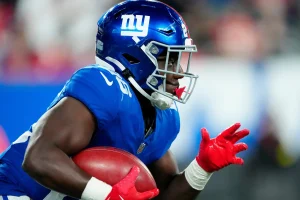
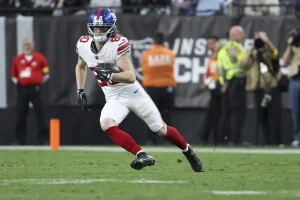
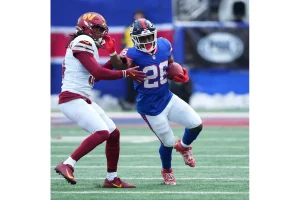
The New York Giants are a professional American football team based in the New York metropolitan area. Founded on August 1, 1925, the Giants are one of the oldest franchises in the National Football League (NFL) and the only original team from that era still operating in the Northeastern United States. They compete in the National Football Conference (NFC) East division and play their home games at MetLife Stadium in East Rutherford, New Jersey, a venue they share with the New York Jets. The franchise has won eight league championships, including four titles in the pre-Super Bowl era and four Super Bowl victories, placing them third all-time behind the Green Bay Packers and the Chicago Bears. Owned and operated by John Mara and Steve Tisch, the Giants have built a long tradition of competitive football, featuring 29 Pro Football Hall of Fame inductees and a devoted regional fan base.
The Giants are widely known by the nicknames “Big Blue” and the “G-Men,” and their defensive units of the 1980s and early 1990s earned the moniker “Big Blue Wrecking Crew.” Wearing dark blue, red, and white, the team represents one of the NFL’s most recognizable brands. Their headquarters and practice facility, the Quest Diagnostics Training Center, is also located in the Meadowlands complex in East Rutherford.
Founding and Organizational Origins
On August 1, 1925, Timothy Mara and Will Gibson were granted an NFL franchise for their newly organized football team in New York City at a cost of $2,500. The Giants played their first game as an exhibition against All New Britain on October 4, 1925, winning 26–0 in front of 10,000 fans. Their first official NFL game took place a week later at the Cycledrome in Providence, Rhode Island, where they lost 14–0 to the Providence Steam Roller. Despite that opening defeat, the Giants finished their first season with an 8–4 record in a 20-team league.
In their third season, the team posted an 11–1–1 mark and captured the 1927 NFL championship, the franchise’s first league title. To distinguish the football team from New York’s baseball Giants, the organization incorporated as the “New York National League Football Company, Inc.” in 1929 and later changed its legal name to “New York Football Giants, Inc.” in 1937, a corporate name the franchise continues to use today. After a disappointing fourth season, owner Tim Mara purchased the entire Detroit Wolverines roster in 1928, primarily to acquire star quarterback Benny Friedman, merging the two squads under the Giants banner.
The Giants’ early financial struggles were significant, as professional football was overshadowed by baseball, boxing, and college football in the mid-1920s. Their fortunes turned during the 1925 season when a visit by Red Grange and the Chicago Bears drew more than 73,000 fans, providing a crucial influx of revenue. By the 1930s, the Giants had stabilized financially and led the league in attendance multiple times throughout that decade and the 1940s.
Growth Into NFL Competition
The Giants were one of five teams admitted to the NFL in 1925 and remain the only original member of that group still active. They quickly established themselves as a competitive force, reaching the NFL Championship Game in 1933 and defeating the Chicago Bears in the famous 1934 “Sneakers Game,” an icy-field contest in which the Giants switched to basketball shoes for traction. From 1931 to 1947, the team qualified for the NFL Championship Game eight times, winning twice under Hall of Fame coach Steve Owen.
After capturing NFL championships in 1938 and 1956, the Giants built a roster featuring future Hall of Famers such as Frank Gifford, Sam Huff, and Roosevelt Brown. The 1956 championship team was coached by Jim Lee Howell and featured future Hall of Fame assistants Vince Lombardi and Tom Landry. Following a string of championship game appearances from 1958 to 1963, the franchise entered a difficult stretch that produced only two winning seasons over the next fifteen years and no playoff appearances.
The team began rebuilding in 1979 by drafting quarterback Phil Simms and later selecting linebacker Lawrence Taylor in 1981. Under head coach Bill Parcells, who took over in 1983, the Giants rebuilt into a championship contender, anchored by the dominant “Big Blue Wrecking Crew” defense and Simms’s steady leadership at quarterback.
New York Giants Competitive Journey
The Giants’ competitive journey stretches across the pre-Super Bowl era, the early Super Bowl period, and the modern NFL. They captured four pre-merger NFL titles in 1927, 1934, 1938, and 1956, then added four Super Bowl championships in 1986, 1990, 2007, and 2011. Throughout their history, the team has appeared in nineteen NFL championship or Super Bowl games, more than any other franchise, and has qualified for the playoffs thirty-three times. They have also won eight NFC East division titles and five NFC championships.
Early Seasons and Development (1925–1978)
The Giants’ earliest seasons were marked by both on-field success and financial difficulty. After winning their first NFL title in 1927, the team remained competitive throughout the 1930s, capturing championships in 1934 and 1938. The 1944 Giants are widely regarded as one of the greatest defensive units in NFL history, allowing only 7.5 points per game and shutting out five opponents, though they lost 14–7 to the Green Bay Packers in that year’s NFL Championship Game.
Following their 1956 championship at Yankee Stadium, the Giants appeared in five NFL Championship Games between 1958 and 1963, losing each time. The 1958 championship game against the Baltimore Colts, often called “The Greatest Game Ever Played,” is widely credited with boosting the NFL’s national popularity. After 1963, the franchise declined sharply, entering a fifteen-year stretch with only two winning seasons and no playoff appearances, a drought that finally ended in 1981.
Breakthrough in NFL (1979–1990)
The late 1970s marked the beginning of the Giants’ return to prominence. The 1978 “Miracle at the Meadowlands,” in which Joe Pisarcik’s fumble was returned for a game-winning touchdown by the Philadelphia Eagles’ Herman Edwards, became a defining moment that helped fuel the team’s determination. The drafting of Phil Simms in 1979 and Lawrence Taylor in 1981 set the foundation for a championship-caliber roster, while head coach Bill Parcells, promoted from defensive coordinator in 1983, brought a hard-nosed approach that transformed the team.
In 1986, the Giants posted a 14–2 regular season record, the franchise’s best since the NFL adopted the sixteen-game schedule, and rolled through the playoffs with a 49–3 divisional win over the San Francisco 49ers and a 17–0 shutout of the Washington Redskins in the NFC Championship Game. They defeated the Denver Broncos 39–20 in Super Bowl XXI, earning the franchise’s first championship since 1956 and the first of four Super Bowl titles. Quarterback Phil Simms earned Super Bowl MVP honors after completing 22 of 25 passes.
After a disappointing 1987 season shortened by a players’ strike, the Giants rebounded to a 12–4 record in 1989 but lost in the divisional round to the Los Angeles Rams. In 1990, New York set an NFL record for fewest turnovers in a season and went 13–3, defeating the San Francisco 49ers 15–13 in the NFC Championship Game before edging the Buffalo Bills 20–19 in Super Bowl XXV.
Modern Program and Current Direction (1991–Present)
Following the 1990 championship, Parcells resigned and was replaced by Ray Handley, ushering in a transition period. Jim Fassel took over as head coach in 1997, and in 2000 his “guarantee” that the Giants would reach the playoffs was fulfilled when they advanced to Super Bowl XXXV, where they lost to the Baltimore Ravens. Tom Coughlin was hired in 2004, and Eli Manning became the starting quarterback later that season.
The Coughlin-Manning era produced two of the most memorable Super Bowl upsets in NFL history. In Super Bowl XLII, the Giants defeated the previously undefeated New England Patriots 17–14, highlighted by David Tyree’s famous helmet catch. Four years later, the Giants beat the Patriots again 21–17 in Super Bowl XLVI, with Eli Manning earning his second Super Bowl MVP award. The franchise moved into MetLife Stadium in 2010 and transitioned through several head coaches, including Ben McAdoo, Pat Shurmur, and Joe Judge, before hiring Brian Daboll in 2022.
Under Daboll, the Giants finished 9–7–1 in 2022 and reached the playoffs, defeating the Minnesota Vikings in the wild-card round before losing to the Philadelphia Eagles. The franchise struggled in 2023 and 2024, finishing 6–11 and 3–14 respectively, prompting further organizational change. In 2026, the Giants hired longtime Baltimore Ravens head coach John Harbaugh to lead the team. On the business side, in September 2025, Julia Koch and her family agreed to acquire a ten-percent minority stake in the franchise at a valuation exceeding $10 billion, subject to NFL ownership approval.
Philosophy and Competitive Strengths
The Giants have long emphasized tough, physical defense and disciplined team play. The “Big Blue Wrecking Crew” defense of the 1980s and early 1990s, led by Lawrence Taylor, set the standard for franchise identity, while more recent defensive units have continued that tradition. The team’s strengths have historically centered on pass rushing, strong linebacker play, and an offensive line capable of supporting a balanced attack. Their consistent appearance in pressure-cooker postseason matchups has shaped a culture of resilience and situational football.
Key Milestones and Major Moments
Among the Giants’ most celebrated moments are the 1934 “Sneakers Game,” the 1958 “Greatest Game Ever Played,” and the dramatic Super Bowl victories over the New England Patriots in the 2007 and 2011 seasons. The franchise’s first overall NFL draft selection of running back Saquon Barkley in 2018, and the 2025 selections of edge rusher Abdul Carter and quarterback Jaxson Dart, represent significant investments in the team’s future. The 2025 season also featured the mid-season dismissal of head coach Brian Daboll after the team fell to 2–8.
New York Giants Achievements and Results
The Giants have won eight league championships and rank third among all NFL franchises in total titles. They have appeared in nineteen NFL Championship or Super Bowl games and qualified for the postseason thirty-three times. Their four Super Bowl victories tie them for fifth-most in league history.
NFL Achievements
The Giants captured four NFL championships in the pre-Super Bowl era, taking titles in 1927, 1934, 1938, and 1956. Their first Super Bowl victory came in Super Bowl XXI, a 39–20 win over the Denver Broncos. Four years later, they edged the Buffalo Bills 20–19 in Super Bowl XXV. After a seventeen-year championship drought, the Giants shocked the previously undefeated New England Patriots 17–14 in Super Bowl XLII and repeated the feat four years later with a 21–17 win in Super Bowl XLVI, giving Eli Manning back-to-back Super Bowl MVP awards.
Conference Achievements
The Giants have won five NFC Championship Games, including dramatic overtime victories over the Green Bay Packers in both the 2007 and 2011 seasons. Their 1986 NFC Championship Game victory over the Washington Redskins, a 17–0 shutout, sent the franchise to its first Super Bowl. The Giants have appeared in eleven NFC Championship Games overall and have frequently played in pressure-packed conference matchups throughout their modern history.
Divisional Achievements
The Giants have won sixteen NFC East division titles, with eight captured in the pre-merger era (1933, 1934, 1935, 1938, 1939, 1941, 1944, and 1946) and eight since the formation of the NFC East in 1970 (1986, 1989, 1990, 1997, 2000, 2005, 2008, and 2011). Their divisional rivalries with the Philadelphia Eagles, Dallas Cowboys, and Washington Commanders remain among the most storied in professional football.
Series Achievements
The Giants’ playoff history includes memorable series against the San Francisco 49ers, with whom they have met eight times in the postseason since 1982, including two NFC Championship Games. They also share historic championship rivalries with the Chicago Bears and Green Bay Packers, having faced Chicago in six NFL title games and Green Bay in multiple championship and playoff contests. Their rivalry with the Philadelphia Eagles dates back to 1933 and has been called the best rivalry in the NFL in the twenty-first century.