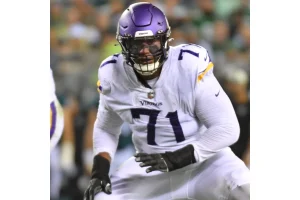
Minnesota Vikings Overview
The Minnesota Vikings are a professional American football team based in Minneapolis, Minnesota. Established on January 28, 1960, the Vikings compete in the National Football League (NFL) as a member of the National Football Conference (NFC) North division. The team plays home games at U.S. Bank Stadium in the Downtown East section of Minneapolis and is recognized for its distinctive purple, gold, and white colors, along with its mascot Viktor the Viking. Owned by Zygi, Leonard, and Mark Wilf, the franchise has built a long history defined by competitive consistency and iconic players.
The Vikings have won one NFL Championship, captured in 1969, and have made multiple Super Bowl appearances, including Super Bowls IV, VIII, IX, and XI, without securing a Super Bowl title. They hold the highest regular season and combined winning percentage among NFL franchises that have not won a Super Bowl, along with the most conference championship appearances of any non-Super Bowl winning team. Known for the famed Purple People Eaters defensive line of the late 1960s and 1970s, the Vikings maintain a reputation for strong defense and high-scoring offenses throughout their history.
Founding and Organizational Origins
The Minnesota Vikings franchise was created through the efforts of Twin Cities businessmen Bill Boyer, H. P. Skoglund, and Max Winter. In August 1959, the ownership group was awarded a franchise in the new American Football League (AFL). Five months later, in January 1960, after significant pressure from the NFL, the group, along with Bernard H. Ridder, reneged on its agreement with the AFL and was instead awarded the NFL’s 14th franchise, with play scheduled to begin in 1961. Ole Haugsrud was added to the ownership because, in the 1920s, when he sold his Duluth Eskimos team back to the league, the agreement entitled him to 10 percent of any future Minnesota team.
The team was officially named the Minnesota Vikings on September 27, 1960, a name meant to reflect Minnesota’s strong Scandinavian American heritage. From the start, the Vikings embraced an energetic marketing program that produced first-year season ticket sales of nearly 26,000 and an average home attendance of 34,586, about 85 percent of Metropolitan Stadium’s capacity of 40,800. Bert Rose, former public relations director for the Los Angeles Rams, was appointed the team’s first general manager, while Norm Van Brocklin was hired as the first head coach on January 18, 1961.
Growth Into NFC North Competition
The Vikings stepped into NFL competition in 1961 as an expansion team playing in the Western Conference. Their first season included the first overall pick in the 1961 NFL Draft, running back Tommy Mason of Tulane, and a third-round selection of quarterback Fran Tarkenton from the University of Georgia. The franchise lost its first seven games after a season-opening upset victory over the Chicago Bears but steadily developed its roster and identity over the following seasons.
The team moved into the NFC Central Division in 1970 following the AFL–NFL merger and won 11 division titles under that banner. In 2002, as part of the league’s realignment with the addition of the Houston Texans, the Vikings and their traditional NFC Central rivals became part of the newly formed NFC North Division. Throughout this period, the organization built a stable infrastructure, including the development of Winter Park in 1981 and the construction of the Hubert H. Humphrey Metrodome in 1982. The current TCO Performance Center in Eagan, Minnesota, completed in 2018, now houses the team’s headquarters and training operations.
Minnesota Vikings Competitive Journey
The Vikings’ competitive journey has been marked by sustained regular-season success, frequent playoff appearances, and a series of championship pursuits that have fallen short of the Super Bowl. Across decades, the franchise has combined strong coaching hires, impactful draft classes, and aggressive trades to remain one of the NFL’s most consistently competitive teams. The team’s progression reflects its evolution from an expansion franchise into a perennial NFC North contender with multiple Super Bowl trips and conference championship runs.
Early Seasons and Development (1961–1969)
The Vikings’ first seven seasons were largely difficult, with a combined record of 32 wins, 59 losses, and 7 ties, including only one winning season (8–5–1 in 1964). The arrival of head coach Bud Grant in 1967, replacing the resigned Norm Van Brocklin, transformed the team’s direction. Grant, who had led the Winnipeg Blue Bombers to four Grey Cup Championships in the Canadian Football League, brought a disciplined approach that quickly produced results. With Joe Kapp replacing the traded Fran Tarkenton and a powerful defense that earned the nickname Purple People Eaters, the Vikings won their first Central Division title in 1968.
In 1969, the Vikings posted a 12–2 record, including 12 straight regular-season victories, the longest single-season winning streak in 35 years. The team defeated the Cleveland Browns 27–7 in the last pre-merger NFL Championship Game, becoming the first modern NFL expansion team to win an NFL Championship. The victory earned a berth in Super Bowl IV, where Minnesota, as heavy favorites, lost 23–7 to the Kansas City Chiefs. Despite the defeat, the season established the Vikings as an emerging NFL power.
Breakthrough in the NFL (1970s)
The Vikings dominated the NFC Central throughout the 1970s under Bud Grant, reaching the playoffs every year and capturing 10 division titles during the decade. In 1971, defensive tackle Alan Page became the first defensive player to win the Associated Press NFL Most Valuable Player Award. The reacquisition of Fran Tarkenton in 1972, along with the drafting of running back Chuck Foreman in 1973, fueled a series of deep postseason runs. The Vikings reached Super Bowls VIII, IX, and XI but lost each, falling to the Miami Dolphins, Pittsburgh Steelers, and Oakland Raiders.
Key moments defined the decade. In 1975, the Vikings started 10–0 before losing a divisional playoff game to the Dallas Cowboys on a controversial Hail Mary touchdown pass from Roger Staubach to Drew Pearson, an outcome that shocked the home crowd. By 1978, the team was aging, and Tarkenton retired after the season holding league records for passing attempts, completions, yards, and touchdowns. The 1970s cemented the Vikings’ reputation as a championship-caliber team unable to secure the league’s ultimate prize.
Breakthrough in the NFL (1980s–1990s)
The Vikings moved into the Hubert H. Humphrey Metrodome in 1982, beginning a new era that featured dominant defenses. Bud Grant retired in 1984, was replaced by Les Steckel, and then returned to the sideline before re-retiring in 1986, when longtime assistant Jerry Burns took over. Under Burns, and later head coach Dennis Green, the Vikings produced strong regular-season results. The franchise acquired Herschel Walker from Dallas in 1989, a trade that later delivered key draft picks to the Cowboys, including Emmitt Smith and Darren Woodson.
The 1998 Vikings set a then-NFL record by scoring 556 points and finished 15–1, with a high-powered offense led by Randall Cunningham, Robert Smith, Cris Carter, and rookie Randy Moss. Kicker Gary Anderson completed the first perfect regular season in NFL history but missed a late field goal in the NFC Championship Game, allowing the Atlanta Falcons to tie and eventually win in overtime. The loss made the 1998 Vikings the first 15–1 team to fail to reach the Super Bowl. Green won four NFC Central titles and two NFC Championship Game appearances in his tenure, compiling an all-time record of 97–62.
Modern Program and Current Direction (2000–Present)
The Vikings transitioned through several head coaches and quarterbacks in the 2000s and 2010s, including Mike Tice, Brad Childress, Leslie Frazier, and Mike Zimmer. In 2007, the team drafted running back Adrian Peterson, who set multiple franchise records and won the 2012 NFL Most Valuable Player Award. Quarterback Brett Favre joined the team in 2009 and led the Vikings to a 12–4 record and the NFC Championship Game, where a late interception in overtime ended a 31–28 loss to the New Orleans Saints. The 2017 season featured the Minneapolis Miracle, a walk-off touchdown pass from Case Keenum to Stefon Diggs, before the Vikings lost the NFC Championship Game to the Philadelphia Eagles 38–7 in their own stadium.
On January 26, 2022, the Vikings hired Kwesi Adofo-Mensah as general manager, and on February 16, 2022, named Kevin O’Connell as head coach. The 2022 Vikings won the NFC North with a 13–4 record and set an NFL record by winning 11 one-score games but lost in the wild-card round to the New York Giants. In 2024, the Vikings drafted Michigan quarterback J. J. McCarthy with the 10th overall pick, though he was lost to a season-ending knee injury. Sam Darnold stepped in and led the team to a 14–3 record, becoming the first quarterback in NFL history to win 14 games in his first season with a team. The current ownership, led by Zygi Wilf, continues to guide the franchise’s long-term direction.
Philosophy and Competitive Strengths
The Vikings’ identity has long combined aggressive defense with explosive offensive play. Defensively, the franchise has historically relied on dominant front lines, including the Purple People Eaters, the Williams Wall, and the Jared Allen-led front four of the late 2000s. Offensively, the team has showcased record-setting performers, including Fran Tarkenton’s passing milestones, Randy Moss’s rookie receiving records, Adrian Peterson’s 2,097-yard rushing season in 2012, and Justin Jefferson’s early career production since 2020. The franchise’s philosophy emphasizes physical play, strategic draft selection, and consistent playoff contention.
Key Milestones and Major Moments
The franchise’s first major milestone was its 1969 NFL Championship, followed by four Super Bowl appearances between 1970 and 1977. In 2017, the Minneapolis Miracle produced the first walk-off game-winning touchdown in NFL playoff history. In 2024, Sam Darnold’s 14 wins in his debut season with the team set a new league record. The Vikings’ all-time record of 537–438–11 reflects sustained regular-season excellence that ranks among the highest winning percentages in the NFL.
Minnesota Vikings Achievements and Results
The Vikings’ verified accomplishments include one NFL Championship, 23 division titles, and 32 playoff appearances, the most of any non-Super Bowl winning team. The franchise has also produced 15 members of the Pro Football Hall of Fame and multiple individual award winners, including Fran Tarkenton, Alan Page, and Adrian Peterson. While the team has yet to win a Super Bowl, it has maintained a record of competitive consistency unmatched by most NFL franchises.
NFL Achievements
The Vikings won their only NFL Championship in 1969, defeating the Cleveland Browns 27–7. The team has appeared in four Super Bowls, losing Super Bowl IV to the Kansas City Chiefs, Super Bowl VIII to the Miami Dolphins, Super Bowl IX to the Pittsburgh Steelers, and Super Bowl XI to the Oakland Raiders. The 1998 Vikings set a then-NFL record with 556 points scored, and the 2017 Vikings delivered the Minneapolis Miracle, the first walk-off game-winning touchdown in playoff history.
Conference Achievements
The Vikings have made 11 conference championship appearances, tied for the most by any non-Super Bowl winning team. Notable conference title game runs include appearances in 1969, 1973, 1974, 1976, 1977, 1987, and 2000. The 2000 NFC Championship Game resulted in a 41–0 loss to the New York Giants, the team’s worst playoff defeat. The 2009 NFC Championship Game against the New Orleans Saints ended in a 31–28 overtime loss after a late interception, and the 2017 NFC Championship Game ended in a 38–7 loss to the Philadelphia Eagles.
Divisional Achievements
The Vikings have captured 23 division championships across the NFL Central and NFC North divisions. The franchise won consecutive NFC Central titles in 1970 and 1971 and added titles in 1973, 1974, 1975, 1976, 1977, 1978, 1980, 1989, 1992, 1994, 1998, and 2000. Following the 2002 realignment into the NFC North, the Vikings have won the division in 2008, 2009, 2015, 2017, and 2022. Their 23 division titles rank among the highest totals in NFL history.
Series Achievements
The Vikings have a long-standing rivalry with NFC North opponents, including the Chicago Bears, Detroit Lions, and Green Bay Packers. The Vikings lead the all-time series against the Bears 65–57–2 and against the Detroit Lions 80–41–2, while the Green Bay Packers lead their series 66–60–3. The Vikings also maintain a notable playoff rivalry with the New Orleans Saints, holding a 23–13 all-time record including 4–1 in postseason play, as well as historic rivalries with the Dallas Cowboys and Los Angeles Rams, both of which were prominent throughout the 1970s.