Green Bay Packers Overview
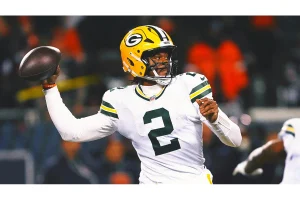
The Green Bay Packers are a professional American football team based in Green Bay, Wisconsin, competing in the National Football League (NFL) as a member of the National Football Conference (NFC) North division. Founded on August 11, 1919, the Packers are the third-oldest franchise in the NFL and the only community-owned major league professional sports team in North America. The franchise plays its home games at Lambeau Field and is currently led by head coach Matt LaFleur, general manager Brian Gutekunst, and president and CEO Ed Policy.
The Packers have built one of the most successful histories in professional football, holding the record for the most wins in NFL history. They have claimed 13 league championships, including four Super Bowl victories in 1966, 1967, 1996, and 2010. Wearing their traditional dark green, gold, and white colors, the franchise has become a defining symbol of football tradition and loyalty across Wisconsin and the wider Midwest.
Founding and Organizational Origins
The Green Bay Packers were founded on August 11, 1919, by former high-school football rivals Earl “Curly” Lambeau and George Whitney Calhoun. Lambeau solicited funds for uniforms and equipment from his employer, the Indian Packing Company, which contributed $500 on the condition that the team be named after its sponsor. The franchise traces its competitive lineage to semi-professional teams in Green Bay dating back to 1896, and it has remained in Green Bay longer than any other franchise in the NFL.
Financial troubles threatened the team’s early existence, prompting Lambeau to find new backers who became known as “The Hungry Five.” These supporters formed the Green Bay Football Corporation, which raised $5,000 through 1,000 shares of stock offered at $5 apiece in 1923. This early stock offering laid the foundation for what would become a unique community-ownership structure that has defined the franchise for more than a century.
Under the original Articles of Incorporation, any proceeds from the eventual sale of the franchise would benefit community causes, a rule that has helped keep the team in Green Bay despite its small market. The Packers have since conducted several additional stock sales to fund team operations, including a 2021 offering that sold almost 200,000 shares to supporters.
Growth Into NFL Competition
The Packers were granted a franchise in the American Professional Football Association on August 27, 1921, joining a young national league that would later become the NFL. The team competed against semi-professional clubs across Wisconsin and the Midwest between 1919 and 1920 before formally entering the league. Lambeau built an early powerhouse behind players such as Mike Michalske, Johnny Blood, Cal Hubbard, and Arnie Herber, claiming NFL championships in 1929, 1930, and 1931.
The arrival of end Don Hutson from Alabama in 1935 transformed the team’s offensive identity. Hutson is credited with inventing modern pass patterns and led the league in receptions in eight seasons. His play helped the Packers win NFL championships in 1936, 1939, and 1944, and his number 14 became the first jersey retired by the franchise in 1951.
After Lambeau’s departure following the 1949 season, the Packers struggled through a difficult decade under several coaches. The arrival of Vince Lombardi as head coach and general manager on February 2, 1959, marked a turning point that would launch the team into a new era of national prominence and eventually into the Super Bowl era.
Green Bay Packers Competitive Journey
The Packers’ competitive journey has stretched across more than a century of professional football, moving from early dominance under Curly Lambeau to championship glory under Vince Lombardi and modern success under Mike Holmgren, Mike McCarthy, and Matt LaFleur. Across league eras, divisions, and postseason formats, the franchise has maintained one of the most consistent winning traditions in the NFL, building a fan base that fills Lambeau Field for every home game.
Early Seasons and Development (1919–1958)
From their founding through the 1940s, the Packers established themselves as one of the league’s most dominant early franchises. They captured NFL championships in 1929, 1930, 1931, 1936, 1939, and 1944, building a reputation for tough defense and innovative offense. A streak of 29 consecutive home games without defeat, set during this era, still stands as an NFL record.
After Don Hutson’s retirement in 1945, the Packers endured a long decline marked by coaching changes and financial pressures. The team moved through several home venues before opening a new City Stadium in 1957, later renamed Lambeau Field in honor of Curly Lambeau following his death. The 1958 season, in which the team finished 1–10–1 under coach Ray “Scooter” McLean, remains the worst in franchise history and set the stage for a major organizational change.
Breakthrough in NFL (1959–1967)
The hiring of Vince Lombardi as head coach and general manager in 1959 sparked one of the most remarkable turnarounds in professional football history. Under Lombardi, the Packers won five championships over seven seasons, including victories in the first two Super Bowls. Stars such as Bart Starr, Jim Taylor, Paul Hornung, Forrest Gregg, Willie Davis, Ray Nitschke, and Henry Jordan powered a team that dominated the NFL during the 1960s.
The Packers captured NFL championships in 1961, 1962, and 1965 before winning the first Super Bowl following the 1966 season with a 35–10 victory over the Kansas City Chiefs. In 1967, the Packers repeated as NFL champions with a 21–17 win over the Dallas Cowboys in the famous “Ice Bowl” and followed it with a 33–14 victory over the Oakland Raiders in Super Bowl II. After Lombardi’s death in 1970, the NFL renamed the Super Bowl trophy the Vince Lombardi Trophy in recognition of his legacy.
Following Lombardi’s departure, the franchise endured a quarter-century of limited success. Between 1968 and 1991, the Packers posted only five winning seasons and made just two playoff appearances, with poor personnel decisions hampering the team. The hiring of Ron Wolf as general manager in 1991 marked the beginning of a new era of accountability and competitiveness.
Breakthrough in NFL (1992–1998)
Under general manager Ron Wolf and head coach Mike Holmgren, the Packers rebuilt into a championship team during the 1990s. The acquisition of quarterback Brett Favre from the Atlanta Falcons in 1992 and the signing of defensive end Reggie White in 1993 transformed the franchise. The team won the NFC Central Division in 1995 and reached the NFC Championship Game before ultimately breaking through with a Super Bowl title in 1996.
The 1996 Packers posted a 13–3 regular-season record, earning the NFC’s top seed and the league’s number-one ranking in offense, defense, and special teams. They defeated the New England Patriots 35–21 in Super Bowl XXXI, earning the franchise’s twelfth league championship and its first Super Bowl title in 29 years. Desmond Howard was named Super Bowl MVP. The Packers returned to the Super Bowl the following year but lost 31–24 to the Denver Broncos in Super Bowl XXXII.
After Holmgren’s departure to Seattle following the 1998 season, the franchise entered a transitional period under head coaches Ray Rhodes and Mike Sherman. Despite regular-season consistency led by Brett Favre, the team struggled in the playoffs, including a historic home playoff loss to the Atlanta Falcons in January 2003.
Modern Program and Current Direction (2019–Present)
Matt LaFleur was hired as head coach in 2019, and his arrival launched another era of sustained regular-season success for the Packers. Under LaFleur, Aaron Rodgers, and general manager Brian Gutekunst, the team won 13 games in each of his first three seasons. The Packers claimed NFC North Division titles in 2019, 2020, and 2021, and Rodgers won back-to-back MVP awards in 2020 and 2021.
Following Rodgers’ departure to the New York Jets in 2023, Jordan Love took over as starting quarterback and led the team to a 9–8 record and an NFC Wild Card victory over the Dallas Cowboys. The 2024 season featured Pro Bowl selections for running back Josh Jacobs and safety Xavier McKinney, as well as the arrival of new defensive coordinator Jeff Hafley. Mark Murphy stepped down as president in 2025 after reaching the organization’s mandatory retirement age, with Ed Policy selected to succeed him as president, chairman, and CEO.
The Packers opened the 2025 season with major roster changes, including the acquisition of pass rusher Micah Parsons from the Dallas Cowboys. Despite injuries to several key players, the team finished 9–7–1 and reached the playoffs for the third consecutive year before being eliminated by the Chicago Bears in the NFC Wild Card round.
Philosophy and Competitive Strengths
The Packers have long been defined by a commitment to strong quarterback play, balanced offensive schemes, and disciplined defensive fundamentals. Across eras, the franchise has consistently developed or acquired elite passers, from Bart Starr to Brett Favre to Aaron Rodgers, building offenses that emphasize precision passing and smart decision-making.
Key Milestones and Major Moments
The Packers’ history is filled with defining milestones, including nine pre-Super Bowl NFL titles, four Super Bowl championships, and a streak of sellouts at Lambeau Field that has continued without interruption since 1960. Memorable moments include the Ice Bowl, Super Bowl XLV victory over the Pittsburgh Steelers, and Aaron Rodgers’ MVP-caliber seasons of the 2010s and early 2020s.
Green Bay Packers Achievements and Results
The Green Bay Packers own one of the most decorated histories in professional football, with a record 13 league championships, four Super Bowl titles, and 38 total playoff appearances. Their combination of historic success and sustained competitiveness places them among the elite franchises of the NFL.
Super Bowl Achievements
The Packers have won four Super Bowls, beginning with the first two in 1966 and 1967 under Vince Lombardi. The franchise added Super Bowl XXXI in 1996 under Mike Holmgren and Super Bowl XLV in 2010 under Mike McCarthy. Aaron Rodgers earned Super Bowl MVP honors in 2011, leading Green Bay to a 31–25 victory over the Pittsburgh Steelers.
Conference Achievements
The Packers have won three NFC Championship Games, capturing conference titles in 1996, 2010, and 2011. Across their history, the team has reached the NFC Championship Game on multiple additional occasions, building one of the most consistent conference-level track records in the league.
Divisional Achievements
The Packers have claimed 21 division championships, including NFL West titles in 1936, 1938, 1939, and 1944, an NFL Central title in 1967, NFC Central titles in 1972, 1995, 1996, and 1997, and NFC North titles in 2002, 2003, 2004, 2007, 2011, 2012, 2013, 2014, 2016, 2019, 2020, and 2021. This sustained divisional dominance has helped cement the Packers’ reputation as one of the NFL’s most consistent winners.
Series Achievements
The Packers hold the NFL record for the most wins in league history, with a regular-season and postseason record reflecting more than a century of competitive success. Their all-time winning percentage of .571 ranks second in NFL history, and the franchise’s 13 league titles remain the most by any team in the league.