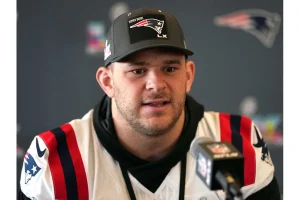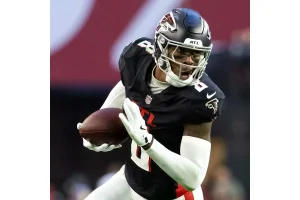
Atlanta Falcons Overview
The Atlanta Falcons are a professional American football team based in Atlanta, Georgia. Founded on June 30, 1965, the Falcons compete in the National Football League as a member of the National Football Conference South division. Their home games are played at Mercedes-Benz Stadium in Atlanta, while their headquarters and practice facilities are located in Flowery Branch, Georgia. The team is owned by Arthur Blank, the co-founder of The Home Depot, and is represented by the mascot Freddie Falcon.
The Falcons wear black, red, silver, and white as their official team colors. Across their history, the franchise has captured six division championships and reached two Super Bowls, including a memorable appearance in Super Bowl LI. Known at times as the “Dirty Birds,” the Falcons are recognized as the oldest major professional sports team in North America without a league championship.
Founding and Organizational Origins
Professional football first reached Atlanta in 1962, when the American Football League staged preseason exhibition games in the city. By 1965, with the completion of Atlanta Stadium, local interest in a professional franchise had grown. Competing groups pursued both AFL and NFL expansion slots, prompting NFL Commissioner Pete Rozelle to act quickly to secure Atlanta for his league.
On June 8, 1965, an AFL franchise was conditionally awarded to a local group, but the NFL responded by forcing the city to choose between the two leagues. By June 30, 1965, the city selected Rankin Smith and the NFL. Smith, a 40-year-old executive vice president at Life Insurance Company of Georgia, paid a then-record $8.5 million for the franchise. The team name “Falcons” was chosen from a public contest, with schoolteacher Julia Elliott of Griffin, Georgia, suggesting the winning entry.
The Atlanta Falcons were formally approved as the NFL’s 15th franchise on June 21, 1965, and began play in 1966. In the 1966 NFL Draft, the team selected consensus All-American linebacker Tommy Nobis from the University of Texas as its first-ever pick, marking the official birth of the franchise.
Growth Into NFL Competition
The Falcons joined the NFL as an expansion team in 1966, operating in the Eastern Conference for one season before shifting to the Western Conference’s Coastal Division from 1967 to 1969. Following the 1970 AFL-NFL merger, the Falcons were placed in the NFC West, where they remained until 2001. After realignment in 2002, the team moved into the NFC South, where they continue to compete today.
The franchise’s early years focused on building infrastructure, scouting talent, and developing a competitive roster. With limited on-field success through the 1970s, the Falcons gradually constructed a foundation of players and coaching personnel that would eventually support sustained playoff runs. By the late 1970s, players like linebacker Tommy Nobis and cornerback Deion Sanders, drafted in 1989, helped raise the team’s national profile.
Atlanta Falcons Competitive Journey
Across nearly six decades, the Atlanta Falcons have evolved from an expansion afterthought into a perennial NFC contender. The franchise’s journey includes periods of struggle in its early decades, dramatic breakthrough seasons led by stars such as Chris Chandler and Jamal Anderson, and modern revivals under quarterbacks Michael Vick and Matt Ryan. Today the Falcons continue to pursue their first Super Bowl championship while developing new talent and refining their competitive approach.
Early Seasons and Development (1966–1991)
The Falcons’ inaugural 1966 season under head coach Norb Hecker was difficult, with the team losing its first nine regular-season games before earning its first victory on the road against the New York Giants. After a slow start to the 1968 season, Hecker was dismissed and Norm Van Brocklin finished the year as head coach. The franchise experienced modest growth through the 1970s, recording winning seasons in 1971 and 1973.
The team’s first playoff appearance came in 1978, when a 9–7 Falcons squad won a Wild Card matchup against the Philadelphia Eagles before falling to the Dallas Cowboys in the Divisional Round. In 1980, the Falcons posted a then-franchise-best 12–4 record, captured their first NFC West division title, and advanced to the Divisional Playoffs. The franchise continued to develop through the late 1980s, highlighted by the 1989 draft selection of Deion Sanders, whose dynamic play drew national attention to Atlanta.
Breakthrough in the NFL (1991–2001)
The Falcons reached the playoffs again in 1991, defeating the New Orleans Saints in the Wild Card round before losing to the Washington Redskins. That same year, the team drafted quarterback Brett Favre, who was later traded to the Green Bay Packers in February 1992. In 1992, the Falcons moved into the Georgia Dome, beginning a 25-year chapter in the landmark stadium.
The 1998 season marked the franchise’s greatest campaign to that point. Under head coach Dan Reeves and led by quarterback Chris Chandler and running back Jamal Anderson, the “Dirty Bird” Falcons finished 14–2 and won the NFC West. They upset the Minnesota Vikings in the NFC Championship Game and advanced to their first Super Bowl, Super Bowl XXXIII, where they fell 34–19 to the Denver Broncos. The following seasons brought injuries and decline, but the franchise rebuilt around quarterback Michael Vick, acquired with the first overall pick in the 2001 NFL Draft.
Modern Program and Current Direction (2002–Present)
In December 2001, Home Depot co-founder Arthur Blank reached an agreement to purchase the Falcons from Taylor Smith for $545 million, with NFL owners unanimously approving the deal in February 2002. Under Blank’s ownership, the franchise stabilized its finances, invested in facilities, and pursued sustained competitive success. The team opened Mercedes-Benz Stadium in 2017 and reached Super Bowl LI that same season, where they famously led 28–3 before the New England Patriots completed the largest comeback in Super Bowl history.
The modern Falcons have continued to rebuild around young talent, including the drafting of running back Bijan Robinson in 2023 and the hiring of Kevin Stefanski as the 20th head coach in franchise history on January 17, 2026. With Greg Beadles serving as CEO and President, the organization remains focused on reaching its first Super Bowl victory.
Philosophy and Competitive Strengths
The Falcons have historically emphasized a balanced offensive attack, highlighted by dual-threat quarterback play, dynamic receiving corps, and physical running games. Defensively, the team has invested in pass-rush talent and secondary playmakers, while embracing aggressive schemes that prioritize creating turnovers. Under Arthur Blank’s ownership, the franchise has prioritized long-term roster building, scouting, and infrastructure investment over short-term fixes.
Key Milestones and Major Moments
Among the franchise’s most memorable moments are the 1998 Super Bowl XXXIII appearance, the 2016 NFC Championship victory at the Georgia Dome, and the dramatic Super Bowl LI collapse against the New England Patriots. The team has also celebrated historic drafts, including the selections of Tommy Nobis in 1966, Brett Favre in 1991, Michael Vick in 2001, and Matt Ryan in 2008. The opening of Mercedes-Benz Stadium in 2017 marked another milestone in the organization’s growth.
Atlanta Falcons Achievements and Results
Across their history, the Atlanta Falcons have compiled an overall record of 398 wins, 512 losses, and 6 ties in the regular season, with 10 wins and 14 losses in the postseason. They have captured six division championships and reached two Super Bowls, establishing themselves as a consistent NFC contender despite their long championship drought.
NFC Achievements
The Falcons have won two NFC Championship Games, first in the 1998 season and again in the 2016 season. The 1998 victory over the Minnesota Vikings was sealed in overtime, while the 2016 victory over the Green Bay Packers ended 44–21 in the final game ever played at the Georgia Dome. These conference championships bookended the franchise’s two Super Bowl runs.
Divisional Achievements
The Falcons have captured six division titles, beginning with their 1980 NFC West crown and most recently winning the NFC South in 2016. Their divisional success spans multiple decades, with championship-winning teams in 1980, 1998, 2004, 2010, 2012, and 2016. These division titles reflect sustained competitiveness within their conference grouping.
Playoff Achievements
Since 1978, the Falcons have made 14 playoff appearances, including deep runs in 1998 and 2016 that each ended in a Super Bowl loss. The franchise reached the Divisional Round in multiple seasons and earned first-round byes in 2004 and 2010, underscoring their regular-season strength during peak eras.