Denver Broncos Overview
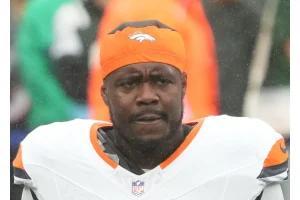
The Denver Broncos are a professional American football team based in Denver, Colorado, competing in the National Football League (NFL) as a member of the American Football Conference (AFC) West division. Founded on August 14, 1959, the Broncos began play in 1960 as a charter member of the American Football League (AFL), joining the NFL after the 1970 merger. The franchise has built a strong legacy with three Super Bowl titles, eight AFC championships, and one of the most loyal fan bases in the league.
The Broncos play their home games at Empower Field at Mile High and are headquartered at Broncos Park Powered by CommonSpirit in Dove Valley, Colorado. Known for their sunset orange, midnight navy, and summit white color scheme, the team is owned by the Walton-Penner Family Ownership Group, which acquired the franchise in 2022. The club is led by controlling owner Greg Penner, with Damani Leech serving as team president, George Paton as general manager, and Sean Payton as head coach.
Founding and Organizational Origins
The Denver Broncos were founded on August 14, 1959, when minor league baseball owner Bob Howsam was awarded an American Football League charter franchise. The team took the field for the first time on September 9, 1960, defeating the Boston Patriots 13–10 in the first-ever AFL game. Early operations were modest, and the original uniforms featured white and mustard yellow jerseys with brown helmets, a look that drew as much attention as the team’s play on the field.
Howsam sold the team in 1961 to Gerald Phipps, a local ownership group that stepped in just in time to keep the franchise in Denver during a period when relocation was a real threat. Star running back Floyd Little, signed in 1967, became the team’s first superstar and helped anchor the franchise during a difficult decade. The Broncos were the only original AFL team never to reach the league championship game and the only original AFL team that never posted a winning season during the AFL’s ten-year history.
The early roster and front-office structure reflected the small-market reality of a startup franchise. Despite limited resources, Denver built a recognizable brand around its colorful uniforms and growing fan support, setting the stage for the team’s gradual improvement once it joined the NFL.
Growth Into NFL Competition
Following the 1970 AFL-NFL merger, the Broncos began their new era in the National Football League as part of the AFC West division. The franchise hired Stanford coach John Ralston in 1972, and by 1973 he guided Denver to its first winning season at 7–5–2, earning UPI AFC Coach of the Year honors. Although the team continued to miss the playoffs under Ralston, the foundation for future success was taking shape.
In 1977, longtime assistant Red Miller was named head coach and assembled the famous Orange Crush Defense, a nickname inspired by a popular soft drink. That season, Denver posted a 12–2 regular-season record, made its first playoff appearance, and advanced to Super Bowl XII, where it lost to the Dallas Cowboys 27–10. Although the result was a loss, the run established Denver as a legitimate contender.
After Pat Bowlen purchased the team in 1984, the Broncos entered a more ambitious phase, highlighted by the trade for quarterback John Elway. Elway’s arrival marked the beginning of the most successful era in franchise history, leading to three Super Bowl appearances under head coach Dan Reeves and setting the stage for sustained competitive growth within the AFC.
Denver Broncos Competitive Journey
Across more than six decades of professional football, the Broncos have evolved from an inconsistent AFL charter member into one of the NFL’s most decorated franchises. The team’s competitive arc includes dynasty-level stretches in the late 1970s and late 1990s, as well as a third championship era in the mid-2010s. Today, Denver continues to pursue a return to championship contention under new leadership and ownership.
Early Seasons and Development (1960–1980)
From 1960 through 1969, the Broncos compiled a 39–97–4 record in the AFL and struggled to find consistent winning form. A 7–7 finish in 1962 was their best result during the decade, and the team never reached the AFL Championship Game. Even so, Denver earned a place in league history by becoming the first AFL team to defeat an NFL opponent, beating the Detroit Lions 13–7 in a 1967 preseason game.
The franchise began turning the corner after 1972, when head coach John Ralston introduced new discipline and a more professional approach. The 1977 season under Red Miller marked a true breakthrough, as the Orange Crush Defense and quarterback Craig Morton carried Denver to its first Super Bowl appearance. Although the Broncos fell short against Dallas, the run legitimized the franchise and energized a fan base that has supported the team through every era since.
Breakthrough in NFL (1981–1998)
The 1981 sale of the team to Edgar Kaiser Jr., followed by Pat Bowlen’s purchase in 1984, brought a new level of ambition. Bowlen paired head coach Dan Reeves with quarterback John Elway, and the duo led Denver to three Super Bowl appearances in the 1980s, falling to the New York Giants, Washington Redskins, and San Francisco 49ers. Although each loss was lopsided, the experience built the foundation for the franchise’s first championships.
After Mike Shanahan took over as head coach in 1995, Denver won back-to-back Super Bowls following the 1997 and 1998 seasons. In Super Bowl XXXII, Terrell Davis rushed for 157 yards and three touchdowns to earn MVP honors as the Broncos upset the Green Bay Packers 31–24. A year later, John Elway earned MVP in Super Bowl XXXIII, a 34–19 victory over the Atlanta Falcons, before retiring as a champion.
That dominant stretch established Denver as an elite NFL franchise and produced a core of Hall of Fame talent, including Elway, Davis, Shannon Sharpe, Steve Atwater, Gary Zimmerman, and others. The team’s success also fueled one of the most passionate fan environments in professional football.
Breakthrough in Modern Era (2012–2025)
The early 2000s brought a series of postseason frustrations, including a 2005 run to the AFC Championship Game. The Broncos rebuilt around veteran quarterback Peyton Manning, who signed in March 2012 and immediately led Denver to a 13–3 record and the AFC’s top seed. Two years later, Denver reached Super Bowl XLVIII but was overwhelmed 43–8 by the Seattle Seahawks.
Determined to finish his career with a championship, Manning returned in 2015 alongside a record-setting defense led by coordinator Wade Phillips. Despite Manning’s diminished play, the defense carried the team to a 12–4 record and a third Super Bowl title, a 24–10 victory over the Carolina Panthers in Super Bowl 50. Manning retired shortly afterward, capping one of the most successful eras of Broncos football.
After several lean seasons, the Broncos returned to the playoffs in 2024 behind rookie quarterback Bo Nix, finishing 10–7 and reaching the postseason for the first time since their 2015 championship. In 2025, Denver posted a 14–3 record, tied the franchise record for wins in a season, and earned the AFC’s No. 1 seed before falling 10–7 to the New England Patriots in the AFC Championship Game.
Modern Program and Current Direction (2022–Present)
The Walton-Penner Family Ownership Group completed its acquisition of the Broncos in 2022, ending more than three decades of Bowlen family stewardship. The new ownership quickly reshaped the roster, trading for star quarterback Russell Wilson and later hiring Sean Payton as head coach in 2023. After a transitional year, Denver parted ways with Wilson and selected Bo Nix with the 12th overall pick in the 2024 NFL Draft.
Under Payton, the Broncos have invested heavily in infrastructure and personnel. The team introduced a new uniform set, the Mile High Collection, in 2024, and unveiled plans in September 2025 for a new stadium at Burnham Yard in downtown Denver, targeted for completion in 2031. The combination of strong ownership, an experienced head coach, and a young quarterback has positioned Denver as a contender in the AFC.
Philosophy and Competitive Strengths
The Broncos have historically built success around strong defensive play, home-field advantage, and stability at the quarterback position. Denver’s altitude and passionate home crowds have long made Empower Field at Mile High one of the toughest venues in the NFL. Recent leadership has emphasized balanced rosters, smart drafting, and a renewed commitment to disciplined, physical football.
Key Milestones and Major Moments
The franchise’s most iconic moments include Floyd Little’s signing that saved the team, the 1977 Orange Crush run to Super Bowl XII, the back-to-back championships in 1997 and 1998, and the dominant 2015 defense that powered the Super Bowl 50 victory. More recently, Denver’s 2025 run to the AFC Championship Game signaled a return to elite competition and reinforced the franchise’s long-standing standard of success.
Denver Broncos Achievements and Results
Across six decades of professional football, the Denver Broncos have built one of the most accomplished resumes in the NFL. The franchise has captured three Super Bowl titles, eight AFC championships, sixteen AFC West division titles, and more than twenty playoff appearances. These accomplishments have placed Denver among the league’s elite franchises and cemented its place in professional football history.
Super Bowl Achievements
The Broncos have won three Super Bowl championships, following the 1997, 1998, and 2015 seasons. The first two titles came under head coach Mike Shanahan with quarterback John Elway and running back Terrell Davis, who earned MVP honors in the first victory. The third title, Super Bowl 50, was powered by a historic defense and quarterback Peyton Manning, who closed his career as a champion.
Denver has also made three additional Super Bowl appearances, finishing as runner-up in Super Bowl XII, XXI, XXII, XXIV, and XLVIII. While those losses were difficult, they reflect the franchise’s consistent ability to reach the league’s biggest stage and remain a perennial contender throughout multiple eras.
Conference Achievements
The Broncos have won eight AFC championships, earning titles in 1977, 1986, 1987, 1989, 1997, 1998, 2013, and 2015. Each championship run featured a signature moment, from John Elway’s late drive against the Cleveland Browns in 1986, known as The Drive, to Peyton Manning’s victory over Tom Brady and the New England Patriots in the 2015 AFC Championship. These runs underscore Denver’s long history of postseason success.
Divisional Achievements
Denver has captured sixteen AFC West division titles, including runs in the late 1970s, the late 1980s, and again from 2011 through 2015. The 2025 division title marked the franchise’s most recent crown and helped secure the AFC’s No. 1 playoff seed. The Broncos’ divisional consistency has been a defining trait of their most successful eras.
Series Achievements
The Broncos have made twenty-four playoff appearances, dating back to their first postseason berth in 1977. Denver’s playoff history includes memorable wins over rivals like the Pittsburgh Steelers, New England Patriots, and Kansas City Chiefs. Each postseason run has contributed to the franchise’s reputation as one of the NFL’s most consistent winners, with an all-time regular-season record of 518–472–10 as of the 2024 season.