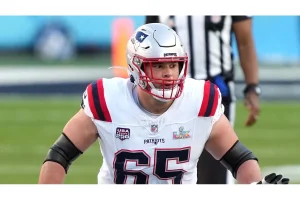
New England Patriots Overview
The New England Patriots are a professional American football franchise based in the Greater Boston area. The Patriots compete in the National Football League (NFL) as a member of the American Football Conference (AFC) East division and play home games at Gillette Stadium in Foxborough, Massachusetts, located about 22 miles southwest of Boston. Owned by Robert Kraft since 1994, the franchise has developed into one of the most successful and valuable teams in the NFL, recognized for six Super Bowl championships and a 19-year run of consecutive winning seasons from 2001 to 2019. The team is led by head coach Mike Vrabel, general manager Eliot Wolf, and president Jonathan Kraft, and its visual identity is built around the Flying Elvis logo and the colors nautical blue, red, new century silver, and white.
Founding and Organizational Origins
On November 16, 1959, Boston business executive Billy Sullivan was awarded the eighth and final franchise of the developing American Football League (AFL). That winter, local fans were invited to submit name suggestions, and Sullivan selected “Boston Patriots,” a reference to the colonists of the Thirteen Colonies who rebelled against British rule and, with Massachusetts playing a central role, declared American independence in 1776. The franchise was built around an original mascot and a Pat Patriot logo designed by Boston Globe artist Phil Bissell.
Because no permanent home was available in Boston, the Patriots rotated through several venues during the AFL years, including Boston University Field, Fenway Park, Alumni Stadium at Boston College, and Harvard Stadium. In 1963, the team earned its first playoff victory over the Buffalo Bills and advanced to the AFL Championship Game, where it lost to the San Diego Chargers. The early organizational foundation was modest, with Sullivan leading a franchise that posted inconsistent results and operated without a true home stadium.
Growth Into NFL Competition
When the AFL and NFL merged in 1970, the Patriots were placed in the AFC East division, where they still play today. In 1971, the franchise moved to a new stadium in Foxborough and changed its geographic name from the Boston Patriots to the New England Patriots after the league rejected the proposed Bay State Patriots label. The team built its early NFL identity around Hall of Fame-caliber players such as offensive lineman John Hannah, cornerback Mike Haynes, and linebacker Andre Tippett, who anchored competitive but inconsistent rosters throughout the 1970s and 1980s.
Ownership turbulence shaped the franchise’s growth. Billy Sullivan lost effective control in the mid-1970s before regaining it, then faced financial collapse in the 1980s tied to debt on Foxboro Stadium, including heavy losses connected to financing The Jacksons’ 1984 Victory Tour. The team was sold to Remington Products owner Victor Kiam in 1988, then to James Orthwein in 1992, before Robert Kraft completed his purchase of the franchise in 1994 for $175 million. The Kraft acquisition stabilized ownership, set the stage for a competitive rebuild, and tied the team’s long-term home to the new Gillette Stadium, which opened in 2002.
New England Patriots Competitive Journey
The Patriots’ competitive trajectory has been defined by a clear arc: an often-struggling AFL and early NFL franchise that, under stable ownership and elite leadership, built the most decorated dynasty of the 2000s and 2010s, captured six Super Bowl titles, and then entered a rebuilding phase that has now produced another AFC championship appearance.
Early Seasons and Development (1960–1992)
Through their AFL and early NFL years, the Patriots posted uneven results, with highlights such as the 1963 AFL Championship appearance and a run of playoff opportunities in 1976 and 1978. After the merger, the team reached the playoffs in 1976, 1978, 1982, 1985, and 1986 under coaches including Chuck Fairbanks and Raymond Berry. Berry’s 1985 team went 11-5, won three straight road playoff games, and advanced to Super Bowl XX, where the Chicago Bears defeated the Patriots 46-10. His successor, Rod Rust, lasted only the 1990 season, which ended 1-15.
Under Victor Kiam and later James Orthwein, the franchise continued to struggle on the field while ownership questions multiplied. Orthwein hired Bill Parcells in 1993 and drafted quarterback Drew Bledsoe with the first overall pick, restoring respectability to the roster, and a 1993 identity overhaul introduced the Flying Elvis logo, royal blue and silver colors, and a more modern uniform set.
Breakthrough in the NFL (1993–1999)
Bill Parcells brought immediate credibility, guiding the Patriots to playoff appearances in 1994 and 1996. In Super Bowl XXXI, following the 1996 season, the Patriots lost to the Green Bay Packers 35-21. Parcells’s successor, Pete Carroll, took the team to the playoffs in 1997 and 1998 but was dismissed after 1999. This stretch established New England as a perennial AFC contender and laid the foundation for the next era of sustained success.
Breakthrough in the NFL (2000–2006)
Bill Belichick was hired as head coach in 2000, and the franchise’s modern identity took shape. In 2001, an injury to Drew Bledsoe opened the door for sixth-round pick Tom Brady, who led the Patriots to a Super Bowl XXXVI victory over the St. Louis Rams, 20-17. Additional championships followed in the 2003 season, 32-29 over the Carolina Panthers, and the 2004 season, 24-21 over the Philadelphia Eagles, establishing a dynasty defined by clutch quarterback play and a defense built on a 3-4 base.
Breakthrough in the NFL (2007–2019)
The 2007 season produced one of the most dominant regular seasons in NFL history, with the acquisition of wide receiver Randy Moss, a 16-0 regular season, and a near-perfect run that ended with a 17-14 loss to the New York Giants in Super Bowl XLII. The Patriots reached another Super Bowl after the 2011 season, losing to the Giants again 21-17, before returning to the championship stage in 2014 with a 28-24 win over the Seattle Seahawks in Super Bowl XLIX. In 2016, New England overcame a 25-point deficit to beat the Atlanta Falcons 34-28 in overtime in Super Bowl LI, and in 2018, the Patriots defeated the Los Angeles Rams 13-3 in Super Bowl LIII, tying the Pittsburgh Steelers with six total Super Bowl titles.
Modern Program and Current Direction (2020–Present)
The post-Brady era began with missing the playoffs in 2020, a 4-13 finish in 2023 that led to Belichick’s departure, and the 2024 NFL draft selection of quarterback Drake Maye. After Jerod Mayo was replaced by Mike Vrabel in January 2025, the Patriots posted a 14-3 record, won the AFC East, and advanced through the playoffs to Super Bowl LX, where they lost to the Seattle Seahawks 29-13. The 10-game improvement in 2025 matched an NFL single-season turnaround record.
Philosophy and Competitive Strengths
Under Belichick, the Patriots built their identity around preparation, versatility, and a team-first culture known as the Patriot Way. On the field, New England traditionally ran an Erhardt-Perkins offense and a Fairbanks-Bullough 3-4 defense designed for flexibility and disguise. The team excelled in situational football, late-game comebacks, and disciplined execution, often winning through coaching, depth, and adjustments rather than raw star power.
Key Milestones and Major Moments
Major moments include the franchise’s first Super Bowl title in 2001, the undefeated 2007 regular season, the 25-point comeback in Super Bowl LI, the snow-filled 2001 AFC Divisional win over the Oakland Raiders known for the tuck rule, the launch of Gillette Stadium in 2002, and the 2025 turnaround under Mike Vrabel. The franchise has also set league records for most postseason wins, most Super Bowl appearances, and the longest regular-season and playoff winning streak of 21 games from 2003 to 2004.
New England Patriots Achievements and Results
The Patriots are tied with the Pittsburgh Steelers for the most Super Bowl championships in NFL history. Across the regular season and postseason, New England has won six Super Bowls, captured the AFC Championship 12 times, and claimed 23 division titles, cementing its place among the most accomplished franchises in professional football.
Super Bowl Achievements
New England has appeared in 12 Super Bowls and won six, in the 2001, 2003, 2004, 2014, 2016, and 2018 seasons. The franchise is tied with the Pittsburgh Steelers for the most Super Bowl victories in league history, and its 12 appearances are the most all-time. Championship runs of 2001 to 2004 made the Patriots only the second team in NFL history to win three Super Bowls in four years.
Conference Achievements
The Patriots have won 12 AFC Championships, the most conference titles in NFL history. Between 2011 and 2018, New England reached eight consecutive AFC Championship Games, a record streak that coincided with the team’s deepest dynasty run.
Divisional Achievements
New England has captured 23 AFC East division titles, including the original 1963 AFL East championship. The franchise won 11 consecutive AFC East titles from 2009 to 2019, tying for the longest such streak in NFL history, and added a 2025 AFC East crown under Mike Vrabel.
Series Achievements
Across their league history, the Patriots have made 29 postseason appearances, including 27 NFL playoff trips following the AFL-NFL merger. The team set the NFL record for most wins in a 10-year period with 126 from 2003 to 2012, posted 19 consecutive winning seasons from 2001 to 2019, and registered a 21-game winning streak from October 2003 to October 2004 that covered both regular-season and postseason play.