Takuma Sato Bio
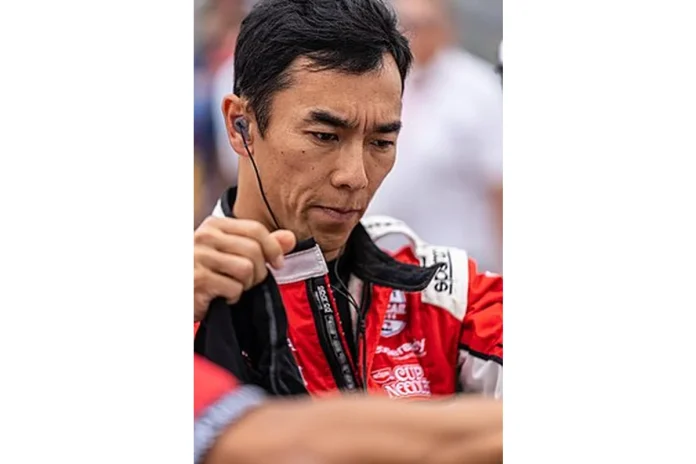
Takuma Sato, born on 28 January 1977 in Shinjuku, Tokyo, Japan, is a Japanese racing driver best known for his success in American open-wheel competition. He competes part-time in the IndyCar Series for Rahal Letterman Lanigan Racing, driving the No. 75 entry. Sato is a two-time winner of the Indianapolis 500, taking victory in 2017 and 2020, and remains the only Asian driver to win the prestigious event. Across his career he has raced in karting, Formula Three, Formula One, Formula E, Super Formula, and IndyCar.
Widely recognized for his aggressive driving style and the motto “No Attack, No Chance,” Sato built his reputation in Japan and Europe before becoming a fan favorite in North America. He also became the first Asian driver to win an IndyCar race when he triumphed at Long Beach in 2013.
Early Life and Background
Takuma Sato was born and raised in Tokyo, Japan, where he developed an early interest in motorsport. Although he began karting in Japan at the age of nineteen, his late start by European standards did not hold him back, as he won the national karting title in 1997. The success in karting helped him earn backing from Honda, a partnership that would shape much of his early career.
Outside of motorsport, Sato was a national cycling champion during his high school years. He has continued to use cycling as a key part of his physical training, an approach that has supported his endurance across long-distance races.
Path to NASCAR
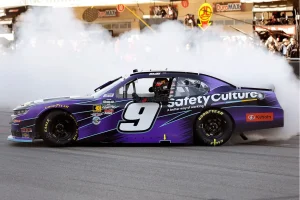
Note: This section is not applicable. Sato’s professional career has been in open-wheel racing, including Formula One, Formula E, Super Formula, and the IndyCar Series. He has not competed in NASCAR national series events.
Takuma Sato Career
Early Career (1997-2001)
After winning the Japanese national karting title in 1997, Sato moved to Europe with support from Honda. He raced briefly in Vauxhall Junior and Formula Opel before stepping up to British Formula 3 in 1999, where he debuted in Class B with Diamond Racing and scored class wins at the British Grand Prix and Spa. He then joined Carlin Motorsport in 2000, winning four races and finishing third in the overall championship.
In 2001, Sato dominated British Formula 3 with twelve wins from 26 races to claim the title, becoming the first Japanese driver to win the series. That same year he added prestigious non-championship victories at the Macau Grand Prix and the Masters of Formula 3, all with Carlin.
Formula One (2002-2008)
Sato graduated to Formula One in 2002 with the Honda-powered Jordan team, paired with Giancarlo Fisichella. He showed flashes of speed alongside wild moments, highlighted by a heavy crash in Austria and a strong fifth-place finish at his home race in Suzuka. He moved with Honda to British American Racing (BAR) in 2003 as a test driver, replacing Jacques Villeneuve for the Japanese Grand Prix and finishing sixth.
Signed as a full-time BAR driver for 2004, Sato enjoyed his strongest Formula One season, qualifying in the top three four times and finishing on the podium at the United States Grand Prix with a determined charge back through the field. The result was the first podium for a Japanese driver since Aguri Suzuki in 1990, and he ended the year eighth in the World Drivers’ Championship with 34 points, the best result ever for a Japanese driver in the series at that time.
Released by BAR at the end of 2005, Sato joined the new Super Aguri Formula One team for 2006. He helped the small Honda-linked squad earn a reputation for fighting spirit, and at the 2007 Canadian Grand Prix his late-race passes on Fernando Alonso and others won F1 Racing magazine’s “Overtake of the Year” award. Super Aguri’s financial struggles forced the team to withdraw after the 2008 Spanish Grand Prix, ending Sato’s time in Formula One after 90 starts and 44 career points.
IndyCar Breakthrough (2010-2016)
After a year away from full-time racing, Sato joined KV Racing Technology for the 2010 IndyCar Series season and finished 21st in the standings. He improved in 2011, scoring three top-five finishes and two pole positions to climb to 13th. At the 2012 Indianapolis 500 with Rahal Letterman Lanigan Racing, he famously chased Dario Franchitti through the final lap and attempted a last-corner pass, earning the respect of Indy fans.
Driving for A. J. Foyt Enterprises from 2013, Sato scored his breakthrough victory at the 2013 Toyota Grand Prix of Long Beach in his 52nd IndyCar start, becoming the first Japanese driver to win an IndyCar race. He added six top-five finishes over his time with Foyt, including two podiums and two poles, before moving on at the end of 2016.
Andretti Autosport and Indianapolis 500 Glory (2017)
Sato joined Andretti Autosport for the 2017 IndyCar Series season and quickly delivered the biggest win of his career. He captured the 2017 Indianapolis 500, becoming the first Asian driver to win the event. Later that season he added a pole at the Dual in Detroit on Belle Isle and another pole at Pocono Raceway, cementing his oval credentials.
Return to Rahal Letterman Lanigan Racing (2018-2021)
On 26 August 2017, RLL announced that Sato would return to the team for 2018 in the No. 30 car alongside Graham Rahal. Despite a turbulent season that included an early Indianapolis 500 crash, Sato saved the best for the return to Portland, where smart strategy earned him a win from 20th on the grid, his first on a permanent road course.
He opened 2019 with a dominant win at Barber Motorsports Park from pole and added a victory at Gateway later that season. On 23 August 2020, after qualifying on the outside of the front row, Sato won the Indianapolis 500 for a second time, cementing his place in IndyCar history. On 5 October 2021, RLL confirmed he would not return to the team for 2022.
Dale Coyne Racing and Chip Ganassi Racing (2022-2023)
On 9 December 2021, Sato was announced as the driver for Dale Coyne Racing with Rick Ware Racing in 2022, replacing Romain Grosjean. He finished 25th at that year’s Indianapolis 500. In 2023 he joined Chip Ganassi Racing for the oval rounds only, marking the first time since 2010 that he was not in a full-time IndyCar seat.
Rahal Letterman Lanigan Racing Era (2024-Present)
On 18 March 2024, Rahal Letterman Lanigan Racing announced that Sato would rejoin the team for an Indianapolis 500-only drive. He finished fourteenth that year, advancing to the Fast 12 round of qualifying and showing pace ahead of his teammates. He returned for the 2025 Indianapolis 500, qualifying second on the grid, leading 51 laps (the most of the field), and finishing eleventh on track before being promoted to ninth after disqualifications for Andretti drivers.
Driving Style and Strengths
Sato is renowned for an aggressive, attack-minded approach that has produced some of the most memorable closing-lap moves in Indianapolis 500 history. He pairs that boldness with strong oval pace, solid qualifying speed, and the experience of working with engineers across multiple teams, allowing him to adapt to changing cars and rules packages over more than two decades.
Notable Races and Milestones
Signature moments include his 2012 last-lap bid at the Indianapolis 500, the 2013 Long Beach win that made him the first Japanese IndyCar winner, the 2017 Indianapolis 500 victory as the first Asian winner, and the 2020 Indianapolis 500 triumph that made him a two-time winner. His 2019 Barber and 2018 Portland wins showcased his road-course ability, while his 2025 Indianapolis 500 performance reinforced his enduring speed.
Takuma Sato Career Wins
Takuma Sato has recorded six career IndyCar Series wins, 14 podiums, and 10 pole positions, with his most recent victory coming at the 2020 Indianapolis 500. His two Indianapolis 500 triumphs in 2017 and 2020 make him the only Asian driver to win the event.
IndyCar Series Highlights
Sato opened his IndyCar win account at the 2013 Toyota Grand Prix of Long Beach with A. J. Foyt Enterprises, becoming the first Asian driver to win an IndyCar race. He added the 2017 Indianapolis 500 with Andretti Autosport, the 2018 Portland race and 2019 Gateway and Barber Motorsports Park wins with RLL, and a second Indianapolis 500 in 2020. Across his IndyCar career he has earned 6 wins, 14 podiums, and 10 poles.
Other Wins and Performances
Beyond IndyCar, Sato captured the 2001 British Formula 3 Championship with Carlin Motorsport, the 2001 Macau Grand Prix, and the 2001 Masters of Formula 3. He also scored a podium at the 2004 United States Grand Prix in Formula One and set the fastest lap at the 2014 Beijing ePrix, the only Formula E race of his career.
| Series | Wins | Top Tens | Poles |
|---|---|---|---|
| IndyCar Series | 6 | 14 | 10 |
| British Formula 3 Championship | 2001 champion | Multiple | Multiple |
Takuma Sato Family
Family Background and Racing Lineage
Sato’s career has been closely tied to Honda, the Japanese manufacturer that first supported his move to Europe in 1999 and powered many of his early racing efforts. His long-time manager, Steve Fusek, has been involved in IndyCar since 1987, including leadership roles with CART and PacWest Racing, and has managed Sato since 2012.
Personal Life
Sato married Chiharu Sato in 2005, and the couple has two children, including their eldest, Rintaro Sato, who made his racing debut in the 2024 F4 Japanese Championship. Sato lives in Carmel, Indiana with Fusek during the racing season and spends the offseason in Japan.
2025 Season Performance
Takuma Sato’s 2025 campaign has been anchored by his Indianapolis 500 program with Rahal Letterman Lanigan Racing. He returned to the team for another 500-only drive, qualifying 13th before being promoted to 12th after another car failed post-qualifying inspection. The effort built on his 2024 outing, where his qualifying pace already outpaced his teammates.
In the race itself, Sato again displayed top-of-the-field pace for RLL, mixing it in the top ten and contending for stage points and a strong finish. His experience and consistency underlined his role as a senior leader within the team, even on a part-time schedule.
With the 2025 Indianapolis 500 complete, Sato’s outlook centers on potential future 500 entries with RLL and continued ambassadorial work for Honda and his sponsors. His enduring speed, particularly on ovals, keeps him firmly in the conversation whenever he returns to the cockpit.