
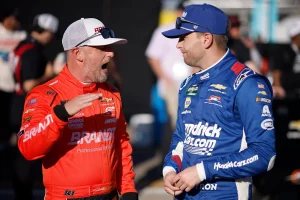
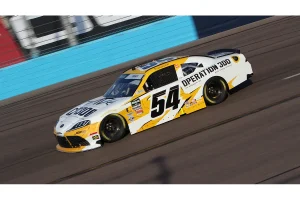
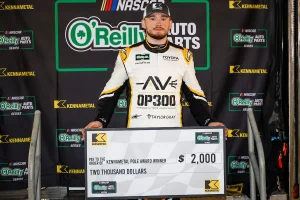
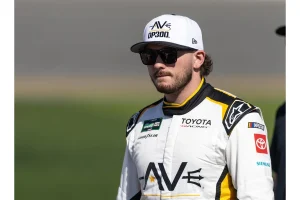
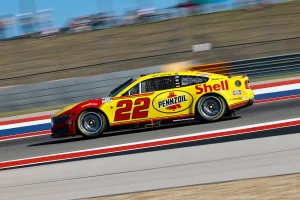
National Association for Stock Car Auto Racing (NASCAR) is the premier sanctioning body for stock car racing in the United States and one of the world’s most prominent motorsport organizations. The NASCAR Cup Series remains the sport’s headline product, running about 36 points‑paying races from February to November, plus exhibition events such as the Clash at the Coliseum and the All‑Star Race. The Next Gen Cup car, introduced in 2022, is a naturally aspirated 670‑horsepower V8 with independent rear suspension, a transaxle, composite body panels, and modular components that promote cost control and competitive parity. At superspeedways, tapered‑spacer and reduced‑power packages keep speeds below extreme levels, while at intermediates and short tracks, aero‑packages and tire compounds are tuned for balance and excitement.
The championship employs a 10‑race playoff that begins with the top 16 drivers and culminates in a Championship 4 finale at Phoenix Raceway, where the highest‑finishing driver among the four contenders takes the Cup title, regardless of the rest of the field. The Xfinity and Craftsman Truck series mirror this structure with their own regular seasons, stage‑style points, and 10‑race playoffs on shorter race formats and often younger or rising‑star lineups. Major teams such as Hendrick Motorsports, Joe Gibbs Racing, Team Penske, RFK Racing, Trackhouse Racing, Kaulig Racing, Stewart‑Haas Racing (until 2024), and 23XI Racing compete across all three series, building a cohesive NASCAR ladder through which drivers progress from Trucks to Xfinity to the Cup over several seasons. Collectively, the Cup, Xfinity, and Truck Series form a three‑tier ecosystem anchored by a long lineage of champions, rules, and technological evolution that reaches from local dirt tracks to the Daytona 500‑sized grandstands.
NASCAR Cup Series: Structure, Winners, and Rules
The NASCAR Cup Series is the top‑tier national series, running about 36 points‑paying races from February to November, plus non‑championship exhibitions like the Clash and All‑Star Race. The schedule spans:
-
Superspeedways – Daytona, Talladega, Atlanta – high‑speed circuits dominated by drafting and tight bunches.
-
Intermediate ovals – 1.5‑mile tracks such as Las Vegas, Kansas, Texas, Charlotte, Atlanta – the schedule core, emphasizing tire life, fuel strategy, and long‑run setup.
-
Short tracks – Martinsville, Bristol, Richmond, North Wilkesboro – braking‑heavy, contact‑intense layouts rewarding throttle control and restarts.
-
Road and street courses – Watkins Glen, Sonoma, Indianapolis road course, Charlotte ROVAL, COTA, Chicago street race – testing shifting, braking, and late‑braking.
-
Occasional dirt events – including the Bristol dirt race, which ties the Cup to NASCAR’s grassroots.
Races usually run 400–500 miles on ovals and 360–400 miles or lap‑count formats on road courses, each split into three stages with extra points, playoff points, and prize money for the top finishers at the end of Stage 1 and Stage 2. The Next Gen Cup car uses a 670‑horsepower V8 with independent rear suspension, composite body pieces, and standardized parts to cut costs and level the playing field.
Cup Series Champions (Complete List, 1949–2025)
The NASCAR Cup Series (or its predecessors, Strictly Stock, Grand National, Winston/Nextel/Sprint/Monster Energy Cup) has crowned a year‑end champion every season since 1949. Three drivers share the record of seven titles each: Richard Petty, Dale Earnhardt, and Jimmie Johnson. The full list of champions by year is:
-
1949 – Red Byron
-
1950 – Bill Rexford
-
1951 – Herb Thomas
-
1952 – Tim Flock
-
1953 – Herb Thomas
-
1954 – Lee Petty
-
1955 – Tim Flock
-
1956 – Buck Baker
-
1957 – Buck Baker
-
1958 – Lee Petty
-
1959 – Lee Petty
-
1960 – Rex White
-
1961 – Ned Jarrett
-
1962 – Joe Weatherly
-
1963 – Joe Weatherly
-
1964 – Richard Petty
-
1965 – Ned Jarrett
-
1966 – David Pearson
-
1967 – Richard Petty
-
1968 – David Pearson
-
1969 – David Pearson
-
1970 – Bobby Isaac
-
1971 – Richard Petty
-
1972 – Richard Petty
-
1973 – Benny Parsons
-
1974 – Richard Petty
-
1975 – Richard Petty
-
1976 – Cale Yarborough
-
1977 – Cale Yarborough
-
1978 – Cale Yarborough
-
1979 – Richard Petty
-
1980 – Dale Earnhardt
-
1981 – Darrell Waltrip
-
1982 – Darrell Waltrip
-
1983 – Bobby Allison
-
1984 – Terry Labonte
-
1985 – Darrell Waltrip
-
1986 – Dale Earnhardt
-
1987 – Dale Earnhardt
-
1988 – Bill Elliott
-
1989 – Rusty Wallace
-
1990 – Dale Earnhardt
-
1991 – Dale Earnhardt
-
1992 – Alan Kulwicki
-
1993 – Dale Earnhardt
-
1994 – Dale Earnhardt
-
1995 – Jeff Gordon
-
1996 – Terry Labonte
-
1997 – Jeff Gordon
-
1998 – Jeff Gordon
-
1999 – Dale Jarrett
-
2000 – Bobby Labonte
-
2001 – Jeff Gordon
-
2002 – Tony Stewart
-
2003 – Matt Kenseth
-
2004 – Kurt Busch
-
2005 – Tony Stewart
-
2006 – Jimmie Johnson
-
2007 – Jimmie Johnson
-
2008 – Jimmie Johnson
-
2009 – Jimmie Johnson
-
2010 – Jimmie Johnson
-
2011 – Tony Stewart
-
2012 – Brad Keselowski
-
2013 – Jimmie Johnson
-
2014 – Kevin Harvick
-
2015 – Kyle Busch
-
2016 – Jimmie Johnson
-
2017 – Martin Truex Jr.
-
2018 – Joey Logano
-
2019 – Kyle Busch
-
2020 – Chase Elliott
-
2021 – Kyle Larson
-
2022 – Joey Logano
-
2023 – Ryan Blaney
-
2024 – Joey Logano
-
2025 – Kyle Larson
This lineage spans the Petty‑era dynasties, Earnhardt’s dominance, the Johnson/Hendrick seven‑title run, and more recent multi‑title drivers like Kyle Busch, Joey Logano, Chase Elliott, Kyle Larson, and Ryan Blaney.
Cup Format and Key Rules
-
Regular season – 26 points‑paying races, with points awarded for finishes, stage wins, and race wins; stage wins build playoff points (bonus points that carry into the playoffs).
-
Fastest Lap point – One additional race point is awarded to the driver who sets the fastest lap in each race across all three national series.
-
Qualification – Top 16 drivers by points plus at least one win (or tiebreakers) enter the playoffs.
-
Round of 16, 12, 8 – Each round is three races; the four lowest‑point totals are eliminated after each segment.
-
Championship 4 – The four remaining drivers run the Phoenix finale on equal points; the highest‑finishing among them wins the title.
-
Waiver / Open‑Entry rules – NASCAR allows Open Exemption Provisional (OEP) entries for star or international drivers under strict conditions; such drivers can earn wins but not playoff points or other championship‑eligible benefits.
NASCAR Xfinity Series: Structure, Winners, and Rules
The NASCAR Xfinity Series is the second‑tier national series and the primary development ladder feeding the Cup Series. It typically runs 33–34 races per year, sharing many tracks with the Cup Series but with shorter race lengths (often 250–300 miles on ovals and reduced‑distance road‑course formats).
Track Mix and Stage Format
-
Short tracks, intermediates, superspeedways, road courses, plus special events like Dash 4 Cash, which offers extra prize money to a small group of drivers at select races.
-
Races are divided into three stages, with extra points, playoff points, and prize money at the end of Stage 1 and Stage 2.
NASCAR Xfinity Series Champions: All Winners (1982–2025)
The NASCAR Xfinity Series (known 1982–2007 as the Busch Series, 2008–2014 as the Nationwide Series) is the second‑tier national series and the main development ladder between the Craftsman Truck Series and the Cup Series. The series typically runs 33–34 races per year, on shorter‑distance formats than the Cup, but with identical stage‑style point structures and a 10‑race playoff ending in a Championship‑4 finale on the same weekend as the Cup title race.
Full list of Xfinity Series champions (1982–2025) by year:
-
1982 – Jack Ingram
-
1983 – Sam Ard
-
1984 – Sam Ard
-
1985 – Jack Ingram
-
1986 – Randy LaJoie
-
1987 – Randy LaJoie
-
1988 – Tommy Ellis
-
1989 – Rob Moroso
-
1990 – Chuck Bown
-
1991 – Bobby Labonte
-
1992 – Joe Nemechek
-
1993 – Steve Grissom
-
1994 – David Green
-
1995 – Johnny Benson Jr.
-
1996 – Randy LaJoie
-
1997 – Randy LaJoie
-
1998 – Dale Earnhardt Jr.
-
1999 – Dale Earnhardt Jr.
-
2000 – Jeff Green
-
2001 – Kevin Harvick
-
2002 – Greg Biffle
-
2003 – Brian Vickers
-
2004 – Martin Truex Jr.
-
2005 – Martin Truex Jr.
-
2006 – Kevin Harvick
-
2007 – Carl Edwards
-
2008 – Clint Bowyer
-
2009 – Kyle Busch
-
2010 – Brad Keselowski
-
2011 – Ricky Stenhouse Jr.
-
2012 – Ricky Stenhouse Jr.
-
2013 – Austin Dillon
-
2014 – Chase Elliott
-
2015 – Chris Buescher
-
2016 – Daniel Suárez
-
2017 – William Byron
-
2018 – Tyler Reddick
-
2019 – Tyler Reddick
-
2020 – Austin Cindric
-
2021 – Daniel Hemric
-
2022 – Ty Gibbs
-
2023 – Austin Hill
-
2024 – Cole Custer
-
2025 – Connor Zilisch (Jesse Love listed in some sources; precise 2025 winner may vary by reference, but Zilisch and Love are the key late‑2025‑era names).
The Xfinity Series has been a launchpad for Cup‑level talent, with champions such as Tony Stewart, Kurt Busch, Kevin Harvick, Matt Kenseth, Brad Keselowski, Kyle Busch, Martin Truex Jr., Austin Dillon, Chase Elliott, Tyler Reddick, Cole Custer, and Austin Hill all moving from Xfinity into the top division.
-
Role in the NASCAR Ladder
-
Many Cup‑level stars such as Kyle Busch, Chase Elliott, Kevin Harvick, and Brad Keselowski run select Xfinity races as part of side‑car or development programs.
-
Xfinity is the launchpad for numerous Cup drivers, including William Byron, Tyler Reddick, Cole Custer, Josh Berry, and Austin Hill, who all used the series as a bridge to full‑time Cup seats.
NASCAR Craftsman Truck Series: Structure, Winners, and Rules
The Craftsman Truck Series is the national series for pickup‑style trucks and the bottom step of the NASCAR national ladder. It runs around 23–24 races annually, mostly on ovals with a growing presence of road‑course events.
Race Length and Stage Format
-
Truck races are typically 200–300 miles or a set number of laps, often split into three stages mirroring the Cup and Xfinity formats.
-
The breed of short tracks, one‑mile, and 1.5‑mile intermediates emphasizes short‑run speed, restarts, and drafting in dense, multi‑truck fields.
NASCAR Craftsman Truck Series Champions: All Winners (1995–2025)
The NASCAR Craftsman Truck Series (originally the NASCAR SuperTruck Series, then Craftsman/National Series/Camping World‑era) is the national series for pickup‑style trucks and the bottom step of the NASCAR national ladder. The schedule usually runs around 23–24 races annually, mostly on ovals, with a growing road‑course presence, and the series uses a 10‑race playoff ending in a Championship‑4 finale where the highest‑finishing driver among the four takes the title.
Full list of Truck Series champions (1995–2025) by year:
-
1995 – Mike Skinner
-
1996 – Ron Hornaday Jr.
-
1997 – Jack Sprague
-
1998 – Ron Hornaday Jr.
-
1999 – Jack Sprague
-
2000 – Greg Biffle
-
2001 – Jack Sprague
-
2002 – Mike Bliss
-
2003 – Travis Kvapil
-
2004 – Bobby Hamilton
-
2005 – Ted Musgrave
-
2006 – Todd Bodine
-
2007 – Ron Hornaday Jr.
-
2008 – Johnny Benson
-
2009 – Ron Hornaday Jr.
-
2010 – Todd Bodine
-
2011 – Austin Dillon
-
2012 – James Buescher
-
2013 – Matt Crafton
-
2014 – Matt Crafton
-
2015 – Erik Jones
-
2016 – Johnny Sauter
-
2017 – Christopher Bell
-
2018 – Brett Moffitt
-
2019 – Matt Crafton
-
2020 – Sheldon Creed
-
2021 – Ben Rhodes
-
2022 – Zane Smith
-
2023 – Zane Smith
-
2024 – Corey Heim
-
2025 – Christian Eckes
The Truck Series has fed Erik Jones, Christopher Bell, Chase Elliott, Kyle Busch, Matt Crafton, Zane Smith, Ben Rhodes, Sheldon Creed, and others up into the Xfinity and Cup Series, making it a cornerstone of NASCAR’s driver‑development ecosystem.
Truck Series as a Development Gateway
-
Factory‑backed operations tied to Cup and Xfinity teams (Hendrick, GMS, RFK, Roush Fenway Keselowski, etc.) use the Truck Series to develop drivers, crew chiefs, and engineers.
-
Standout alumni include Erik Jones, Christopher Bell, Chase Elliott, Kyle Busch, Matt Crafton, and Zane Smith, all of whom climbed from Trucks into the Cup Series.
-
Owner‑driver and short‑track‑based outfits represent grassroots backgrounds, using Trucks to elevate regional reputations and attract larger sponsorships, often with limited budgets and opportunistic sponsorship deals.
Core Rules and Point Structure
-
Standard points for finishes:
-
3 points for a win, 1 for a draw in non‑win‑determined ties, with stage‑style formats awarding extra points for Stage 1 and Stage 2 and 1 additional point for the fastest lap in each race (all three national series, since 2025).
-
-
Playoff structures use reset‑point systems and elimination‑style rounds, with Championship 4 finales at the end of a 10‑race postseason.
-
Waivers and medical–personal‑reason exemptions exist for drivers who miss races due to family emergencies, medical issues, age‑rule delays, or major‑event conflicts, though such waivers can carry penalties (e.g., loss of playoff points).
Charter and Entry Rules
-
Cup charter system:
-
36‑car maximum field, with charters guaranteeing automatic entry for 36 of the 40‑car weekend.
-
Up to four “Open” entries (non‑charters) qualify through speed; charters are tradable assets to maintain competitive‑and‑financial stability.
-
-
Xfinity and Trucks have similar, smaller charter families and open‑entry paths, with special provisions such as Extra Entry Provisionals for world‑class or crossover drivers who do not earn playoff‑eligible points but can still win.
Safety and Technical Innovations
-
SAFER barriers (Steel and Foam Energy Reduction) installed on walls at major tracks dissipate crash energy and reduce peak G‑forces on drivers.
-
HANS (Head and Neck Support) devices, mandatory in all national series, restrain head‑and‑neck motion during high‑speed impacts and have become standard in global motorsport.
-
Carbon‑fiber seats, improved restraints, fire‑resistant suits, and advanced onboard “black boxes” record crash‑data for forensic analysis and rule refinement.
-
The Next Gen Cup car and its cousins in Xfinity and Trucks use modular body sections, standardized parts, and common‑spec components to lower costs, speed repairs, and narrow technical gaps between teams.
Ongoing Rule Changes (2025 and Beyond)
-
Faster‑lap points – One extra point for the fastest lap in each race across Cup, Xfinity, and Trucks, creating an extra mid‑race incentive.
-
Revised playoff‑waiver penalties – If a driver receives a playoff waiver for non‑medical/non‑age‑related reasons (e.g., missing a race for a crossover‑event commitment), the driver loses playoff points and starts the playoffs with baseline 2,000 points, discouraging schedule‑skipping for stars.
-
Expanded practice and qualifying windows – NASCAR increased on‑track practice time and simplified starting‑lineup rules to improve show‑quality and reduce “stacked‑field” surprises.
-
41st‑entry / Open‑Entry Provisional trials – Special OEP rules allow occasional 41st cars for star drivers from other series or international events, though these cars do not earn playoff points, prize money, or tiebreaker advantages.
Why NASCAR Matters
NASCAR is far more than a collection of stock‑car weekends; it is a cultural, economic, and technical engine that has anchored motorsports in North America for nearly eight decades. Its significance comes from several intertwined pillars:
-
Champions and rivalries:
-
The Cup Series champion list (1949–2025) spans legends like Petty, Earnhardt, Johnson, Stewart, Gordon, Busch, Logano, Larson, Blaney, and Elliott, creating multi‑decade rivalries such as Earnhardt vs. Gordon, Petty vs. Pearson, and modern Hamlin–Logano–Larson–Elliott clashes.
-
Xfinity and Truck champions like Reddick, Cindric, Hemric, Gibbs, Hill, Custer, Smith, Crafton, and Heim form a pipeline of future stars and sustaining storylines.
-
-
Rules and fairness:
-
The charter system, stage‑style points, fastest‑lap modifiers, and playoff‑waiver rules aim to balance parity, entertaintment, and financial stability.
-
Open‑entry and OEP provisions allow for crossover stars and regional talent without disrupting the core championship‑qualification logic.
-
-
Technology and safety:
-
SAFER barriers, HANS devices, carbon‑fiber safety cells, and advanced data‑recording systems have drastically reduced fatal and severe‑injury incidents and influenced safety approaches in other racing disciplines.
-
The Next Gen and its derivatives blend high‑power V8s, computer‑aided design, and simulation‑based crash‑analysis into a cost‑controlled, show‑focused package.
-
-
Grassroots and globalization:
-
Beyond the three national series, NASCAR supports regional short‑track racing, ARCA, Whelen Modified Tour, and weekly series, forming a vast grassroots network that feeds talent upward.
-
International series in Mexico, Canada, Brazil, Europe, and special Garage 56 projects at Le Mans help export NASCAR’s style and culture beyond the U.S.
-
The Apple TV streaming partnership for all NASCAR national series since 2023 centralized global distribution, ended local blackouts, and brought every national race to an international fanbase, reshaping the sport’s media footprint.
-
For tens of millions of American fans, NASCAR remains family‑oriented weekend entertainment that blends local short‑track excitement with national‑level drama. The combination of high speeds, pack‑style drafting, pit‑stop strategy, and a 36‑race, three‑tier National‑Series structure creates a narrative arc where every point can matter and a single race can shift the championship. Through that evolving structure, NASCAR continues to matter as both a sport and a cultural institution, honoring its roots while continually rewriting the rules, winners, and technology for the next generation.