RFK Racing Overview
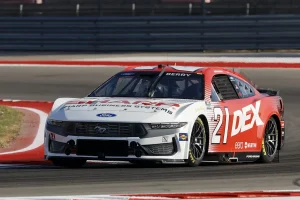
RFK Racing, doing business as Roush Fenway Keselowski Racing, is an American professional stock car racing organization that competes in the NASCAR Cup Series. Headquartered in Concord, North Carolina, the team was founded in 1988 and has evolved through several ownership structures, beginning as Roush Racing, becoming Roush Fenway Racing in 2007 when Fenway Sports Group acquired a 50 percent stake, and rebranding to RFK Racing in 2022 when Brad Keselowski joined as a co-owner alongside Jack Roush and John W. Henry. The team competes with Ford Mustang vehicles and currently fields three full-time entries in the NASCAR Cup Series, amassing a legacy that includes two NASCAR Cup Series championships, eight total championships across multiple series, and more than 330 combined victories in national NASCAR competition.
Founding and Organizational Origins
Roush Racing was established by Jack Roush, a former Ford Motor Company employee and founder of Roush Performance. Prior to entering NASCAR competition, Roush had competed and won championships in various drag racing and sports car racing series since the mid-1960s, including the NHRA, SCCA Trans-Am Series, IMSA GT Championship, and the 24 Hours of Daytona. The racing business originated as a small branch of Roush’s successful automotive engineering and road-racing equipment company based in Livonia, Michigan. Early Roush drivers included Tommy Kendall, Scott Pruett, and Willy T. Ribbs.
The NASCAR operation, founded in 1988 and based in Concord, North Carolina, quickly became the cornerstone of the company. From its inception, Roush competed exclusively in Ford brand automobiles. The organization also operates Roush-Yates Engines, which provides engines for most Ford teams competing in NASCAR and ARCA competition.
Growth Into NASCAR Competition
Roush expanded its racing portfolio systematically across multiple NASCAR national series. The Xfinity Series program began in 1992 with the No. 60 entry driven by Mark Martin. The NASCAR Craftsman Truck Series operation launched in 1995, and the organization entered ARCA competition in 2005. This multi-series approach allowed the team to develop drivers progressively from lower divisions up to the Cup Series.
Roush-Yates Engines, formed in 2004 as a partnership between Roush and rival Yates Racing, became one of the most influential engine programs in NASCAR. By 2006, most Ford teams were using Roush-Yates powerplants, including Team Penske, Wood Brothers Racing, Rick Ware Racing, Haas Factory Team, and Front Row Motorsports. This engine partnership solidified Roush’s technical importance within the Ford racing ecosystem.
RFK Racing Competitive Journey
RFK Racing has evolved from a single-car operation in 1988 into one of NASCAR’s most accomplished organizations, accumulating championships and victories across multiple national series while developing numerous drivers who advanced to become Cup Series stars.
Early Seasons and Development (1988–2004)
During its first decade and a half of competition, Roush built its technical capabilities and driver development infrastructure. The organization operated multiple Cup Series teams, sharing information and resources across the enterprise to improve performance. In 2001, after years in separate facilities, all Roush teams consolidated into a single shop in Concord to enhance communication and competitive performance. This organizational structure became a model for multi-team operations in NASCAR.
The early 2000s brought breakthrough success. Matt Kenseth captured the Winston Cup championship in 2003, and Kurt Busch won the inaugural Nextel Cup championship in 2004, giving Roush consecutive Cup Series titles. These championships established the organization as a dominant force in NASCAR competition.
Breakthrough in NASCAR Cup Series (2005–2011)
The 2005 season marked a historic achievement when all five Roush teams qualified for the Chase for the Nextel Cup, setting a NASCAR record that still stands. The organization operated five full-time Cup teams between 1998 and 2000, and again from 2003 through 2009, more than any other NASCAR organization during that era. Roush’s multi-team structure allowed information sharing and resource allocation that other teams could not match.
Following the 2009 season, NASCAR mandated that Roush reduce its operation to four Cup Series teams, and the organization later consolidated to two full-time entries by 2016. During this period, drivers including Carl Edwards, Greg Biffle, Ricky Stenhouse Jr., and Chris Buescher represented the team at various competition levels. Edwards and Biffle both won multiple championships in the Xfinity Series with Roush equipment, while Stenhouse Jr. captured back-to-back Xfinity championships in 2011 and 2012.
Modern Program and Current Direction (2022–Present)
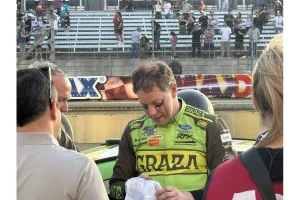
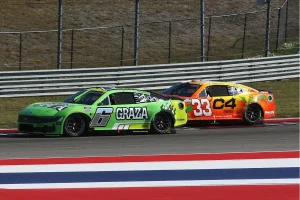
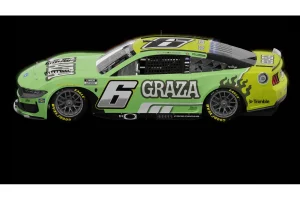
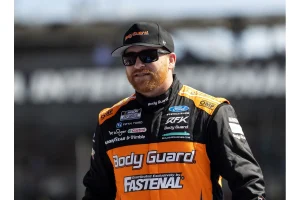
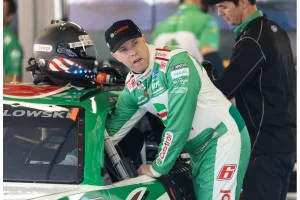
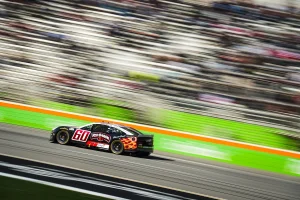
RFK Racing currently fields three full-time NASCAR Cup Series entries. Brad Keselowski drives the No. 6 Ford Mustang Dark Horse as driver and co-owner, having joined the organization in 2022 after departing Team Penske. Chris Buescher pilots the No. 17 Mustang, and Ryan Preece competes full-time in the No. 60 Mustang starting in 2025 with Kroger as the primary sponsor. Corey LaJoie drives the No. 99 on a part-time schedule.
Keselowski’s arrival as co-owner signaled a new chapter for the organization. The team expanded back to a three-car operation for the 2025 season for the first time since 2016. RFK continues to operate Roush-Yates Engines and maintains technical alliances with Front Row Motorsports and other Ford teams. Ford remains the exclusive manufacturer partner.
Philosophy and Competitive Strengths
RFK Racing’s competitive identity centers on engineering excellence and systematic driver development. The organization historically recruited developmental drivers through The Gong Show, an elimination-style testing program that identified future stars including Kurt Busch, Carl Edwards, and David Ragan. Roush-Yates Engines provides technical superiority by supplying engines and support to multiple Ford teams, creating a technical network that benefits the organization and its partners.
Key Milestones and Major Moments
The organization’s defining moments include the consecutive Cup Series championships in 2003 and 2004, the historic five-team Chase qualification in 2005, the Fenway Sports Group partnership announcement in 2007, and Keselowski’s arrival as co-owner in 2022 that brought the RFK Racing name to the forefront. The Xfinity Series program produced five driver championships, and the Truck Series operation served as a springboard for drivers who reached Cup Series success.
RFK Racing Achievements and Results
RFK Racing has established itself as one of NASCAR’s most successful organizations with championships, hundreds of wins, and countless podium finishes across multiple national series spanning more than three decades of competition.
NASCAR Cup Series Achievements
The organization has captured two NASCAR Cup Series championships, winning consecutive titles in 2003 with Matt Kenseth and 2004 with Kurt Busch. The team has accumulated 143 Cup Series victories and 92 pole positions. These championships represent the pinnacle of the organization’s competitive success in NASCAR’s premier division.
Xfinity Series Achievements
Roush dominated the Xfinity Series with five driver championships, winning titles with Greg Biffle in 2002, Carl Edwards in 2007, Chris Buescher in 2015, and back-to-back championships with Ricky Stenhouse Jr. in 2011 and 2012. The No. 60 team driven by Mark Martin established early dominance, and the program accumulated 137 wins before the Xfinity operation concluded following the 2018 season.
Craftsman Truck Series Achievements
The Truck Series program won 50 races and captured the 2000 series championship with Greg Biffle. The operation served as a critical development ground for future Cup Series stars, including Kurt Busch, Kyle Busch, Carl Edwards, and others who used Roush trucks to advance their careers before moving to top-level competition.
ARCA Menards Series Achievements
Roush competed in the ARCA Menards Series starting in 2005, accumulating 4 wins and 3 pole positions across 30 races. While championship success eluded the organization in ARCA competition, the program contributed to driver development and technical advancement.