Front Row Motorsports Overview
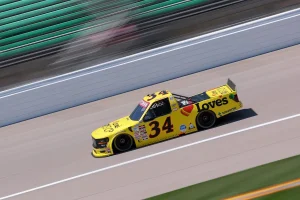
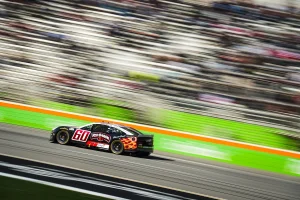
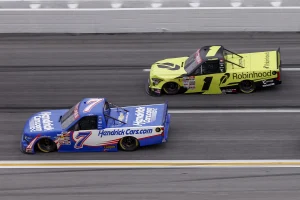
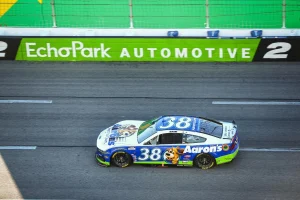
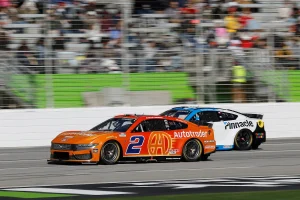
Front Row Motorsports (FRM) is an American professional stock car racing team that competes in the NASCAR Cup Series and NASCAR Craftsman Truck Series. Founded in 2004 and based in Mooresville, North Carolina, the organization fields Ford Mustang Dark Horse entries full-time in the Cup Series and Ford F-Series trucks in the Truck Series. Owned by Bob and Brad Jenkins, FRM has earned recognition as a competitive small-budget operation that has achieved notable success at superspeedway tracks, including victories at the Daytona 500, Talladega Superspeedway, Pocono Raceway, and Indianapolis Motor Speedway. The team operates with approximately 60 employees and maintains technical alliances with major Ford teams, including RFK Racing from 2016 to 2023 and Team Penske beginning in 2024. FRM currently fields entries in the Cup Series under Nos. 4, 34, and 38, along with Truck Series entries under Nos. 34 and 38.
Founding and Organizational Origins
Front Row Motorsports traces its roots to 2004 when restaurant entrepreneur Bob Jenkins partnered with team owner Jimmy Means to form Means-Jenkins Motorsports. Jenkins, who owns more than 250 Yum! Brands restaurant franchises including KFC, Taco Bell, Long John Silver’s, and A&W locations, began his NASCAR involvement as a sponsor for a Busch Series entry driven by Brad Teague. After taking full ownership of the team in 2005, Jenkins rebranded the operation as Front Row Motorsports and entered the NASCAR Cup Series. The early years were challenging, as the team operated on a limited budget with equipment often acquired secondhand from other teams.
In 2005, FRM moved into a shop in Mooresville, North Carolina, that previously housed MDM Motorsports and Ranier Racing. The team initially struggled to establish itself, frequently running part-time schedules due to sponsorship constraints. During these formative years, FRM relied heavily on Jenkins’s restaurant franchises, including Taco Bell and Long John Silver’s, to appear on the cars when outside sponsorship was unavailable. The team gradually built its operational foundation, hiring key personnel and establishing relationships with other NASCAR organizations that would later prove critical to its growth.
Growth Into NASCAR Competition
FRM began running part-time in the Cup Series in 2004 and attempted to expand to full-time competition in 2005, though sponsorship limitations forced the team to run a limited schedule. During the late 2000s, the team continued to develop its infrastructure while competing with modest resources. A significant turning point came in 2009 when Front Row Motorsports formed a partnership with Earnhardt Ganassi Racing, acquiring owner points that provided some stability in qualifying for races. This alliance helped the team become locked into the first five races of subsequent seasons.
The 2010 season marked a pivotal shift when FRM switched to Ford and established a technical alliance with Roush and Yates Racing. This relationship provided the team with manufacturer support and access to better equipment, enabling gradual improvement in competitiveness. In 2012, the signing of David Ragan, a noted restrictor-plate specialist, positioned FRM to capitalize on its growing strength at superspeedway tracks. The following year, Ragan delivered the team’s first Cup Series victory at Talladega Superspeedway, beginning a reputation for excellence on tracks where aerodynamic disadvantages are minimized.
Front Row Motorsports Competitive Journey
Front Row Motorsports has evolved from a struggling small-budget operation into a respected NASCAR organization with multiple wins and championships across national series. The team’s competitive trajectory has been defined by its ability to punch above its weight at superspeedways and short tracks, where driver skill and race strategy often matter more than pure equipment parity. Over nearly two decades of competition, FRM has developed drivers, built technical partnerships, and achieved milestones that seemed unlikely during its humble beginnings.
Early Seasons and Development (2004-2011)
The team’s early years were characterized by instability and limited resources. Operating from 2004 through 2010, FRM frequently fielded cars as start-and-park operations due to insufficient funding for full-distance races. The No. 34 car, which became the team’s primary entry, cycled through numerous drivers including Todd Bodine, Randy LaJoie, Chad Chaffin, Kevin Lepage, John Andretti, and Tony Raines during this period. Despite these challenges, the team gradually built experience and infrastructure, with Steve Lane serving as crew chief and helping establish basic operational procedures.
A breakthrough moment came in 2009 when Tony Raines drove the No. 34 to a fourth-place finish at the Aaron’s 312 at Talladega Superspeedway, delivering FRM’s first top-ten or top-five finish in either series. This performance demonstrated the team’s potential at superspeedway tracks and laid the groundwork for future success. In 2011, David Gilliland joined the team and finished third in the Daytona 500, signaling that FRM could compete for strong results at the sport’s biggest events. The combination of Gilliland’s plate-racing abilities and the team’s growing technical resources began attracting attention within the garage.
Breakthrough in NASCAR Cup Series (2012-2016)
The 2012 signing of David Ragan proved transformative for FRM’s competitive fortunes. Ragan’s superspeedway expertise elevated the team’s performance, with a fourth-place finish at Talladega in October demonstrating improved competitiveness. In 2013, Ragan delivered the milestone victory the organization had been building toward, winning the Aaron’s 499 at Talladega Superspeedway with a dramatic last-lap pass. Teammate David Gilliland finished second, producing FRM’s first one-two finish and marking the first win for a No. 34 car since Wendell Scott’s historic victory in 1964. The team earned sixteen top-25 finishes throughout the season, establishing itself as a legitimate competitor at plate tracks.
Following Ragan’s departure, FRM continued its upward trajectory by forming an expanded technical alliance with Roush Fenway Racing in 2016. This partnership enabled the team to sign Chris Buescher, the reigning Xfinity Series champion, to drive the No. 34 car. Buescher delivered a stunning victory in the rain-shortened Pennsylvania 400 at Pocono Raceway, becoming the first driver since Joey Logano in 2009 to win a race while competing for Rookie of the Year honors. The victory secured FRM’s first-ever berth in the NASCAR Chase for the Cup playoffs, with Buescher ultimately finishing sixteenth in points, a career-best for the organization at that time.
Modern Program and Current Direction (2017-Present)
Following Buescher’s departure, Michael McDowell took over driving duties for the No. 34 car in 2018 and would become central to FRM’s most significant achievements. McDowell began his tenure with modest results but found his stride at superspeedway tracks. In 2021, he delivered the most prestigious victory in team history by winning the Daytona 500, finishing as a 100-1 underdog in his 358th Cup Series start. This breakthrough victory elevated FRM’s profile and demonstrated the team’s capability to win at the highest levels of NASCAR competition.
The 2023 season brought another milestone when McDowell dominated the Verizon 200 at the Brickyard, leading the most laps in a race for the first time in team history. That same year, FRM expanded its Cup Series program by acquiring assets from BK Racing and later purchasing a third charter from Stewart-Haas Racing. For the 2025 season, the organization fields three full-time Cup Series entries with Noah Gragson in the No. 4 Ford Mustang Dark Horse, Todd Gilliland in the No. 34, and Zane Smith in the No. 38. This expansion reflects the team’s growth from a modest part-time operation to a three-car organization with increased resources and technical support from Team Penske.
Philosophy and Competitive Strengths
Front Row Motorsports has built its identity around excelling at tracks where aerodynamic performance matters less than driver skill and race execution. The team has become particularly strong at superspeedways such as Talladega and Daytona, where pack racing and restrictor plates create opportunities for calculated risks and strategic positioning. FRM also demonstrates competitive ability at short tracks and road courses, where mechanical grip and driver talent often outweigh the advantages held by larger teams with superior resources. This strategic focus allows the organization to compete effectively despite operating on a fraction of the budget that top-tier teams command.
Key Milestones and Major Moments
FRM’s history includes several landmark achievements that define the organization’s competitive journey. The 2013 Talladega victory delivered the team’s first Cup Series win under David Ragan, while Chris Buescher’s 2016 Pocono win secured the first playoff berth in team history. Michael McDowell’s 2021 Daytona 500 victory represented the largest upset in the race’s modern era and remains the organization’s most celebrated accomplishment. The 2022 Truck Series championship with Zane Smith brought FRM its first national series title, validating the team’s development pipeline and technical partnerships. These moments reflect the steady progression from a struggling startup to an established NASCAR contender.
Front Row Motorsports Achievements and Results
Front Row Motorsports has accumulated a impressive record across NASCAR’s top three national series, including multiple championships, major victories, and consistent playoff appearances. The organization’s total record shows 24 career wins, 16 pole positions, and championships at both the Cup Series and Truck Series levels. These accomplishments have been achieved while maintaining the identity of a small-budget operation that maximizes its resources through strategic partnerships and focused competitive priorities.
NASCAR Cup Series Achievements
FRM has earned four Cup Series victories that represent the cornerstone of the organization’s accomplishments. David Ragan’s 2013 win at Talladega delivered the team’s breakthrough moment, while Chris Buescher’s 2016 victory at Pocono established FRM as a playoff-caliber team. Michael McDowell’s 2021 Daytona 500 win stands as the organization’s most prestigious achievement, marking the first time FRM visited victory lane at NASCAR’s most iconic event. McDowell added another significant victory in 2023 at Indianapolis Motor Speedway, leading the most laps in a breakthrough performance that demonstrated the team’s potential to dominate at major tracks.
Truck Series Achievements
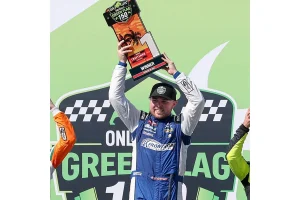
The Truck Series program has been remarkably successful for FRM, with 20 total victories and one championship. Zane Smith’s 2022 season proved historic, as he won the Truck Series championship at Phoenix Raceway, delivering FRM its first national series title. Smith also won at Daytona that season, establishing himself as a dominant force in the division. The organization has continued its Truck Series success with additional wins from drivers including Todd Gilliland, Brett Moffitt, Layne Riggs, and Chandler Smith, building a development platform that feeds talent into the Cup Series program.