Team Penske Overview
Team Penske is an American professional auto racing organization founded in 1966 and headquartered in Mooresville, North Carolina. The team competes across multiple racing series including the IndyCar Series, NASCAR Cup Series, IMSA SportsCar Championship, and FIA World Endurance Championship. Owned and chaired by Roger Penske through Penske Corporation, Team Penske has established itself as one of the most successful racing organizations in motorsport history with more than 660 race victories and 44 championships. The team maintains manufacturer partnerships with Chevrolet for IndyCar competition, Ford for NASCAR competition, and Porsche for IMSA and WEC competition. Team Penske fields entries in IndyCar Series with car numbers 2, 3, and 12, while the NASCAR Cup Series program operates car numbers 2, 12, and 22.
The organization operates from a state-of-the-art facility in Mooresville and maintains a distinct identity characterized by its red, white, and black team colors. Throughout its nearly six-decade history, Team Penske has demonstrated remarkable versatility by succeeding across multiple racing disciplines including open-wheel, stock car, sports car, and endurance racing. The team’s competitive portfolio includes a record 20 Indianapolis 500 victories, making it the most successful team in the history of that prestigious event. Team Penske has produced numerous championship-winning drivers and has maintained its position at the pinnacle of American motorsport through strategic leadership, technical excellence, and continuous investment in infrastructure and personnel.
Founding and Organizational Origins
Roger Penske established Team Penske in 1966, initially focusing on sports car racing competition. The team’s first major competitive appearance came at the 1966 24 Hours of Daytona with a Lola T70 entered for driver Mark Donohue. This early involvement in endurance racing laid the foundation for what would become a diversified racing operation. Penske, a former race driver himself, built the organization with a business-oriented approach that emphasized professionalism, technical development, and strategic partnerships with manufacturers and sponsors.
The early years saw Team Penske competing primarily in the Can-Am Series and Trans-Am Series, where Donohue drove the team to consecutive championships. The blue Sunoco-liveried Chevrolet Camaro claimed Trans-Am titles in 1968 and 1969, establishing Penske’s reputation for building competitive programs. The partnership with manufacturers such as AMC and Porsche during this period demonstrated Penske’s ability to develop winning relationships with automotive companies seeking racing exposure. This foundational period established the operational philosophy that would guide Team Penske throughout its expansion into additional racing disciplines.
Growth Into IndyCar Competition
Team Penske entered IndyCar racing in 1968, initially competing with a stock block-powered Eagle chassis driven by Mark Donohue. The team made its Indianapolis 500 debut in 1969, where Donohue earned Rookie of the Year honors. This marked the beginning of Penske’s long-standing relationship with the Indianapolis Motor Speedway and the open-wheel racing community. The organization gradually expanded its IndyCar program throughout the early 1970s, building the technical infrastructure and personnel necessary to compete for championships.
A pivotal moment came in 1971 when Donohue delivered Team Penske’s first IndyCar victory at the Pocono 500. The following year in 1972, Donohue secured the team’s first Indianapolis 500 victory, beginning a legacy of dominance at the Brickyard that continues to this day. In 1978, Roger Penske co-founded Championship Auto Racing Teams alongside other prominent team owners, creating the CART sanctioning body in response to disputes with USAC. This strategic move positioned Team Penske at the center of American open-wheel racing governance and helped shape the sport’s commercial development throughout the 1980s and 1990s.
Team Penske Competitive Journey
Team Penske has pursued competitive excellence across multiple racing disciplines throughout its history, expanding from its initial sports car and Trans-Am roots into a diversified organization competing in IndyCar, NASCAR, Formula One, sports car racing, and endurance events. The team’s competitive journey reflects a strategic approach to motorsport participation, entering series with strong manufacturer partnerships and departing when opportunities diminished. Team Penske has demonstrated particular strength in American open-wheel racing while building formidable programs in stock car and sports car competition.
Early Seasons and Development (1966-1980s)
The formative years of Team Penske established patterns of technical innovation and competitive success that defined the organization. Mark Donohue served as the team’s primary driver during this period, winning championships in Trans-Am and Can-Am competition while developing Penske’s technical capabilities. The partnership with Porsche during the early 1970s produced dominant performances in Can-Am racing, including George Follmer’s 1972 championship and Mark Donohue’s commanding 1973 season with the Porsche 917/30. These successes demonstrated Penske’s ability to extract maximum performance from manufacturer partnerships.
The open-wheel program grew steadily throughout the 1970s and 1980s, producing Indianapolis 500 victories and establishing Penske as a championship contender. The team developed its own chassis during the CART era, building cars in England that competed against other top teams. Driver lineups featuring Al Unser, Rick Mears, and Danny Sullivan brought continued success, with the team accumulating multiple Indianapolis 500 wins and CART championships. This period established Team Penske’s reputation for engineering excellence and strategic race management that would define the organization moving forward.
Breakthrough in IndyCar (1990s-2000s)
The 1994 season represented one of Team Penske’s most dominant performances in IndyCar history. Powered by the revolutionary Penske PC-23 chassis and Ilmor-Indy V8 engine, the lineup of Al Unser Jr., Paul Tracy, and Emerson Fittipaldi amassed 12 wins, 10 pole positions, and 28 podium finishes across 16 races. The season’s defining achievement came at the Indianapolis 500, where Penske introduced the powerful Mercedes-Benz 500I engine, securing the pole position and outside front row. Al Unser Jr. ultimately won the race after Fittipaldi crashed late in the event, giving Team Penske a dominant victory. However, the following year proved challenging when Penske failed to qualify any cars for the Indianapolis 500.
The open-wheel split of the mid-1990s led Team Penske to navigate complex competitive landscapes. The organization returned to Indianapolis 500 competition in 2001 following the split resolution, delivering a dramatic 1-2 finish with rookie Hélio Castroneves and Gil de Ferran leading the most laps. This victory marked a significant milestone for Roger Penske, who described it as the biggest of all his Indianapolis 500 wins after the disappointment of 1995. The subsequent years saw continued investment in IndyCar competition, with manufacturer partnerships shifting from Oldsmobile to Toyota to Honda before settling with Chevrolet beginning in 2012.
Championship Success (2010s-Present)
The 2010s brought sustained championship success for Team Penske in IndyCar competition. Will Power claimed the 2014 IndyCar Series Championship after three consecutive runner-up finishes, adding to Penske’s legacy. Simon Pagenaud secured the 2016 championship as Team Penske finished 1st, 2nd, and 3rd in the final standings. Josef Newgarden joined the team in 2017 and immediately won the championship, repeating his title success in 2019. The team maintained its championship-winning pace into the 2020s, with Will Power capturing his second championship in 2022.
Indianapolis 500 success continued throughout this period, with Team Penske adding victories in 2015, 2018, 2019, 2023, and 2024. The 2024 victory marked Team Penske’s record 20th Indianapolis 500 triumph, with Josef Newgarden becoming the first back-to-back winner since Hélio Castroneves. The team navigated challenges including a 2024 disqualification at St. Petersburg due to technical violations, responding with continued competitive performance throughout the season. Current IndyCar drivers include Josef Newgarden in the No. 2 Hitachi entry, Scott McLaughlin in the No. 3 Dallara, and David Malukas in the No. 12 Verizon entry.
Modern Program and Current Direction
Team Penske operates as a diversified racing organization competing across multiple professional series with substantial technical resources and experienced personnel. The Mooresville, North Carolina headquarters houses engineering, fabrication, and operational capabilities for all racing programs. President Tim Cindric leads day-to-day operations under the guidance of Chairman Roger Penske, maintaining the organizational structure that has driven decades of success. The current three-car IndyCar program represents a return to full-time competition following the departure of Simon Pagenaud after the 2021 season.
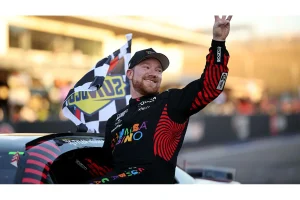
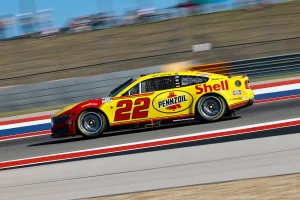
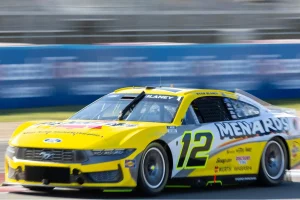
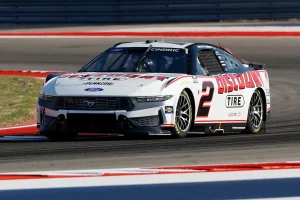
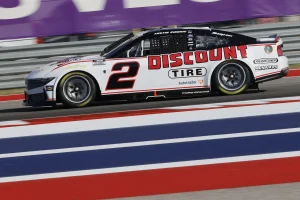
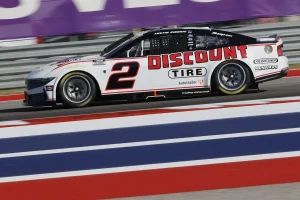
The NASCAR Cup Series program operates with manufacturer partner Ford, fielding entries for Austin Cindric in the No. 2 car, Ryan Blaney in the No. 12, and Joey Logano in the No. 22. This program has produced multiple championships and continues to compete for race victories and playoff positioning. The sports car and endurance racing program utilizes Porsche machinery in both IMSA SportsCar Championship and FIA World Endurance Championship competition, with the Porsche 963 serving as the current platform. Current IMSA drivers include Matt Campbell, Kévin Estre, and Laurens Vanthoor in the No. 6 entry, with Julien Andlauer, Laurin Heinrich, and Felipe Nasr driving the No. 7 Porsche 963.
Philosophy and Competitive Strengths
Team Penske has built its reputation on engineering excellence, strategic race management, and the ability to develop strong partnerships with manufacturers and sponsors. The organization emphasizes technical development and continuous improvement across all competitive programs. Race strategy, pit crew performance, and driver development represent core competencies that have contributed to sustained success. The team’s willingness to invest in infrastructure and personnel reflects a long-term commitment to motorsport competition that distinguishes Penske from many competing organizations.
Key Milestones and Major Moments
Team Penske’s history includes numerous landmark achievements that have shaped American motorsport. The first Indianapolis 500 victory in 1972 with Mark Donohue began a record-setting pattern of success at the Brickyard. The 2001 return to Indianapolis 500 competition following the open-wheel split produced a dramatic 1-2 finish. The organization’s Formula One participation from 1974 to 1976 resulted in a single Grand Prix victory in Austria, making Penske one of only two American constructors to achieve a win in Formula One competition. The 2014 Indianapolis 500 controversy involving telemetry manipulation resulted in a disqualification and multi-race suspension for team president Tim Cindric, representing a rare setback for the organization.
Team Penske Achievements and Results
Team Penske has accumulated an extensive record of competitive accomplishments across multiple racing disciplines throughout its history. The organization has secured 44 total championships including nine USAC championships, 16 IndyCar Series championships, nine CART championships, five NASCAR Cup Series championships, two Xfinity Series championships, and additional titles in sports car and international competition. With more than 660 total race victories across various series, Team Penske ranks among the most successful racing organizations in motorsport history.
IndyCar Series Achievements
Team Penske’s IndyCar program represents the cornerstone of the organization’s competitive legacy. The team has accumulated 248 IndyCar Series victories along with 231 pole positions and 244 race wins across CART and IndyCar competition. The record 20 Indianapolis 500 victories span from 1972 through 2024, with recent wins by Hélio Castroneves, Juan Pablo Montoya, Will Power, Josef Newgarden, and others maintaining the team’s dominance at the Brickyard. Key Indianapolis 500 victories include the dramatic 2001 return victory, the controversial 2002 finish, and the record-tying and record-breaking wins in recent years.
NASCAR Achievements
The NASCAR program has contributed significantly to Team Penske’s competitive portfolio with 157 Cup Series victories and five championships. Joey Logano captured the NASCAR Cup Series championship driving for Team Penske, adding to the organization’s stock car success. The Xfinity Series program achieved two championships and 81 race victories before scaling back full-time participation. Current NASCAR drivers Ryan Blaney and Joey Logano continue to compete for victories and championships within the NASCAR playoff system.
IMSA and Sports Car Achievements
Team Penske has maintained a strong presence in sports car and endurance racing throughout various periods of its history. The American Le Mans Series program secured multiple LMP2 championships with Porsche RS Spyder machinery, while the return to IMSA competition with Acura produced drivers championships in 2019 and 2020. The current Porsche 963 program competes in both IMSA WeatherTech SportsCar Championship and FIA World Endurance Championship, representing Team Penske’s continued commitment to top-level endurance racing. The partnership with Porsche has included overall victories and prototype competition success across North American and international endurance events.