
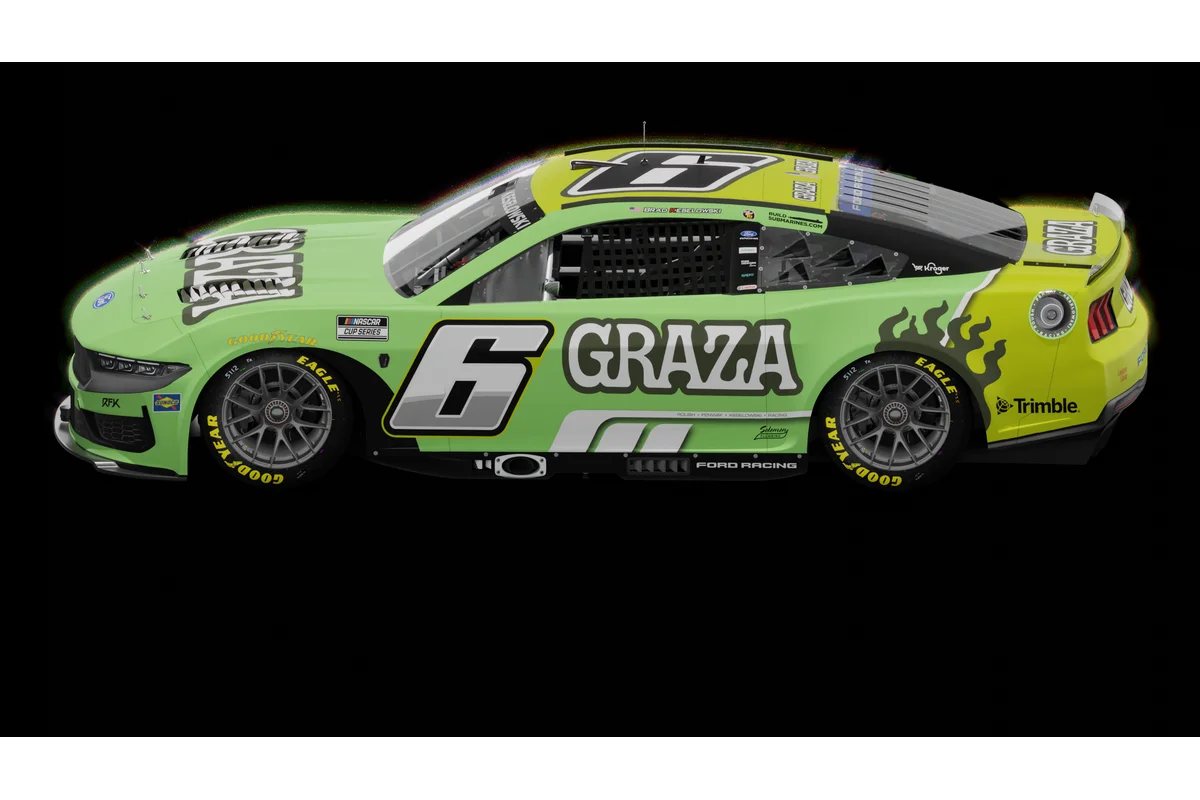
Brad Keselowski has once again criticized NASCAR’s growing emphasis on road courses, expressing concerns about their impact on fans, sponsors, and ratings. Speaking from Daytona Beach, Florida, Keselowski, a 2012 Cup Series champion and current team owner, argued that the increasing number of road course events is hurting the business side of NASCAR.
Keselowski Voices Concerns Over NASCAR’s Road Course Expansion
Since the NASCAR Cup Series increased its road course races from two to six, Keselowski has openly questioned this shift, highlighting its negative effects on fan interest and sponsorship appeal. Viewing the situation as both a competitor and a business leader, he emphasized that road courses have traditionally struggled with lower attendance, diminished TV ratings, and weaker sponsor engagement.
“As a business owner, it’s the hardest races to sell sponsors for. It has the lowest attendance, the lowest ratings,”
he said.
“That doesn’t make sense to me. We should be going places where the sponsors wouldn’t be there, the fans wouldn’t be there, and TV gets the best ratings. And road courses are historically the worst in all of those categories. So, I don’t feel any obligation to that.”
– Brad Keselowski, NASCAR driver and team owner
This argument aligns with ongoing debates in the sport about the surge in road course events. While they can sometimes produce exciting finishes, data consistently show that many road course races draw smaller TV audiences compared to traditional oval events.
Viewer Numbers and Fan Reactions Highlight Challenges
For example, the 2025 Cup race at Sonoma averaged roughly 2.19 million viewers, below the ratings typically seen at midseason oval races. This decline in viewership extends to multiple road course events, contributing to a divided fan base. Some fans appreciate the added complexity and skill demanded by road courses, but many remain loyal to NASCAR’s oval racing roots.
Attendance figures reveal similar difficulties. Though NASCAR does not regularly publish comprehensive attendance data, information from venues such as Indianapolis shows that crowds at road course configurations are significantly smaller than in years past when the traditional oval format was used.
The Brickyard 400, once famous for drawing over 200,000 spectators, saw these numbers drop as the event transitioned to the road course layout. This highlights a broader trend where road course races fail to replicate the atmosphere and sellout crowds that ovals like Daytona and Talladega continue to generate.
These factors weigh heavily on sponsors, whose investments depend on strong TV ratings and live audience sizes to maximize brand visibility. Road course races can limit their return on investment due to smaller audiences, causing hesitation among sponsors eager to support NASCAR’s top series.
Keselowski reinforced these points during his comments.
“Why more people tune into an oval versus a road course. I think a lot of fans identify NASCAR with ovals. And they understand the concept of what we’re doing on ovals and enjoy it more than they do on road courses,”
he stated.
Keselowski’s Difficult Race at Circuit of The Americas Adds to Criticism
Keselowski’s frustrations were compounded by his recent performance at the Circuit of The Americas (COTA) road course. Starting 26th on the grid, he faced challenges recovering from a broken leg and struggled with car handling issues throughout the race.
An early, extended pit stop further hampered his efforts, dropping him deep in the field. Over team radio, Keselowski expressed his difficulties managing the car’s balance on the technical Austin circuit.
“It’s pretty tight at turn-in on every corner, and then from there it’s like I have too much wheel in it and it really shoots the back out hard on me,”
he said.
“I’m just really, really struggling here with no grip.”
– Brad Keselowski, driver
Despite a modest improvement from 29th in Stage 2 to finish 20th overall, the race was a tough reminder of the challenges road courses present, especially for a driver still regaining form after injury.
What This Means for NASCAR’s Future Road Course Strategy
Keselowski’s outspoken stance reflects broader ambivalence in NASCAR as the sport balances tradition with innovation. The increased inclusion of road courses aims to diversify race formats and attract new audiences but risks alienating some core fans and sponsors who prefer oval racing.
As viewership data and attendance numbers suggest, road courses have yet to fully capture a mainstream NASCAR audience, leading to ongoing debate about the optimal race schedule. Keselowski’s dual perspective as a veteran driver and team owner underscores the complexity of these decisions, particularly when sponsorship dollars and fan engagement are at stake.
The coming seasons will likely see NASCAR reassessing its approach, weighing fan preferences and business realities before deciding how prominently road courses figure in future Cup Series calendars. Keselowski’s critiques ensure this debate remains front and center among drivers, owners, and executives as the sport evolves.
