
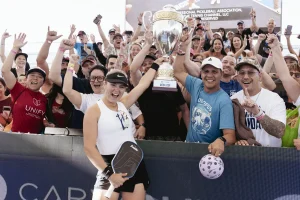

Pickleball has ignited a sporting frenzy as America’s—and arguably the world’s—fastest-growing game, seamlessly blending the strategic depth of tennis, the compact court of badminton, and the quick reflexes of table tennis into a paddle sport that’s irresistibly accessible for beginners yet devilishly skillful for pros. Invented casually in 1965 by three dads on a summer afternoon, it now boasts over 36.5 million U.S. players (up 223% since 2019), thousands of courts nationwide, and multimillion-dollar pro circuits like PPA and MLP drawing celebrity crowds and TV deals. Whether rallying in your driveway, dominating seniors’ leagues, or chasing majors with stars like Ben Johns and Anna Leigh Waters, pickleball delivers low-impact joy, fierce competition, and endless social bonds—proving it’s far more than a trend; it’s the future of racket sports.
Invention and History
In 1965, three fathers—Joel Pritchard (U.S. Congressman), Bill Bell, and Barney McCallum—frustrated by a badminton shortage, improvised on an old badminton court using ping-pong paddles, a lowered net, and a plastic Wiffle ball. The game stuck; Pritchard named it after his dog “Pickles,” who chased balls (or family boat “Pickle”). By 1967, McCallum codified rules and built the first permanent court. Spread via Bainbridge Yacht Club; 1972 first organized play (Washington); 1976 inaugural tournament (Tukwila, WA, 16 players).
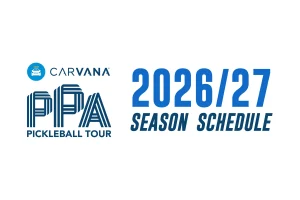
1984: USA Pickleball Association (USAP) formed in Washington. 1990s: Indoor boom, 1K courts nationwide. 2010s acceleration: 2016 U.S. Open Pickleball Championships (Naples, FL, 1K players → 3K+ by 2024); 2019 Association of Pickleball Professionals (APP) launches pro tour. 2021: Professional Pickleball Association (PPA Tour, $1M prizes); Major League Pickleball (MLP, team-based). 2022: Washington state sport; 2024 Olympics push (not included). 2026: PPA fall-spring schedule, MLP expansion to 24 teams.
Court Specifications
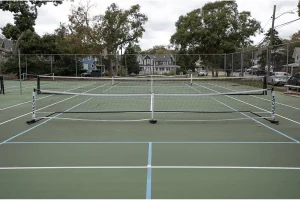
Doubles/Singles Court: 44 feet long × 20 feet wide (6.4m × 6.1m), identical to badminton doubles.
-
Boundaries: Baselines 44 ft apart; sidelines 20 ft; centerline divides service areas.
-
Net: 36 inches (91 cm) high at sidelines, 34 inches (86 cm) at center; posts exactly 22 feet apart (outside court lines).
-
Non-Volley Zone (“Kitchen”): 7 feet deep on each side (14 ft total), marked by non-volley line; crucial for volley restrictions.
-
Service Areas: Right/even, left/odd boxes (10 ft × 15 ft each).
Minimum Clearance: 30 ft behind baseline, 16 ft sides (pro: 40–50 ft ceiling). Surfaces: Outdoor (concrete, asphalt, modular tiles); indoor (wood/synthetic). Portable nets/paddles enable backyard play.
Equipment Standards (USAP 2025)
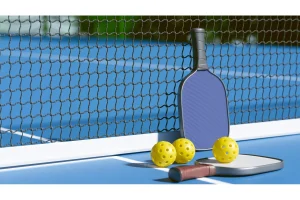
Paddle: Rectangular/square, max 16 inches wide × 17 inches long (total perimeter ≤24 inches edge); edge guard ≤0.1 inch thick. Materials: Wood/composite/graphite/carbon fiber; textured for spin (no sandpaper). 1,000+ USAP-approved models (e.g., Selkirk Vanguard, JOOLA Perseus).
Ball:
-
Outdoor: 26–40 holes, 2.87–2.97 inches diameter, 0.78–0.935 oz; wind-resistant (e.g., Onix Dura Fast 40, PPA standard).
-
Indoor: Larger holes (40+), softer flight for gym play (e.g., Franklin X-40, MLP standard).
-
Specs: Seamless plastic; bounce 30–34 inches on 72°F concrete.
Grip/Tape: Overgrips allowed; no performance-enhancing tape. Pro tours mandate USAP-approved gear; annual testing for compliance.
Comprehensive Rules (USAP Official, 2025 Rulebook)
Format: Singles/doubles; rally scoring (point every rally regardless of server).
-
Games: To 11 points (win by 2); tournaments/pro 15/21 (win by 2, no cap).
-
Serve:
-
Underhand, arm straight, paddle head below waist/navel/palm at contact.
-
Diagonal to opposite service box; one attempt.
-
Drop Serve (2021+): Bounce first (no strike).
-
Feet behind baseline; let serves (net clip, lands in) replayed.
-
-
Double-Bounce (“Two-Bounce”) Rule: Serve return + opponent’s return must bounce once each; third shot volleys OK.
-
Kitchen (Non-Volley Zone): No volleys with feet/momentum in 7-ft zone; line fault; enter OK if volley hit airborne before crossing.
-
Faults: Ball out/net; kitchen volley; carry/scoop/double-bounce violation; body interference; wrong server.
Doubles:-
Both serve until side-out (first server no second fault).
-
Partners switch sides on 1st, 3rd, 5th+ team points.
Timeouts: 2/game (60 sec) + 1 med (15 min); 2-min between games.
Referees: Pro events full crews; recreational self-call.
-
Pro Organizations: USAP, APP, PPA, MLP
USA Pickleball (USAP): Governing body (1984); sanctions 500+ amateur events/year; rulebook standard; Nationals (Indianapolis, 7 age/skill divisions); certifies courts/paddles; 100K+ members.
Association of Pickleball Professionals (APP): Pioneering pro tour (2019); 15–20 global events (U.S./Europe/Asia); $1M+ purses; traditional singles/doubles; Onix balls; focuses accessibility (pro/am draws). 2025 champ: Ben Johns (singles).
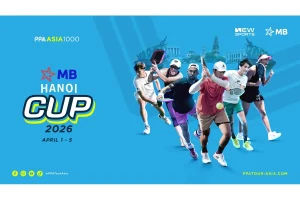
Professional Pickleball Association (PPA Tour): Elite circuit (2021); 25+ majors 2025–26 (e.g., PPA Austin June, PPA Vegas); $5M+ prizes; broadcast-focused (CBS); strict rules (net redo); top stars (Johns, Waters). Carvana-sponsored 2026 fall-spring.
Major League Pickleball (MLP): Team league (2021); 24 franchises (2026); June–July season + mid-season tourney; 4v4 format (2 pros/2 amateurs, rotating “DreamBreakers”); group play → playoffs; Franklin X-40 ball; $2M+ purses. 2025 champs: Orlando Squeeze.
Key Differences:
Tournament Structure and 2026 Pro Scene
USAP Nationals: July, 5K+ players. U.S. Open: April, Naples (50K fans, all levels).
Pro 2026:
-
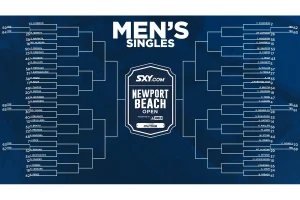
PPA: 25 events (e.g., PPA Bay Area March, PPA World Championships Dec).
-
MLP: 24 teams (e.g., St. Louis Shock, LA Mad Drops); group play return.
-
APP: 18 internationals.
$10M+ total pro prizes; stars: Ben Johns (PPA #1), Anna Leigh Waters (doubles phenom), Federico Staksrud (rising).
Why Pickleball Matters
Pickleball transforms fitness and community with unmatched accessibility—needing just a paddle, ball, and 20×44 ft space—making it ideal for backyards, gyms, or parks without tennis’s physical toll or cost. Its explosive growth (158% participation 2019–2023, 36.5M U.S. players 2024) signals a social revolution: 60% seniors, 40% families/kids, blending competition with low-injury play (1/1K hours vs. tennis 7/1K).
Economically, it drives a $2B+ industry: 13K+ courts (doubling yearly), $900M infrastructure demand, pro tours paying $10M+ (Ben Johns earns $500K+). Proliferation via USAP/APP/PPA/MLP creates jobs, TV deals (CBS/ESPN), stadiums like The Pickleball Club (43 courts). Global spread (50+ countries, 1M+ international players) positions it for 2028 Olympics potential, rivaling padel.
Socially, it fosters intergenerational bonds—grandparents vs. grandkids—boosting mental health (85% players report stress relief). Pro parity elevates women (Waters dynasty); inclusivity for disabled via adaptive rules. Ultimately, pickleball democratizes racket sports, turning casual fun into pro spectacle while combating sedentary lifestyles.