
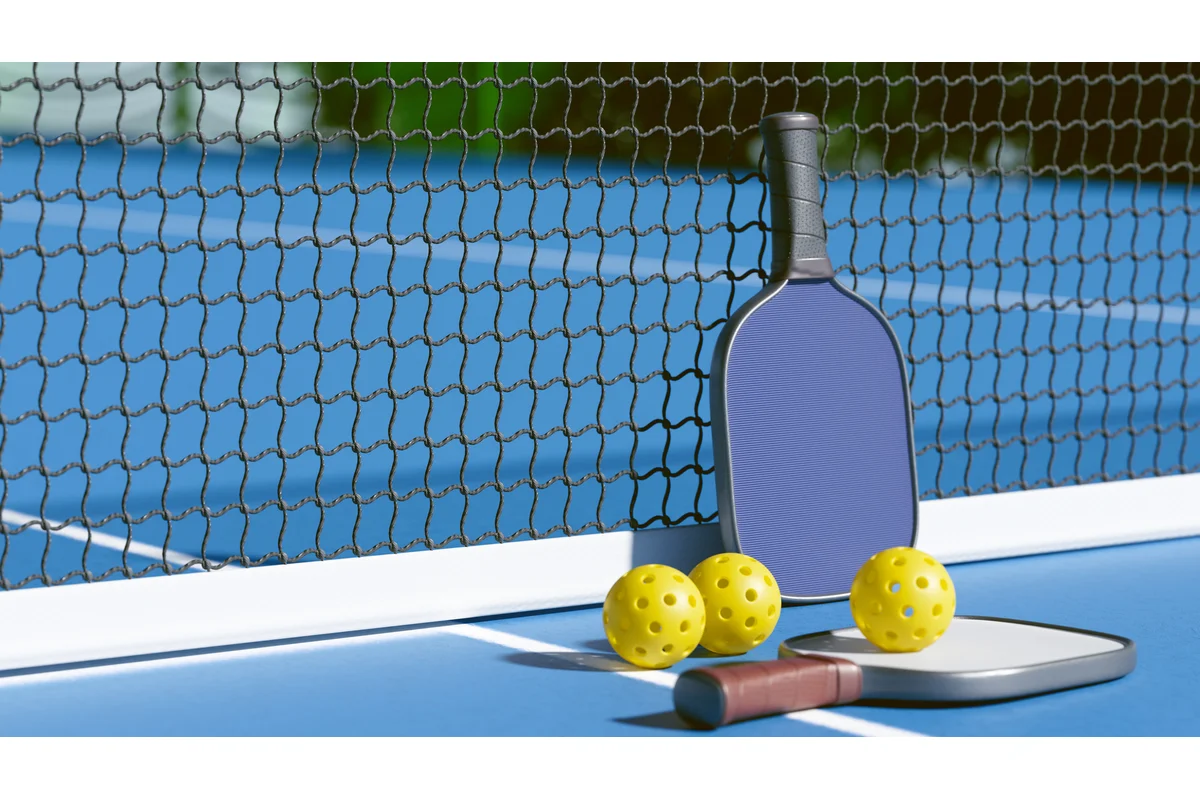
The pickleball third shot drop is often seen as the defining skill that distinguishes casual players from consistent winners. Achieving it demands more than just trial and error; it requires understanding the precise mechanics involved. Recent investigations by Enhance Pickleball have uncovered specific scientific data about ball speed, trajectory, and landing placement that demystify this crucial shot, making it far more achievable with the right approach.
Pinpointing the Ideal Landing Spot for the Third Shot Drop
The conventional advice is to land the ball “in the kitchen,” aka the non-volley zone, but research shows the target is actually more exact. The prime landing zone is a two-foot section extending from the kitchen line toward the baseline. The optimal location is roughly one foot past the kitchen line, forcing opponents to hit upward and consequently limiting their attack options.
When you hit crosscourt, this landing zone effectively enlarges. Geometrically, the diagonal across the court provides 10% to 25% more room for error compared to a straight shot down the line, offering more forgiveness and strategic advantage to the player executing the drop.
Precise Speed and Height Are Essential for Consistency
Understanding the correct speed to deliver the ball to this zone is critical. For shots struck down the line from the baseline, the ideal ball speed hovers between 19 and 20 miles per hour. Speeds above this range risk overshooting the target area, while slower speeds tend to result in hitting the net.
For crosscourt shots, the required speed increases modestly to about 22 to 23 miles per hour, reflecting the greater distance the ball must travel. Along with speed, ball height is equally significant: the ball should clear the net between 8 inches and 18 inches, with its peak height—generally above the kitchen line—reaching approximately 5.5 to 6 feet. Mastering these speed and height parameters contributes substantially to hitting consistent third shot drops.
Common Mistakes and How to Correct Them
Even skilled players frequently falter when attempting the third shot drop. The most common mistake is hitting the net, which arises either from underhitting or poorly timed contact. Alternatively, hitting the ball too high or too far can also backfire—higher shots give opponents aggressive opportunities due to the elevated bounce, while shots landing too deep often allow the opposition to attack before the ball bounces.
Achieving the delicate balance between these extremes requires refined technique and disciplined mechanics, emphasizing control over both speed and height.
Key Technical Factors for Effective Execution
To consistently perform a successful third shot drop, several technical considerations are vital. First, striking the ball at the paddle’s center is crucial since off-center hits notably reduce ball speed, often dropping it below the required 19-20 mph threshold, which increases the risk of errors.
Body positioning also plays an important role. Moving forward through the shot, rather than leaning backward, ensures better control and power consistency, much like a balanced free throw in basketball. Footwork supports this dynamic by helping maintain consistent contact height; players should position themselves so the ball is struck as it descends, sometimes needing to retreat slightly to establish the optimal hitting zone.
Maintaining a firm wrist avoids added variability. Generating power primarily through the shoulder and using a compact, controlled swing instead of wide arcs improves timing and precision, reducing the likelihood of mishits.
Incorporating Spin and Targeting Strategies
Once fundamentals are secure, players can introduce spin to their drops. There are three primary spin types: slice (cutting under the ball), flat (no spin), and topspin (rolling over the ball). Slice and flat drops offer higher consistency due to their straightforward motion. While topspin demands a higher swing path and greater control, it causes the ball to bounce lower, decreasing the opponent’s attack opportunities even if the ball clears the net at a higher point.
Strategically, targeting an opponent’s backhand is advantageous because most players have weaker reach and less aggressive returns from that side. When on the right court side against a right-handed player, aiming near the center backhand poses the greatest challenge. From the left side, sharper crosscourt angles to that backhand position maximize space and effectively force weaker responses.
Picking one reference focus—either the landing point near a foot beyond the kitchen line or the height immediately over the net—helps reduce confusion and maintain shot consistency during play.
Transforming the Third Shot Drop from an Art into a Science
The third shot drop no longer needs to be a mysterious or frustrating component of pickleball. Viewing it as a mechanical skill supported by data about ball speed, landing zones, and trajectory transforms it into a calculated shot rather than a leap of faith. Enthusiasts and competitors alike can sharpen their technique by applying these scientific insights, giving them an essential weapon to control rallies and seize match momentum. Mastering these details often delivers the critical edge that separates average players from true winners on the court.

