
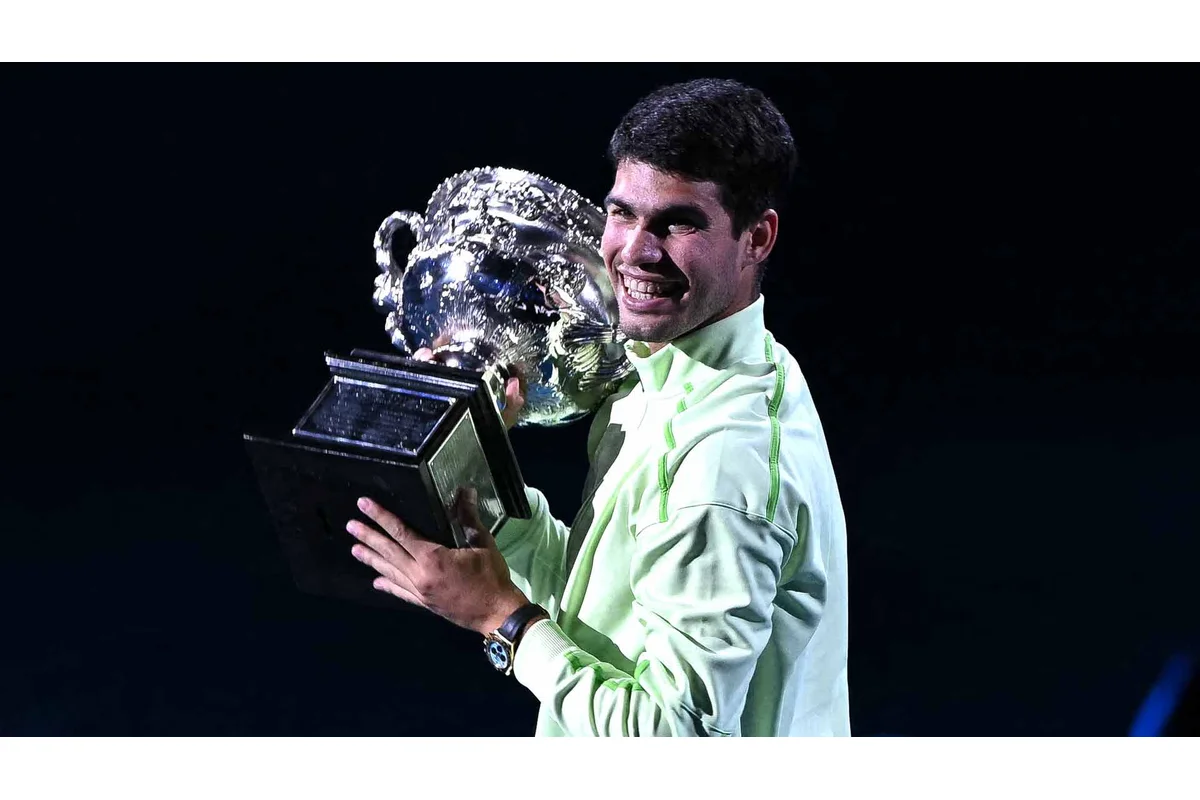
Carlos Alcaraz recently secured his seventh Grand Slam title by defeating Novak Djokovic in the Australian Open final, breaking two significant records in the process. The 22-year-old surpassed Rafael Nadal to become the youngest man in the Open Era to complete a Career Grand Slam and also broke Bjorn Borg’s record as the youngest with seven major titles.
Despite these achievements, former World No. 4 Greg Rusedski argues that Alcaraz is not yet ready to be included in the Greatest of All Time (GOAT) conversation. He emphasizes Alcaraz’s current shortfall compared to Djokovic, Nadal, and Federer, who have all exceeded 20 Grand Slam victories.
“In my opinion, it’s ridiculous. He has won seven Grand Slams; he’s on the path but still needs to work to reach 20 or more. Djokovic has 24, Nadal 22, and Federer 20. There’s a very big gap. He would need to win all the Grand Slams this year to reach 10.”
Rusedski highlights the sizable gap between Alcaraz’s accomplishments and the established GOAT candidates. Even with a strong start, Alcaraz’s total Grand Slam count remains far below the three legends leading the sport.
The Timeframe for Alcaraz to Reach Historic Milestones
Comparing Alcaraz’s progression with Djokovic’s career trajectory offers perspective. Djokovic took three years after winning his first major in 2008 to claim another, gradually building his record. If Alcaraz maintains a pace of winning two Grand Slams annually, including one in the current season, he could match Djokovic’s tally by age 31.
“And even if he reaches 10 Grand Slams this year, it would still take him two and a half years to win them all and reach 20. So, it’s a bit premature to put him in the GOAT debate now. You have to define yourself by something. The numbers, longevity, the era you played in… Look at Novak’s history. That’s why I consider him the greatest of all time.”
Rusedski stresses that beyond the numbers, longevity and the era faced also shape the GOAT status. Despite Alcaraz’s rapid rise and a balanced 5-5 record against Djokovic, the former pro insists it is too soon to rank him alongside the sport’s all-time greats.
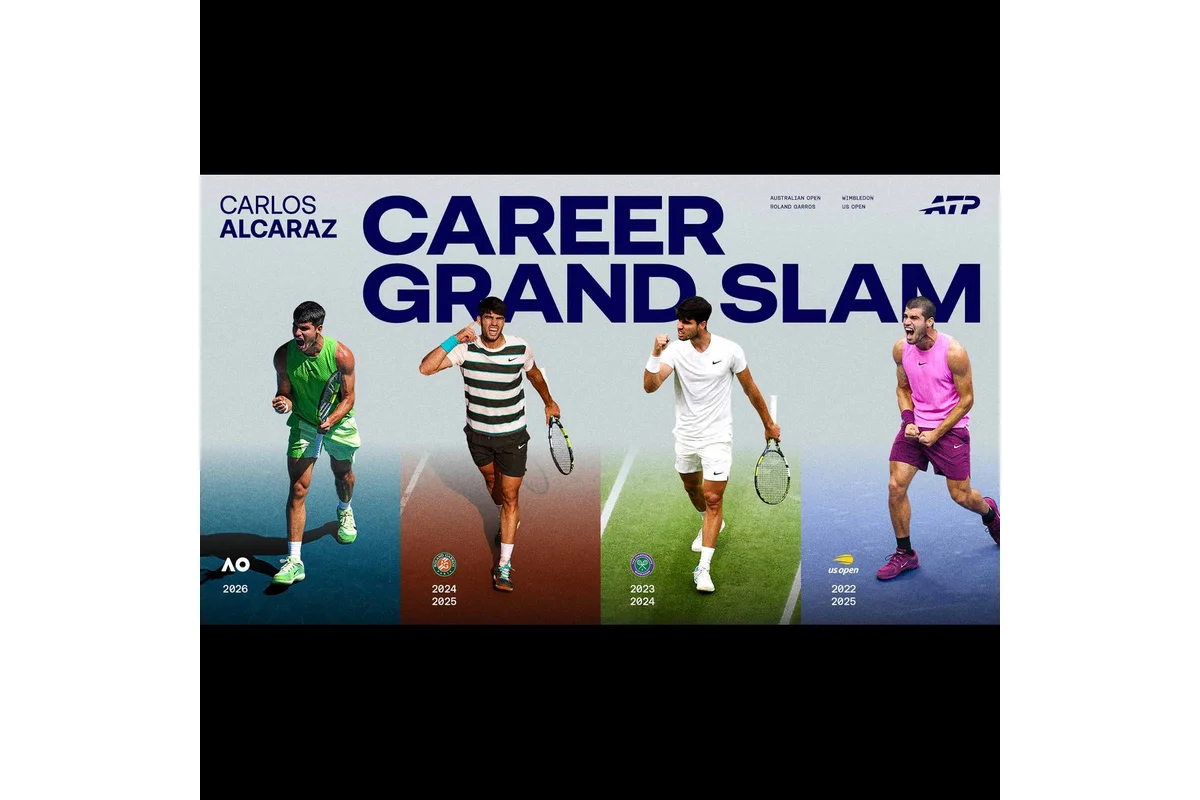
Alcaraz’s performance at the Australian Open demonstrated his growth, having never progressed beyond the quarterfinals stage there before. He also achieved a milestone by ending Djokovic’s bid for a 25th major and recorded the longest semifinal in Melbourne’s history by defeating Alexander Zverev.
Yevgeny Kafelnikov’s Doubts About Alcaraz’s Calendar Grand Slam Chances
Carlos Alcaraz reached his fourth straight Grand Slam final at the Australian Open, having previously won at the French Open and US Open last year, while falling short at Wimbledon. With the Career Grand Slam now complete, questions arise regarding his ability to claim the Calendar Grand Slam – winning all four majors in a single season.
Yevgeny Kafelnikov expressed skepticism about this possibility, especially predicting that Jannik Sinner would prevent Alcaraz from sweeping all four tournaments.
“No, he won’t win four tournaments. Sinner won’t allow it.”
The Italian player’s consistent Grand Slam presence is notable; last year, Sinner reached every final, winning twice (Australian Open and Wimbledon), but lost to Alcaraz twice (French Open and US Open). However, during the recent Australian Open, Sinner was defeated by Djokovic in the semifinals, clearing the path for Alcaraz to meet Djokovic in the final.
Alcaraz and Sinner’s Ongoing Rivalry in Major Finals
Alcaraz and Sinner faced off in a Grand Slam final for the first time at Roland Garros last year, dominating the last nine major titles between them. Djokovic was the last player outside this duo to win a Major, his 2023 US Open victory being the latest exception. Since then, Djokovic has only reached two finals: the 2024 Wimbledon and the 2024 Australian Open.
The upcoming French Open presents Alcaraz with the chance to complete a rare three-peat. In 2024, Alcaraz overcame Alexander Zverev at Roland Garros, while last year’s final saw him triumph over Sinner despite a two-set deficit and saving three match points in the longest final in French Open history.
Should Sinner claim the clay-court major, he would also achieve a Career Grand Slam, intensifying the rivalry and stakes between the two young stars as they chase further Grand Slam success.
