
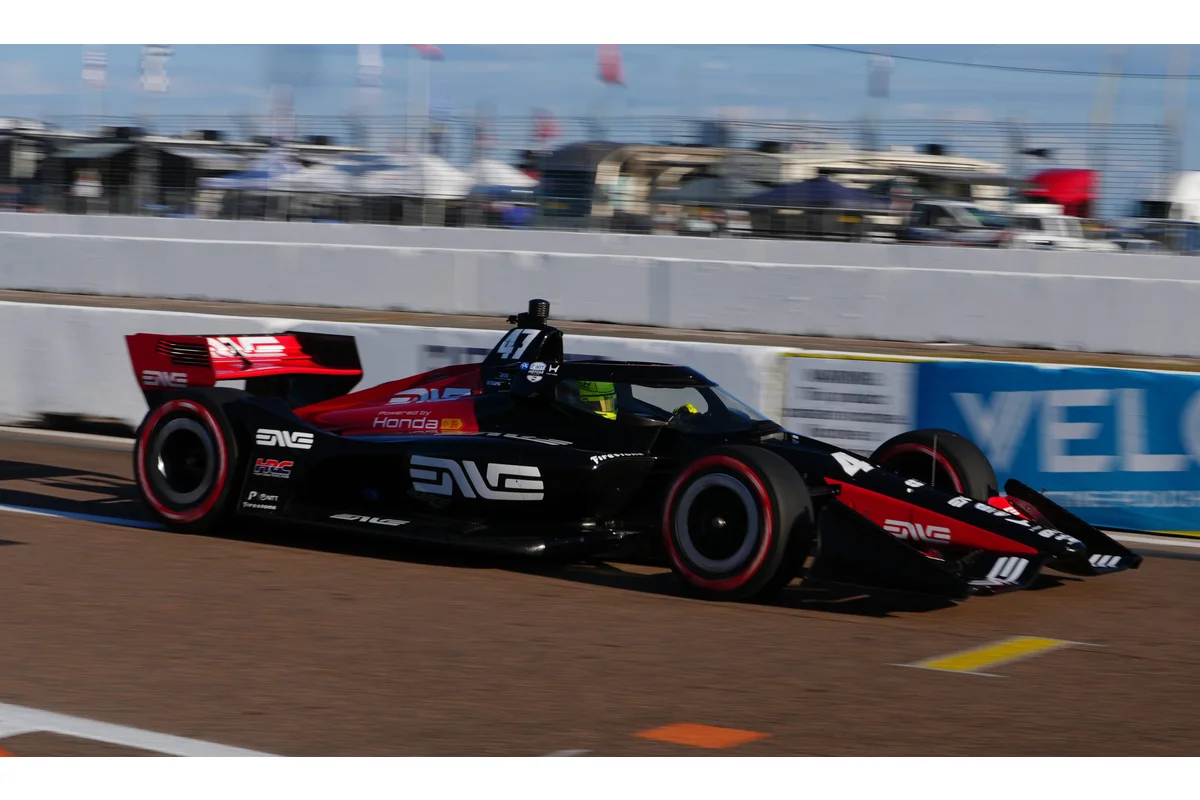
As IndyCar prepares for a crossover weekend with NASCAR at Phoenix Raceway, Chip Ganassi Racing took a moment to criticize the new 2026 Formula 1 regulations on social media. This comment followed widespread dissatisfaction from top F1 drivers such as Max Verstappen and Lando Norris, who openly expressed frustration with the latest generation of F1 cars after the Australian Grand Prix qualifying.
The upcoming F1 season will feature cars powered almost equally by internal combustion engines and electric battery systems, a shift introduced by the FIA. This change forces F1 drivers to manage battery levels actively, especially by lifting off the throttle approaching corners to recharge, which has significantly altered driving styles and lap performance.
Driver Reactions Highlight New F1 Hybrid Challenges
During testing in Bahrain, Max Verstappen likened the new F1 cars to “Formula E on steroids,” emphasizing how the hybrid systems have transformed the racing experience. Similarly, after the Australian GP qualifying, Lando Norris declared that the new regulations had turned the previously best F1 cars into the worst.
Responding to these sentiments, Chip Ganassi Racing posted on their X social media platform:
“’Super-clipping’, ‘downshifting on straights’, ‘battery management’ 🥱 Yeah, we don’t do that here. We race.”
This pointed remark references new technical terms like “Superclipping,” a phenomenon where the engine revs while the driver slows down, diverting power to recharge the battery rather than propelling the car forward.
Contrasting IndyCar’s Future Powertrains with Formula 1’s Electric Focus
Unlike Formula 1’s radical shift toward hybrid electric power units beginning in 2014, IndyCar has maintained a stronger reliance on traditional internal combustion engines. The most recent major change in IndyCar was over ten years ago, introducing the 2.2L Twin Turbo V6 engine, supplemented recently by mild hybrid technology.
While F1’s regulatory changes have attracted manufacturers such as Audi and encouraged Honda’s continuation amid the push toward electrification, these changes have sparked debates about whether the sport is losing its traditional competitive appeal.
In contrast, IndyCar has announced plans to introduce a new 2.4L Twin Turbo V6 hybrid engine in 2028 that will still predominantly depend on internal combustion power. Both Honda and Chevrolet have confirmed their commitment to this direction under the upcoming regulation changes.
What This Means for the Future of Motorsport Rivalry
The ongoing tension between Formula 1’s push toward electric hybrid power and IndyCar’s commitment to maintaining traditional engine dominance highlights a key division in motorsport philosophy. Fans and drivers alike are watching closely as these two series evolve in different directions: one emphasizing technological innovation with electrical components and the other focusing on driving purity and mechanical power.
As the 2026 F1 season approaches with new rules that demand extensive battery management and altered driving tactics, IndyCar’s straightforward approach, emphasizing pure racing without such constraints, may appeal to those frustrated by the complexity. The upcoming seasons will reveal how these competing strategies influence both the sports’ popularity and manufacturer involvement in a rapidly changing automotive landscape.
'super-clipping'
'downshifting on straights'
'battery management' 🥱Yeah, we don't do that here. We race. https://t.co/H8c0KBylCP
— Chip Ganassi Racing ⚡️ (@CGRTeams) March 7, 2026
