
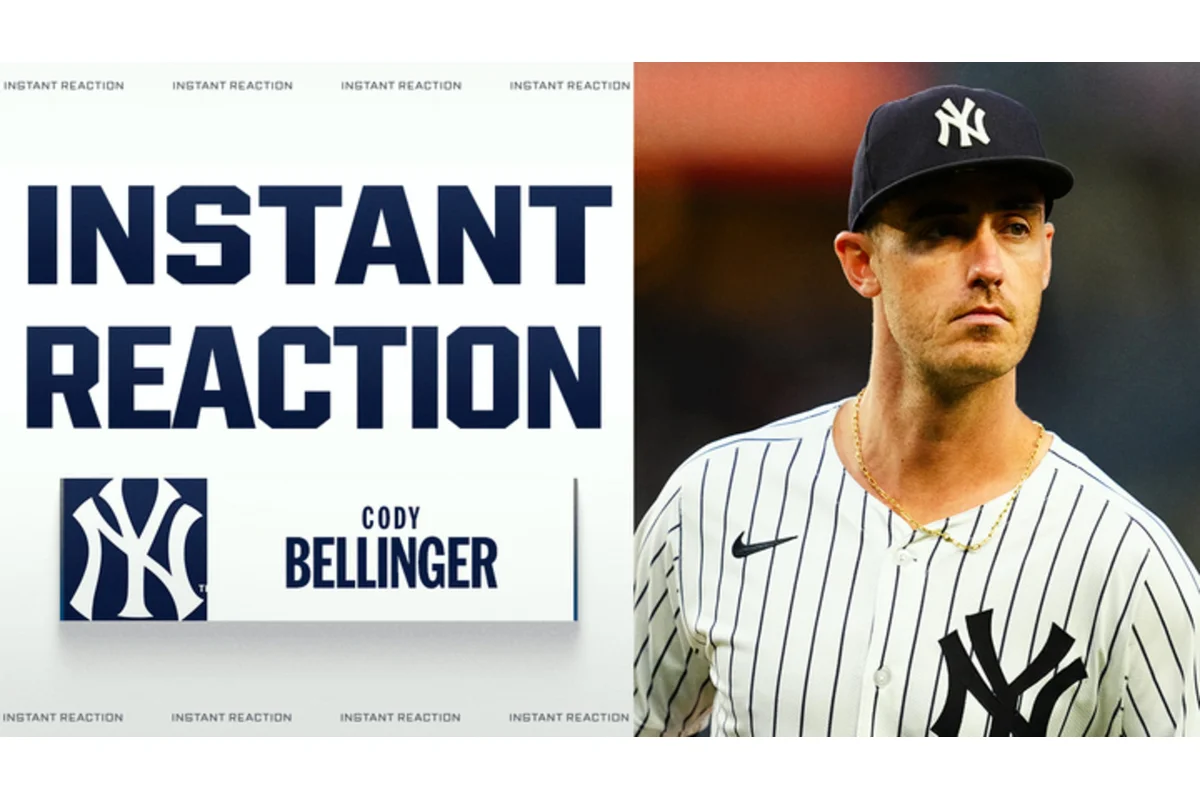
After months of negotiation, the New York Yankees have finalized a five-year, $162.5 million contract agreement with outfielder Cody Bellinger, securing his return to the Bronx through the 2030 season. This deal marks the end of a prolonged standoff, allowing the Yankees to maintain a crucial piece of their lineup as they aim to contend in an increasingly competitive American League East.
Bellinger, who was acquired from the Los Angeles Dodgers last offseason in exchange for Cody Poteet, made an immediate impact during his first year with New York. He emerged as the club’s second most productive hitter behind the reigning American League MVP, Aaron Judge, appearing in 152 games while hitting 29 home runs. His offensive and defensive versatility made him indispensable throughout the 2025 season.
Details and Structure of Bellinger’s New Contract
The deal includes a $20 million signing bonus and guarantees $32.5 million in each of the first two years, totaling roughly $85 million in that span. It grants Bellinger full no-trade protection and features opt-out options after the second and third seasons. If he chooses to remain under contract, Bellinger will earn $25.8 million in years three and four, followed by a slight increase to $25.9 million in the final year.
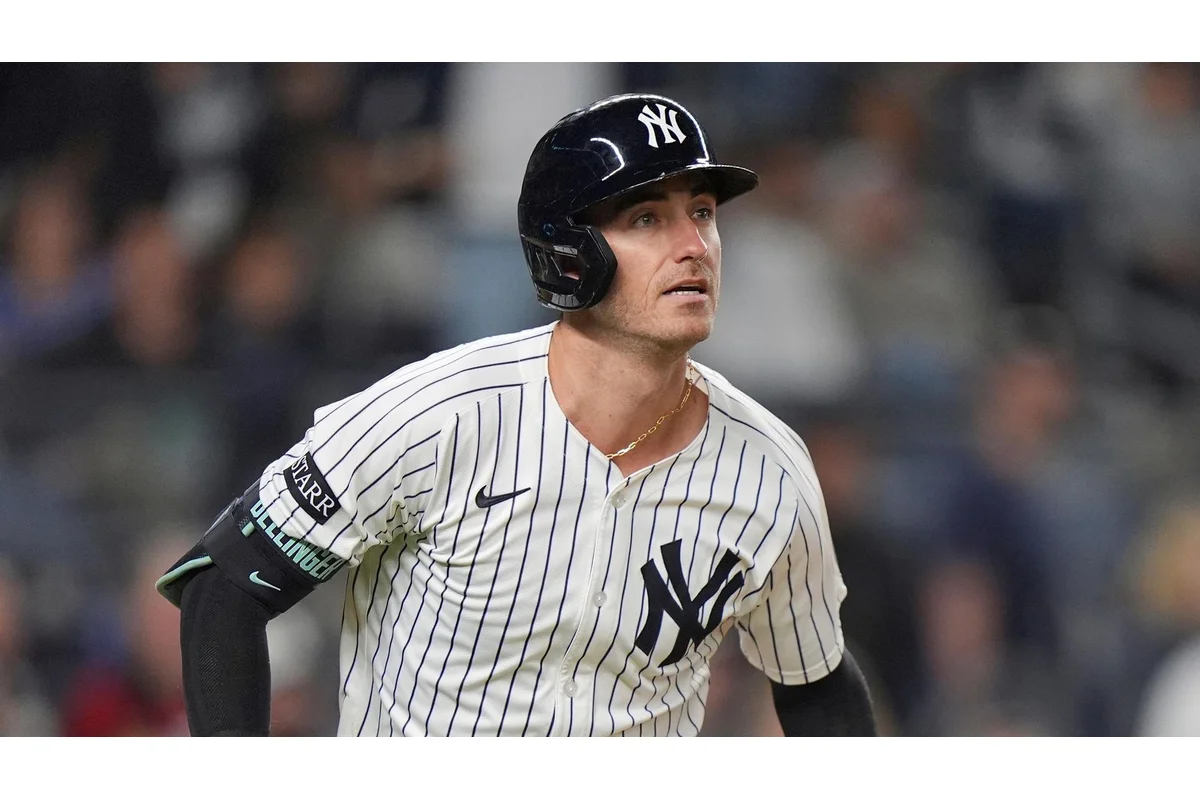
Despite Scott Boras, Bellinger’s representation and one of MLB’s top agents, reportedly pushing for a seven-year agreement, the Yankees insisted on capping the contract length at five years. Reports indicated the team was prepared to withdraw if it could not reach this term, ultimately winning the bidding process. This compromise provides Bellinger substantial compensation while keeping the Yankees’ commitment period relatively short in an effort to maintain flexibility.
With an average annual value (AAV) of $32.5 million, Bellinger now ranks as the fifth-highest paid outfielder in baseball. Though the contract’s total value falls short of some recent top-tier deals—such as Kyle Tucker‘s record-setting short-term agreement—it still reflects Bellinger’s elite status among position players.
This signing officially places the Yankees above the luxury tax threshold, effectively limiting their ability to add any other high-profile, long-term contracts without incurring further penalties.
Despite these financial constraints, securing Bellinger was critical for the Yankees to remain competitive beyond the 2025 campaign. His presence bolsters the lineup’s depth and maintains a strong offensive complement to Aaron Judge.
“Cody Bellinger is 1 of 11 players to average 4+ bWAR and 90+ RBI over the past 3 seasons 🔥The Yankees got their guy back.” – Just Baseball
Bellinger’s Role and Importance to the Team
Bellinger was pivotal in protecting Aaron Judge’s spot in the batting order during the 2025 season, combining consistent power and contact ability with admirable defensive range. His flexibility allowed him to cover all three outfield positions and occasionally first base, offering manager Aaron Boone valuable lineup and defensive options.
His 5.1 wins above replacement (WAR) marked the second-best value of his career, complemented by a .272 batting average, .334 on-base percentage, and .480 slugging percentage. Bellinger’s ability to produce both offensively and defensively was a major factor in the Yankees’ push for postseason success.
Beyond performance metrics, Bellinger brings a sense of stability and familiarity to a roster that has frequently undergone changes around the core stars. His return allows the Yankees to avoid piecing together a patchwork outfield and maintain continuity in the clubhouse.
Had Bellinger signed elsewhere, the Yankees would have faced a difficult offseason, likely reverting to a contingency plan after the loss of Juan Soto the previous year. His decision to stay alleviates those concerns, though it also raises questions about how prospects will fit into the long-term picture.
Uncertainties Surrounding Yankees’ Outfield Prospects
With Bellinger entrenched for the near future, the development paths of younger outfielders Jasson Domínguez and Spencer Jones have become less certain. Neither prospect has solidified a consistent role, and the team’s urgent need to win now complicates opportunities for their growth at the Major League level.
Domínguez, a highly touted switch-hitting outfielder, has struggled to gain traction in New York despite flashes of brilliance. Over parts of three seasons, he has yet to play a full 162-game slate and has encountered challenges both offensively and defensively. Defensive metrics paint a worrying picture, with Domínguez posting a -9 Fielding Run Value (FRV), -7 Defensive Runs Saved (DRS), and -10 Outs Above Average (OAA) in left field during 2025, placing him near the bottom of league defenders at his position.
His offensive splits as a switch-hitter further complicate his profile. While Domínguez has demonstrated promise batting left-handed—producing a .274 average and 116 weighted runs created plus (wRC+) over 288 at-bats and launching nine home runs—his right-handed performance was underwhelming, hitting only .204 with a 63 wRC+ in 93 plate appearances. The Yankees face a decision whether Domínguez can improve as a right-handed hitter or if he should abandon switch hitting to focus solely on his left-handed approach.
With limited playing time and the Yankees’ push to win, Domínguez’s development in the majors faces uncertainty. The team’s priority on immediate contributions from veterans limits patience for prospective growth.
Spencer Jones, a 2022 first-round pick known for his left-handed power and speed, is another outfield prospect caught in a difficult spot. After a standout minor league season in 2025 featuring 35 home runs, a .571 slugging percentage, 153 wRC+, and 29 stolen bases, Jones appeared poised for a Major League debut last year. Yet, the Yankees prioritized pitching depth down the stretch, shelving his call-up. At 6-foot-7, Jones also offers defensive upside, primarily in center field.
With Bellinger’s contract in place, Jones’s chances of cracking the Opening Day roster diminished, increasing speculation about his availability in trade discussions. The Yankees will likely seek to maximize his value by only promoting him if he can play regularly. Given the team’s win-now mode, a platoon or bench role does not seem to fit Jones’s skill set or development needs.
Jones could start the 2026 season in Triple-A to refine his plate discipline, particularly reducing high strikeout numbers, before joining the Major League club as necessary due to injury or roster changes. The organization faces a balancing act in managing its outfield depth, determining which prospects to retain and which could be used as trade assets.
Looking Ahead: Yankees’ Offseason Direction and Roster Challenges
With the first major offseason signing secured, the Yankees now confront a roster that closely resembles the one that struggled in last year’s postseason ALDS against the Toronto Blue Jays. That series exposed considerable pitching weaknesses, as New York allowed 34 runs over four games.
Because the Bellinger deal pushes the team past the luxury tax threshold, the Yankees appear unlikely to add another significant long-term contract this offseason. As a result, trades have emerged as the primary method for strengthening the roster, particularly in the pitching department.
Prospects like Spencer Jones and Jasson Domínguez, while still promising, could become trade chips as the Yankees seek to address pitching needs or acquire veteran reinforcements. Additionally, the front office has emphasized a desire to avoid an overly left-handed lineup, which may influence the decision to move one or both outfield prospects.
Brian Cashman and the Yankees’ leadership face difficult decisions in the remaining weeks before spring training. Balancing the urgency to compete now with long-term player development and roster flexibility will shape the team’s competitiveness through 2026 and beyond. The Bellinger signing was a critical initial step, yet numerous questions remain about how the roster will evolve in pursuit of another championship.
https://twitter.com/JustBB_Media/status/2014068940956197353
