
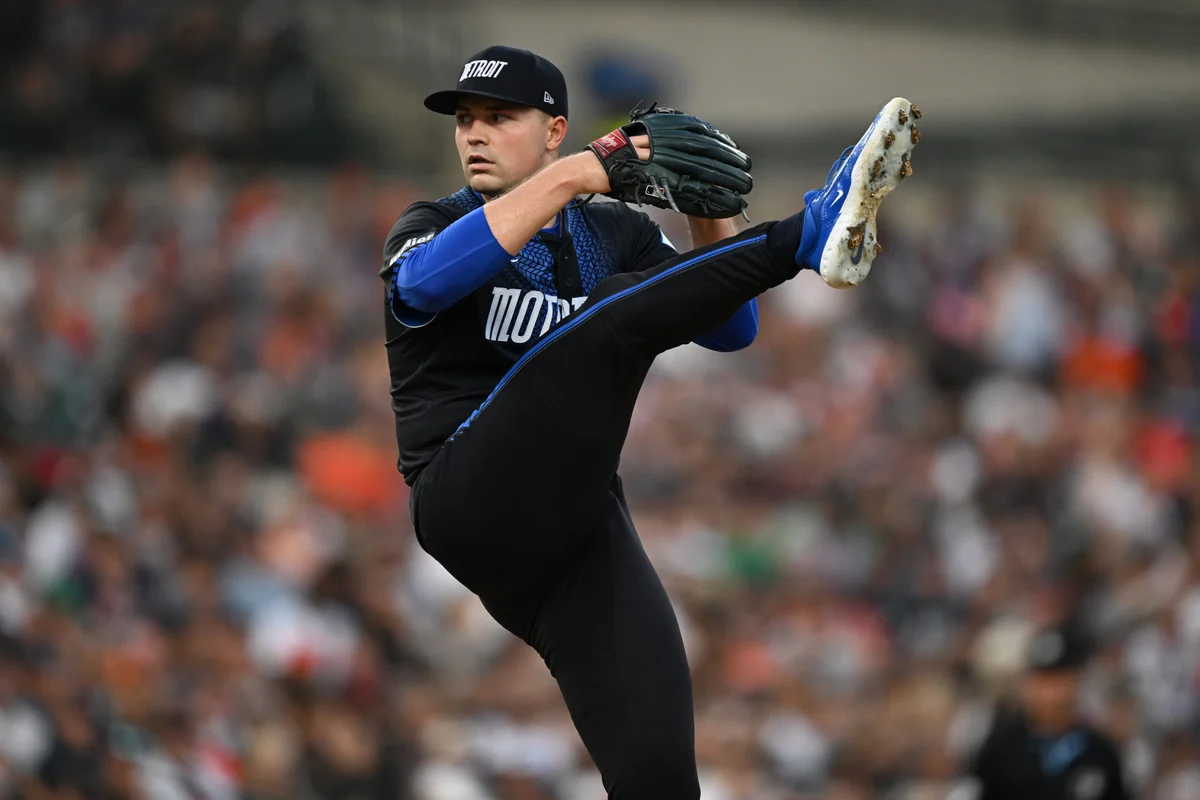
Tarik Skubal’s arbitration case has become one of the most talked-about stories of the baseball offseason, highlighting a significant $13 million gap between what he and the Detroit Tigers are willing to accept. Represented by the high-profile agent Scott Boras, Skubal is seeking a $32 million salary, a figure that Boras argues reflects Skubal’s value alongside any Major League Baseball starting pitcher, rather than relying solely on historical arbitration benchmarks.
The negotiation has sparked debate. The Tigers presented an offer that would have been among the highest arbitration awards for a starting pitcher, yet Boras and Skubal claim his unique standing as a rising talent justifies pushing beyond precedents. Boras, known for his aggressive client representation, aims to set the stage this Wednesday for Skubal, a pitcher on the verge of free agency, to secure a substantial payday and maintain leverage for the next stage in his career.
Scott Boras’s Strategy Behind Skubal’s $32 Million Request
The critical figure Boras must eclipse in arbitration is roughly $25 million, the midpoint between the Tigers’ offer and Skubal’s demand. Arbitration operates on a winner-takes-all basis, so if Skubal convinces the arbitrator that his worth exceeds this amount, he will receive the full $32 million for the 2026 season.
The Tigers rely heavily on historical comparisons to argue their case, citing precedents such as Jacob deGrom’s post–Cy Young raise and David Price’s record-setting arbitration sum. Detroit’s offer sits just above $19 million, reflecting these benchmarks. However, Boras is expected to emphasize inflation and recent performance metrics to contest the relevance of these past cases.
For context, David Price’s last arbitration year commanded $19.75 million at the time, which adjusted for inflation would approximate $27 million today. Jacob deGrom’s $17 million salary, similarly adjusted, equates to nearly $22 million. Skubal’s $19 million offer, however, has no inflation adjustment, highlighting the Tigers’ conservative stance.
Analysts like Cody Stavenhagen of The Athletic note that both Price and deGrom had more established careers and superior bWAR (Wins Above Replacement) metrics when receiving their landmark raises. While the Tigers plan to use these factors to justify their offer, Boras will argue that Skubal’s performances and potential merit a new standard.
Potential Gains for Scott Boras in Winning Arbitration
The arbitration case represents a significant financial and reputational opportunity for Boras. Agents typically earn around 5 percent of their clients’ negotiated salaries, meaning Boras could take home approximately $1.6 million if Skubal secures the $32 million figure.
More importantly, Boras stands to build invaluable trust with Skubal by vigorously defending him in arbitration. While Detroit seeks to minimize Skubal’s salary by emphasizing tradition and past contracts, Boras’s approach frames the pitcher as a rising star deserving of top-tier compensation. This dynamic will almost certainly influence Skubal’s future loyalty and willingness to remain with or return to the Tigers.
Boras’s influence extends beyond this single arbitration. He is known for encouraging clients to test free agency to maximize their market value. Despite Skubal’s affection for Detroit, demonstrated by his recent winter sports tour engaging with local fans, a loss or perceived undervaluing in arbitration could motivate him to sign with a larger market team when free agency arrives. Boras intends to underline this stance irrespective of Wednesday’s outcome.
The Broader Impact of Skubal’s Arbitration Case on MLB’s Economic Landscape
Arbitration outcomes are often unpredictable and depend heavily on the individual arbiter’s judgment. Boras’s attempt to secure a new high-water mark for starting pitchers like Skubal could reshape future contract negotiations for young MLB players. Paul Skenes and others may face similar battles as the collective bargaining agreement discussions approach later this year.
If Skubal establishes a record-setting contract through arbitration, it could intensify debates about baseball’s financial disparities. The system was originally designed to help small- and mid-market teams retain their emerging stars, but a trend toward inflated arbitration salaries may exacerbate the imbalance favoring wealthier franchises such as the Dodgers or Mets.
Winning this arbitration would not only reinforce Boras’s reputation as a leading advocate for player value but also signal to owners and players alike that the current structure may be due for reassessment. Conversely, a loss could stall that momentum, leaving young players with fewer powerful negotiating tools. Regardless, Boras remains a formidable force shaping MLB’s labor and salary dynamics.
“There are viable arguments on both sides. First, the Tigers did offer Skubal what would’ve been a record-breaking raise and one of the richest starting pitcher arbitration contracts in MLB history. But those deals haven’t aged well with arbitration and, as Boras and Skubal have outlined, he is a unique case.” ?Cody Stavenhagen, The Athletic
“Boras always wants his clients to test free agency. As much as Skubal loves playing in Detroit in front of Tigers fans – as evidenced by his Detroit sports tour this winter – he will not play for an organization that he perceives doesn’t believe in him.” ?Anonymous MLB insider
“If he fails with Skubal, the best pitcher in MLB, he fails for all players trying to achieve their market value from a young age. He’s the good guy in this story.” ?Industry analyst
