
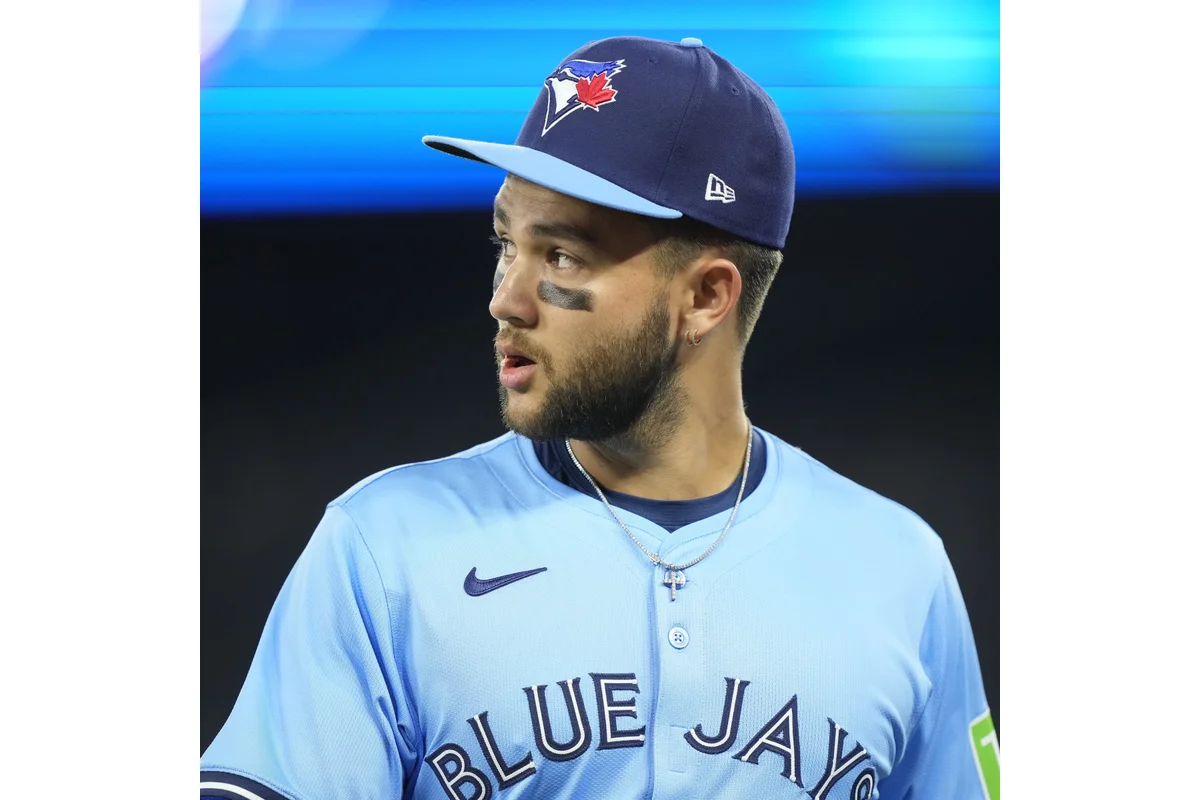
The Atlanta Braves’ failure to qualify for the playoffs in 2025 after an 0-7 start has left fans frustrated, and their quiet offseason moves have done little to inspire confidence. Despite offseason trades and signings like sending Nick Allen for Mauricio Dubon and adding Mike Yazstremski, the Braves chose not to pursue Bo Bichette in free agency—a decision that could prove costly as the 2026 season approaches.
Bo Bichette spent the first seven years of his professional career with the Toronto Blue Jays, playing a key role in their 2025 World Series run. However, Toronto’s heavy offseason spending resulted in them letting Bichette go. With the Jays planning to slot Andres Gimenez at shortstop and Kazuma Okamoto at third base, Bichette became a free agent—a prime opportunity the Braves missed to bolster their roster.
Bichette initially sought a seven-year, $200 million deal, the same offer extended by the Philadelphia Phillies. After Kyle Tucker signed with the Los Angeles Dodgers, the New York Mets entered the bidding, ultimately securing Bichette with a three-year contract worth $42 million annually that included opt-out options. Meanwhile, the Braves could have provided Bichette with a clear starting role at shortstop, something the Phillies and Mets could not guarantee.
Atlanta’s offense struggled in 2025, especially beyond stars Ronald Acuña Jr. and Matt Olson, and the addition of a contact-oriented hitter like Bichette could have added crucial depth. Although Bichette’s defensive capabilities are questionable, the Braves’ offensive shortcomings demanded a player who could inject some much-needed consistency and production at the plate.
Instead of investing in Bichette, Atlanta appears set to rely on Mauricio Dubon at shortstop, despite his inexperience at that position. With the Mets and Phillies actively strengthening their lineups, the Braves needed a reliable offensive upgrade to keep pace within the competitive NL East. As it stands, they retain largely the same underperforming core from recent disappointing seasons.
Braves’ Need to Remain Active Before Season Starts
The Braves cannot afford complacency with spring training imminent. Designated hitter Marcell Ozuna remains available on the free-agent market, representing a sensible low-cost addition. Considering Eugenio Suarez’s recent short-term contract elsewhere, acquiring Ozuna should not require a significant financial commitment. Although Ozuna’s performance dipped in 2025—with 21 homers and a .756 OPS compared to his MVP-caliber 2024 season—he would provide valuable power and depth for Atlanta’s lineup.
On the pitching front, the Braves boast a strong rotation anchored by Spencer Strider, Spencer Schwellenbach, and Chris Sale—an impressive trio when healthy. Unfortunately, injuries limited playing time for all three last year, and adding available free-agent pitchers like Zac Gallen or Nick Martinez would unlikely resolve those durability concerns.
The Braves and Phillies cannot rely on the Mets repeating their late-2025 collapse, just as the Mets and Phillies shouldn’t expect Atlanta to stumble below .500 again. The NL East promises a fierce battle in 2026, but Atlanta must reinforce its lineup to stay competitive. Passing on Bichette undermined the team’s ability to support its elite players and could ultimately cost them the division title.
Since winning the World Series and making seven playoff appearances in recent years, the Braves have set high expectations. Missing the postseason in 2025 may signal a turning point. Instead of investing to regain momentum, the Braves remained largely inactive in free agency. Bo Bichette would have offered an immediate offensive boost, but now he will bolster rival teams instead of Atlanta’s chances to contend.
