
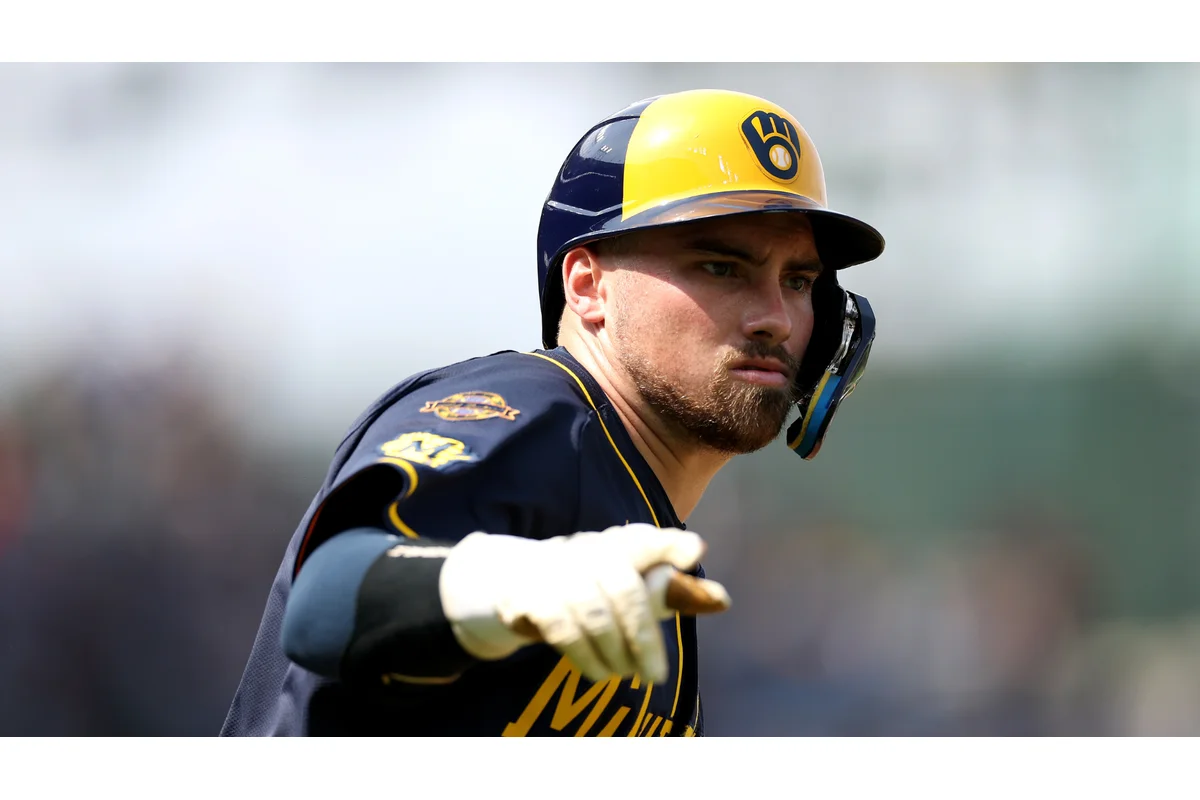
On Monday, third baseman Caleb Durbin was traded from the Milwaukee Brewers to the Boston Red Sox in a significant six-player exchange. This move comes after Durbin’s strong showing last year, finishing third in the National League Rookie of the Year voting. The trade also includes several prospects and draft picks, marking a major roster shakeup ahead of the new MLB season.
Details of the Trade and Player Movements
Milwaukee received left-handed pitchers Kyle Harrison and Shane Drohan, along with infielder David Hamilton, in exchange for Durbin and infielders Andruw Monasterio and Anthony Seigler. Additionally, Boston gained a competitive balance draft pick in July’s amateur draft, positioned around 67th overall. This transaction addresses key positional needs for both teams as they prepare for the upcoming season.
Durbin’s Role and Boston’s Infield Prospects
Approaching his 26th birthday, Durbin is expected to fill the third base vacancy Boston faces after Alex Bregman’s departure via free agency, where Bregman signed a lucrative five-year deal with the Chicago Cubs. Alongside newly acquired Willson Contreras, who is slated to cover first base, Durbin offers versatility to the Red Sox lineup, capable of playing both second and third base. Chief baseball officer Craig Breslow indicated that the team has yet to finalize Durbin’s defensive position but anticipates he will earn regular playing time.
We’re just excited about getting a really good player into the organization, and we’ll figure out where he fits best,
Breslow said.
It just doesn’t feel like it makes sense to commit to anything right now.
– Craig Breslow, Chief Baseball Officer
Performance Recap and Impact in Milwaukee
Durbin contributed solidly to Milwaukee’s recent success, appearing in 136 games and posting a .256 batting average with a .334 on-base percentage. His 11 home runs and 18 stolen bases played a key role in helping the Brewers secure their third consecutive National League Central title and advance to the NL Championship Series in the previous season. Durbin was initially acquired from the New York Yankees, alongside left-hander Nestor Cortes, in exchange for closer Devin Williams.
Brewers’ Plans After Losing Durbin
With Durbin’s departure, the Brewers face an open spot at third base. Joey Ortiz, the team’s starting third baseman in 2024, moved to shortstop last year. Meanwhile, newcomer David Hamilton mostly plays second base and shortstop, having appeared in just one game at third base last season. Jett Williams, another addition acquired in the recent trade sending Freddy Peralta to the New York Mets, is expected to get some third base playing time during spring training. Williams has demonstrated flexibility by playing multiple infield and outfield positions during his time in the Mets’ system.
Meanwhile, Sal Frelick, who trained at third base in spring 2024, has settled into right field, where he earned a Gold Glove. Brewers management remains confident in their infield depth despite losing Durbin.
Brewers Executive on Future Infield Depth and Prospects
Matt Arnold, Milwaukee’s president of baseball operations, highlighted a robust pipeline of infield talent in their farm system, which influenced the organization’s confidence in making this trade. He cited several promising players who could fill left-side infield roles in the future.
You also start looking at the future here with Jesus Made, Cooper Pratt and Luke Adams, Luis Peña and Andrew Fischer, there are just a lot of these types of guys coming we feel like in our system who could absolutely handle the left side of the diamond that have really high upsides,
Arnold said.
We feel like we have the ingredients now to weather the loss of somebody like Caleb Durbin, who obviously meant a lot to our franchise. But we feel really good about the infield depth both now and in the future as well.
– Matt Arnold, Brewers President of Baseball Operations
Incoming Players’ Background and Potential Contributions
Milwaukee received two left-handed pitchers in the deal: Kyle Harrison and Shane Drohan. Harrison, age 24, appeared in eight major league games last year for both the Red Sox and San Francisco Giants, compiling a 1-1 record with a 4.56 ERA. He was originally part of the Red Sox’s return package when Rafael Devers was traded to the Giants in 2025. Drohan, 27, has not yet pitched in the major leagues but showed promise in the minors, posting a 5-2 record with a 3.17 ERA and 77 strikeouts over 54 innings split between Triple-A Worcester and High-A Greenville last season.
Harrison’s not that far removed from being one of the best pitching prospects in the sport,
Arnold said.
Drohan had an outstanding year last year in Triple-A. Both those guys are really exciting for us to add.
– Matt Arnold, Brewers President of Baseball Operations
Infielder David Hamilton, who was selected by Milwaukee in the eighth round of the 2019 draft before being traded to Boston in 2021, returns to the Brewers. Hamilton, 28, had a challenging 2025 campaign with Boston, batting .198 with six home runs and 22 stolen bases. His defensive abilities and speed remain valuable assets.
Hamilton’s a guy we know very well,
Arnold said.
He’s an elite baserunner. He’s really fast. He’s a really good defender. He’s an exciting player.
– Matt Arnold, Brewers President of Baseball Operations
Performance and Experience of Other Players Involved
Andruw Monasterio, a 28-year-old infielder who can cover every infield spot, contributed a .270 batting average with four home runs and 16 RBIs over 68 games last season for Milwaukee. Anthony Seigler, 26, had more limited playing time, recording a .194 average without home runs in 34 games.
Trade’s Implications for Both Teams
This trade provides Boston with a promising young third baseman to fill a critical gap left by offseason departures, while the Brewers reinforce their pitching depth and add versatile infielders. The exchanges reflect broader strategy adjustments, with both teams balancing immediate roster needs against long-term development. As spring training progresses, both organizations must finalize roles to optimize their squads for the demands ahead.
