
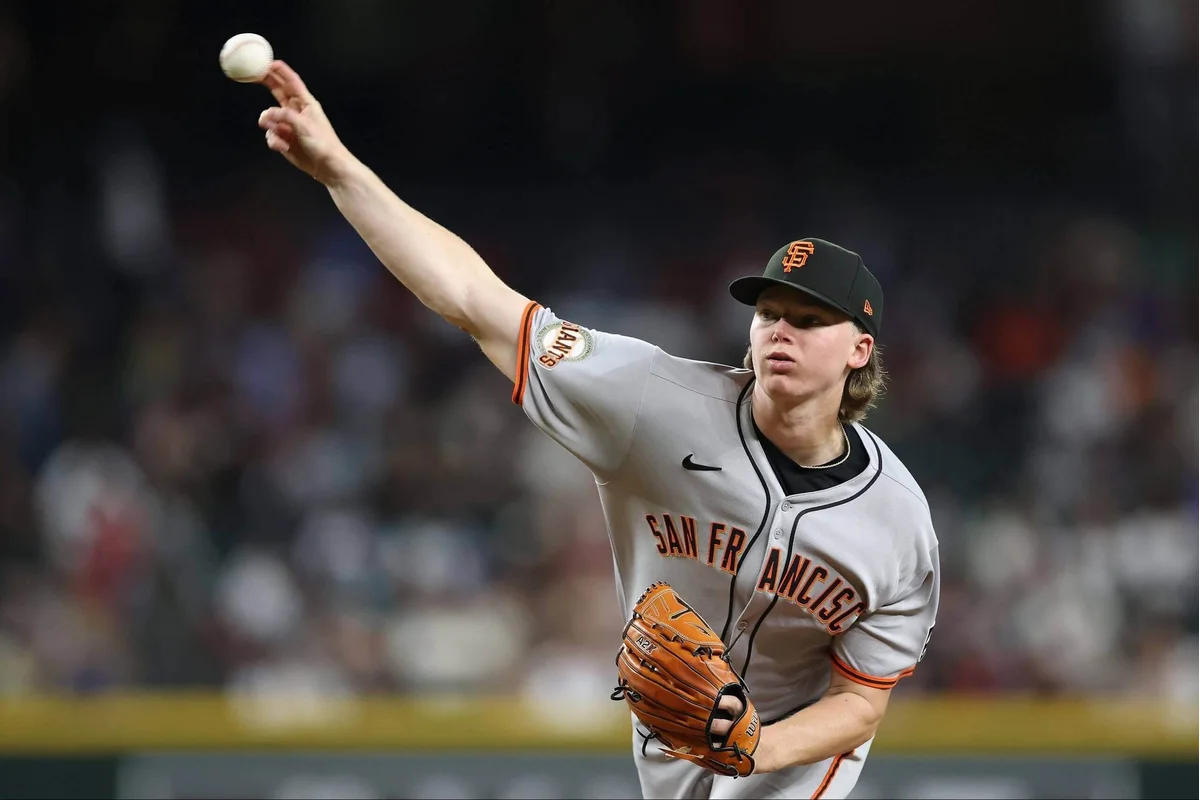
The San Francisco Giants face an intense and intriguing dilemma regarding their first base position heading into the 2026 season, as top prospect Bryce Eldridge and established star Rafael Devers compete for playing time. With the Giants’ Bryce Eldridge Giants future now under scrutiny, the organization must decide how to best utilize two powerful left-handed bats in the lineup, both capable of long-term impact.
San Francisco’s Evolving First Base Challenge
Historically, first base had been a problematic spot for the Giants, with Lamonte Wade Jr.’s performance declining and Wilmer Flores showing signs of aging despite some continued success against left-handed pitching. However, midway through 2024, the team’s outlook began to change dramatically as Bryce Eldridge, a promising teenager in the lower minors, started drawing attention as a potential long-term first baseman for San Francisco.
Now 21 years old and pushing for a spot on the Opening Day roster, Eldridge’s trajectory faced a notable setback in June 2025 when Buster Posey orchestrated a blockbuster trade for Rafael Devers. The three-time All-Star transitioned swiftly to first base and took over as the Giants’ everyday player at the position despite his prior experience being primarily at third base and designated hitter roles.
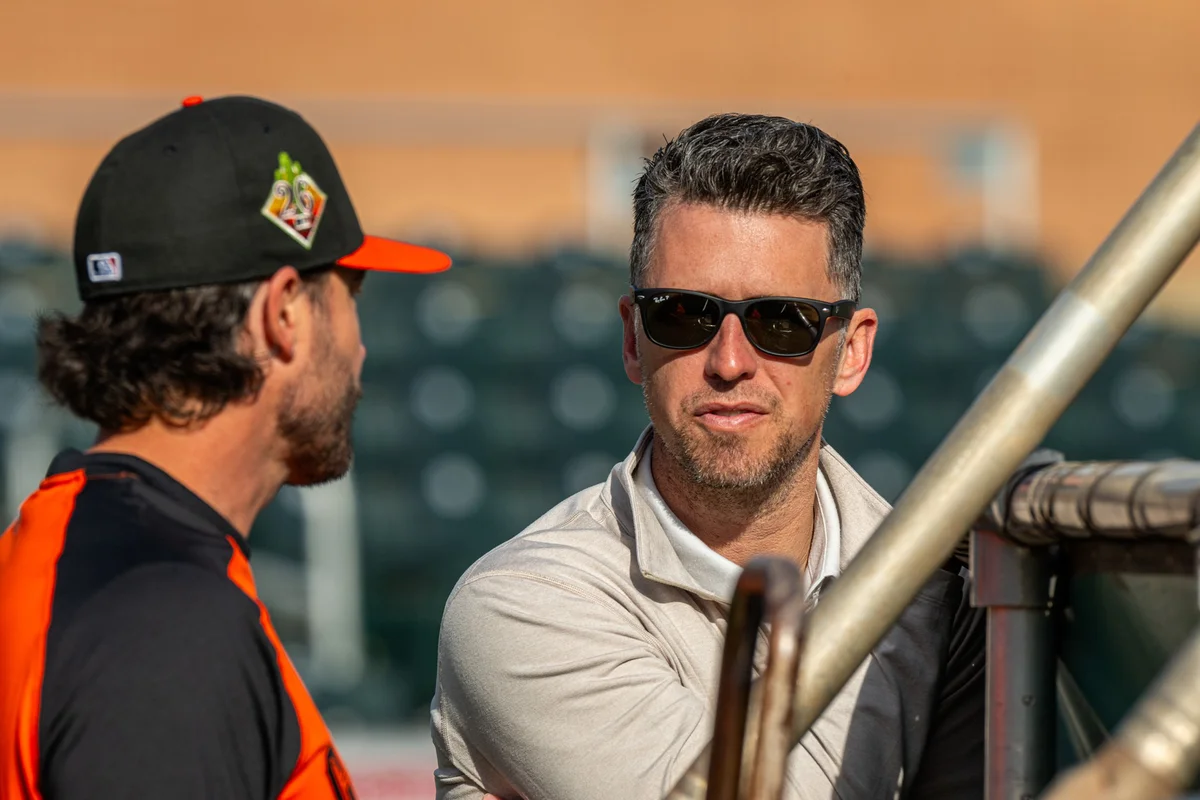
This acquisition forced the Giants into a complex strategic decision about how to balance Devers’ proven talent with Eldridge’s future potential over many seasons.
Bryce Eldridge’s Path to First Base
Selected in the 2023 draft, Eldridge entered the Giants organization as a two-way player with no fixed defensive position after starring as both a pitcher and hitter in high school. Initially tested in corner outfield roles, the team quickly shifted him to first base, where his development has been closely monitored.
While Eldridge’s bat has made a strong immediate impression, his defensive skills required significant work. At 6-foot-7, his early defensive performances prompted questions, but reports from the end of the 2025 season suggest noteworthy progress. A highlight came with a notably slick defensive play against the Dodgers, illustrating the gains Eldridge has made on the field.
Although improvement is still needed, these early signs have fueled optimism about Eldridge’s ability to eventually handle the position and contribute as a well-rounded player.
Rafael Devers’ Transition and Impact
Devers’ arrival ignited immediate speculation about his role, given that San Francisco already fields one of MLB’s best third basemen in Matt Chapman. Historically a third baseman with Boston, Devers had resisted playing first base, making the Giants’ plans for him uncertain at first.
At his introductory press conference with San Francisco, Devers clarified his willingness to adapt, stating he would play wherever the Giants needed him. Throughout the rest of the 2025 season, Devers logged nearly 250 innings at first base and produced a positive defensive runs saved (+2), marking the first time in his career that his defensive metrics were above zero. This shift reflects at least league-average defensive competence for Devers at first base, contrasting with his struggles at third while with the Red Sox.
Balancing Playing Time: What Lies Ahead?
Rafael Devers is expected to be an everyday fixture in the lineup, whether stationed at first base or as the designated hitter, given his status as the Giants’ premier offensive player and primary free-agent acquisition. Devers’ bat is a rare asset, ranking since 2017 among the top 20 in baseball for home runs (235), RBIs (747), runs scored (715), isolated power (.231), and slugging percentage (.506) among players with over 3,000 plate appearances.
By contrast, Bryce Eldridge remains unproven in the major leagues but stands as perhaps the most exciting prospect since Buster Posey himself. Despite some concerns about strikeouts, Eldridge’s contact quality in 2025 was exceptional. Across three levels, including major league appearances, he averaged an exit velocity of 95.6 mph, a mark surpassed only by Oneil Cruz among qualified hitters and slightly higher than Aaron Judge’s 95.4 mph. Additionally, Eldridge maintained a hard-hit rate of 63% and hit 25 home runs over 102 minor-league games, demonstrating formidable raw power.
San Francisco will likely split time between Devers and Eldridge at first base and as designated hitter throughout the season. However, Devers has expressed a preference for playing defense daily rather than solely DH duties, presenting the Giants with a difficult decision regarding Eldridge’s early career path.
The Developmental Challenge for Eldridge
The pressing question facing the Giants is whether Eldridge, despite his incredible offensive upside, should spend a substantial portion of time as a designated hitter early in his career. While his bat might justify this role, restricting defensive opportunities could limit his overall growth, reduce his ability to contribute in multiple ways, and impact his cumulative wins above replacement (WAR).
During spring training, Eldridge has occasionally taken fly balls in corner outfield spots, but these experiments echo earlier efforts that ultimately did not suit his development. Given the defensive shortcomings of players like Heliot Ramos and Jung Hoo Lee in those outfield corners, this may be contingency planning rather than a long-term solution for Eldridge.
Anticipating the Giants’ Strategic Decisions
The early months of the 2026 season promise a compelling narrative as the Giants navigate how best to manage these two left-handed power hitters. Balancing Eldridge’s potential with Devers’ proven production will likely be among manager Tony Vitello and executive Buster Posey’s most urgent priorities.
Both players offer the Giants a potent offensive foundation for the coming decade, and the organization’s handling of their roles will significantly influence the team’s competitive trajectory. Whether their home run totals accumulate primarily at first base or in the designated hitter spot remains to be seen, but their presence assures an exciting future for the club.
In the end, the showdown between Bryce Eldridge and Rafael Devers represents one of the most fascinating positional competitions in recent Giants history, with long-term implications for the Bay Area franchise’s success.
Bryce Eldridge already making it look easy at first base 😲 pic.twitter.com/Nald0qhFOM
— SF Giants on NBCS (@NBCSGiants) September 21, 2025
