
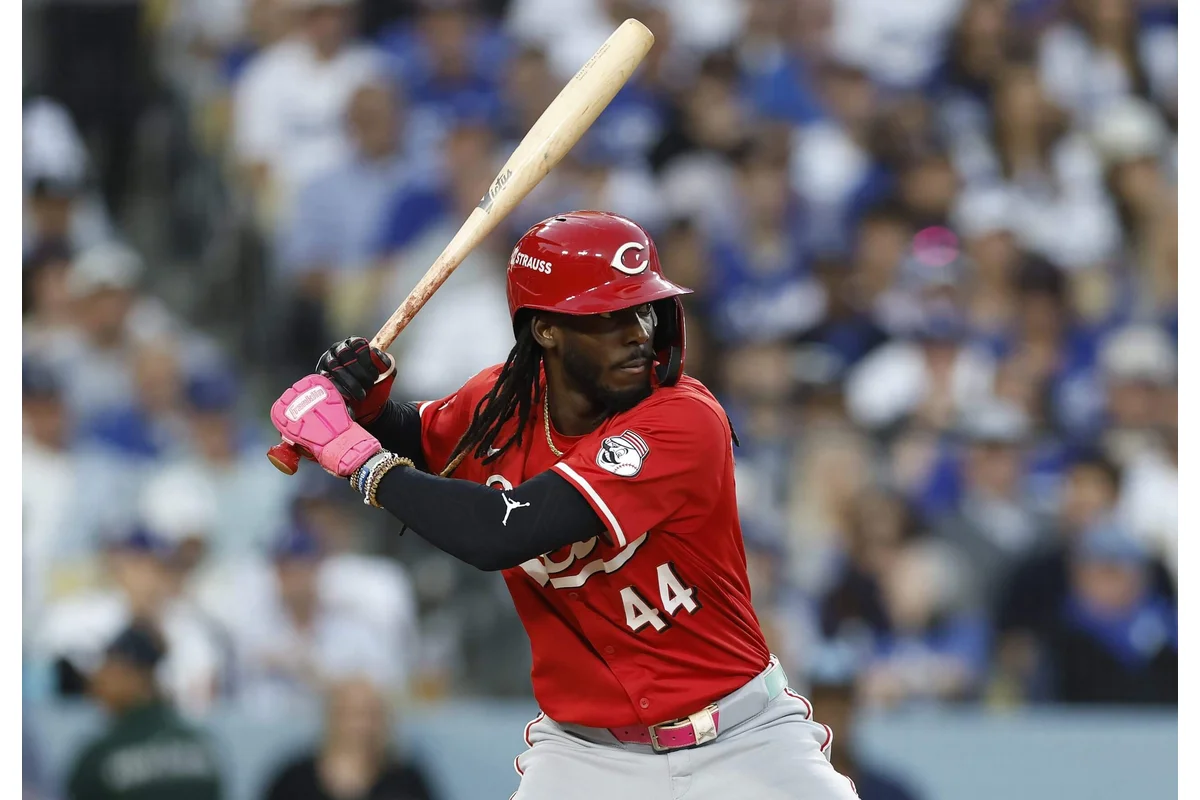
The Cincinnati Reds are facing a key decision regarding TJ Friedl’s playing time in the 2026 season. Friedl, who has been a vital offensive contributor, especially as a leadoff batter, demonstrated substantial impact in 2025 by leading the Reds in on-base percentage (.364) and ranking second in runs scored with 82. His ability to get on base was notable, placing him third in Major League Baseball for times on base from the leadoff spot, behind only Shohei Ohtani and Fernando Tatis Jr.
Despite these offensive strengths, Friedl presents some challenges. Over recent seasons, he has shown signs of physical wear, with diminished running speed and defensive effectiveness. His sprint speed declined sharply from the 71st and 74th percentiles in 2022 and 2023 to just the 26th and 32nd percentiles the last two years. This drop in speed is coupled with a defensive rating that ranked Friedl near the bottom among center fielders, placing 174th out of 179 with a Defensive Runs Saved figure of -10 in 2025. Comparatively, Boston’s Ceddanne Rafaela led all center fielders at +20, while Reds outfielders Pete Crow-Armstrong, Dane Myers, and Will Benson posted +15, +3, and +4, respectively.
Health and Changes to Playing Style Influencing Friedl’s Contribution
Friedl’s playing time and style have been altered after enduring three stints on the injured list in 2024. To preserve his health, he has consciously reduced the frequency of high-effort plays like running and diving. This strategic change might enhance his durability but has also coincided with a notable decline in production after the 2025 All-Star break, where his batting average fell to .238, including a .221 average in the final 44 games.
This combination of reduced physical capability and uneven offensive results creates a complex scenario for the Reds’ management in balancing Friedl’s role as a consistent contributor versus his limitations in the field.
Potential Roster Adjustments and Defensive Focus for 2026
The Reds organization appears to be prioritizing defensive solidity in the upcoming season, with discussions underway about diversifying the outfield. There is an expressed interest in increasing playing time for Dane Myers in center field, which could also see Friedl transitioning to left field more often. This move aims to optimize the team’s overall defense while still leveraging Friedl’s ability to get on base from the top of the lineup.
Questions remain about how a roster with reduced Friedl involvement would shape the team’s offensive and defensive dynamics. Could limiting Friedl’s innings help keep him fresher and more productive during games? How will the lineup adjust if Friedl’s role as leadoff hitter diminishes, and what impact does less time in center field have on the Reds’ defensive performance?
Implications for the Reds and Future Outlook
The decisions made regarding TJ Friedl’s role in 2026 will significantly influence the Reds’ competitive strategy. Balancing Friedl’s undisputed offensive talents with his declining running speed and defensive struggles presents a challenge that reflects broader tensions within the team. If managed well, reducing Friedl’s workload could preserve his offensive spark while strengthening the team’s outfield defense through players like Myers and Crow-Armstrong.
This ongoing evaluation also signals the Reds’ broader shift towards emphasizing defensive improvements alongside offensive efficiency. How the season unfolds will provide further insights into the effectiveness of this strategy and Friedl’s evolving impact on the team’s success.
