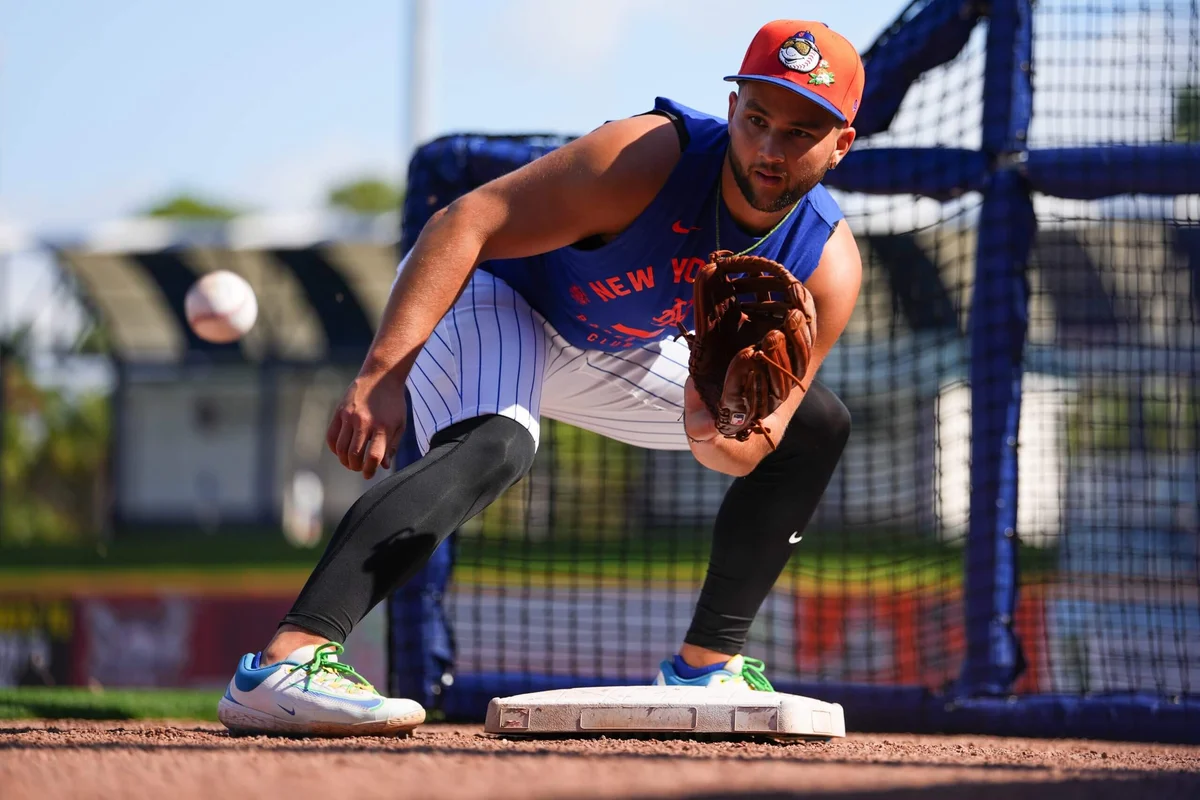
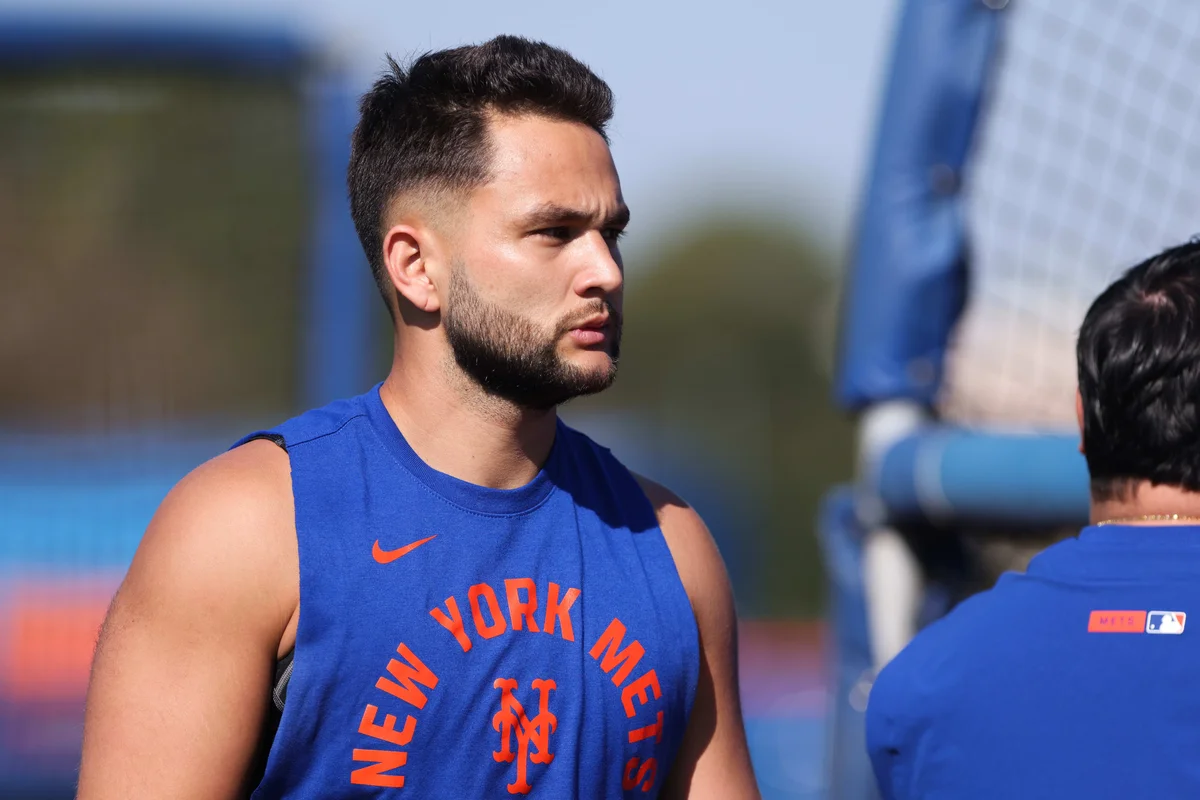
Bo Bichette makes smooth play at third base in Mets debut. [Image Source: NYT]
Bo Bichette returned to the field for the first time since the Blue Jays’ loss to the Dodgers in Game 7 of last season’s World Series, making his Mets debut at third base during their Grapefruit League opener on February 21 at Clover Park in Port St. Lucie. As Bichette adapts to a new defensive position with the New York Mets, his goal remains clear: to help the team reach October and achieve postseason success.
Bichette’s Transition to Third Base Begins Amid Mets’ Infield Experiment
After years of falling short with Toronto, Bichette joins the Mets confident that his playoff experience will be a valuable asset in Queens. The team recently launched what has been dubbed the “Great Infield Experiment,” shifting Bichette from shortstop to third base. This strategy involves rotating four middle infielders across the entire infield, a plan devised by Mets executive David Stearns to maximize versatility.
In his first game at third base, Bichette faced immediate challenges when a ground ball came down the line from Miami’s Connor Norby. He successfully backhanded the ball but his throw to first base, attempted by Jose Rojas, was off-target and led to an error. Bichette acknowledged the throw could have been better, saying,
“The throw could have been better, for sure.”
The former shortstop also noted the difference in positioning, stating,
Image of: Bo Bichette
“I don’t know if it’s tougher. It’s different.”
Carlos Mendoza, a Mets coach, expressed satisfaction with Bichette’s debut effort, particularly praising his arm strength during spring training sessions. Bichette will continue to receive regular reps at third base throughout spring training, with Jorge Polanco filling in at first base as the team adapts to the new defensive alignments.
While Polanco sat out the opener, veteran Marcus Semien stepped in at second base, the spot usually guarded by Francisco Lindor, who is currently recovering from hand surgery.
Adjusting to a New Defensive Perspective
Reflecting on his first experience playing third base, Bichette remarked on the adjustment required to get comfortable with a different viewpoint on the field.
“Playing third was fun,” he said, adding,
“I’m learning something new.”
He pointed out that unlike playing shortstop where he could see the hitter more clearly, third base demands close attention to the contact point of the ball. Bichette explained,
“I noticed right away the viewpoint is different [than shortstop]. You can’t really look at the hitter. You look at the contact point. There’s definitely a lot of stuff I can learn in the game.”
Mets leadership remains optimistic about Bichette’s ability to adapt, recognizing the challenges both he and Polanco face as they learn new positions. The team values their offensive contributions enough to accept a learning curve on defense, confident their experience will translate well over time.
Bichette Emphasizes Team Culture and Winning Mentality
Bichette brings not only his skills but also a focused mindset to the Mets clubhouse, having been shaped by highs and lows in his earlier years with Toronto. He stressed the importance of collective effort and team identity in achieving playoff success.
Reflecting on his playoff experience, Bichette said,
“I learned it’s not too complicated. It’s about having a group of more than 26 guys on the same page come together every day. You have conversations about what it looks like and what you want the identity of the team to be. It comes down to having the entire locker room here to win.”
He further highlighted the process that he and teammate Vladimir Guerrero Jr. endured in Toronto, which helped build a winning culture.
“It’s about the process,”
Bichette said.
“The organization was kind of put in Vlad’s and my hands at a really young age and we went through a lot of ups and downs. We had some really good times and not so good times that shaped us to get to the point that it was just really about winning. It’s not that we didn’t think it was about that from the beginning, but we had to get to the point where it really was the main focus and the only thing we cared about. We had to set that culture.”
With the Mets, the challenge is to transplant and grow that mindset within a new environment. Bichette stated,
“I think I can bring who I am and how I play on the field and what matters to me. Hopefully that turns into conversations about winning — and that’s already happening.”
Looking Ahead: Continuous Growth and Team Dynamics
The Mets’ infield reshuffling extends beyond spring training and will continue into the regular season as Bichette and Polanco establish their footing at the corner infield spots. Despite the unusual positions and new defensive demands, the club values the veteran players’ leadership and historical playoff insight as integral to driving the team’s success.
Bichette is expected to play a crucial part in building team chemistry and bringing experience from his time with Toronto’s Blue Jays. The Mets aim to harness this infield experiment into a cohesive and competitive unit that can advance deep into the postseason.
The ongoing adjustments and Bichette’s willingness to embrace this new chapter underscore a strong commitment to excellence and adaptability. As spring progresses, fans and analysts alike will watch closely to see how the Bo Bichette third base transition influences the Mets’ 2024 campaign.