
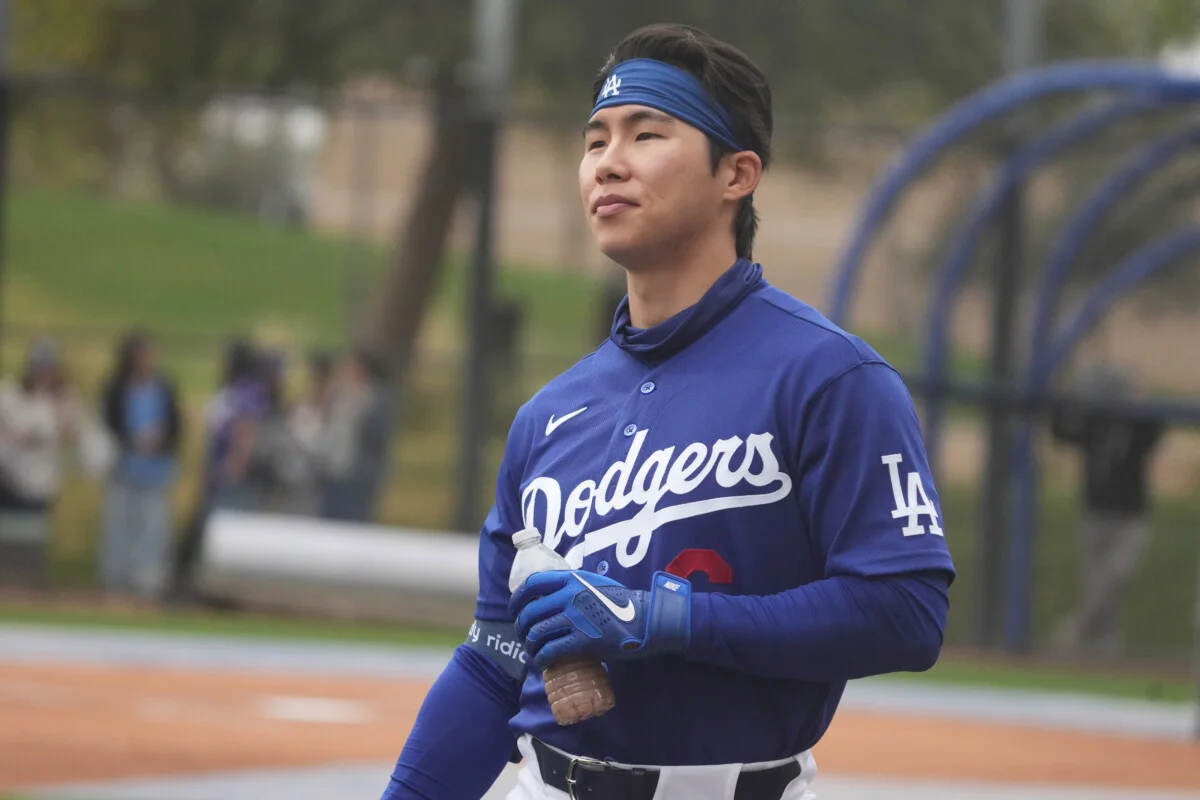
The Los Angeles Dodgers face a crucial decision for their second base position as the 2026 season approaches, following news that Tommy Edman will not be ready for Opening Day due to surgery recovery. This absence sets the stage for a competitive battle involving Miguel Rojas, Hyeseong Kim, and Alex Freeland, each vying to fill the gap left by Edman on the roster of the reigning World Series champions.
While the Dodgers’ front office, led by Andrew Friedman, could pursue external options through trades or acquisitions, the team’s current wealth of talent suggests that internal candidates like Kim, Rojas, and Freeland will be the primary contenders to secure the role at second base.
Internal Options and Potential Setups for Second Base
With Edman sidelined for the early part of the season, the Dodgers are likely to rely on a platoon system using Rojas, Kim, and Freeland to maintain stability. Rojas, a seasoned veteran who played a vital role in the World Series victory, and Freeland, who impressed defensively at third base during 2025, bring valuable experience. However, Hyeseong Kim, a promising second-year player from the Korean Baseball Organization (KBO), could offer the team a long-term upgrade if he proves capable of handling everyday responsibilities.
Outside candidates like Santiago Espinal appear unlikely to factor significantly in this race, emphasizing the Dodgers’ intent to develop from within unless a high-impact acquisition becomes necessary.
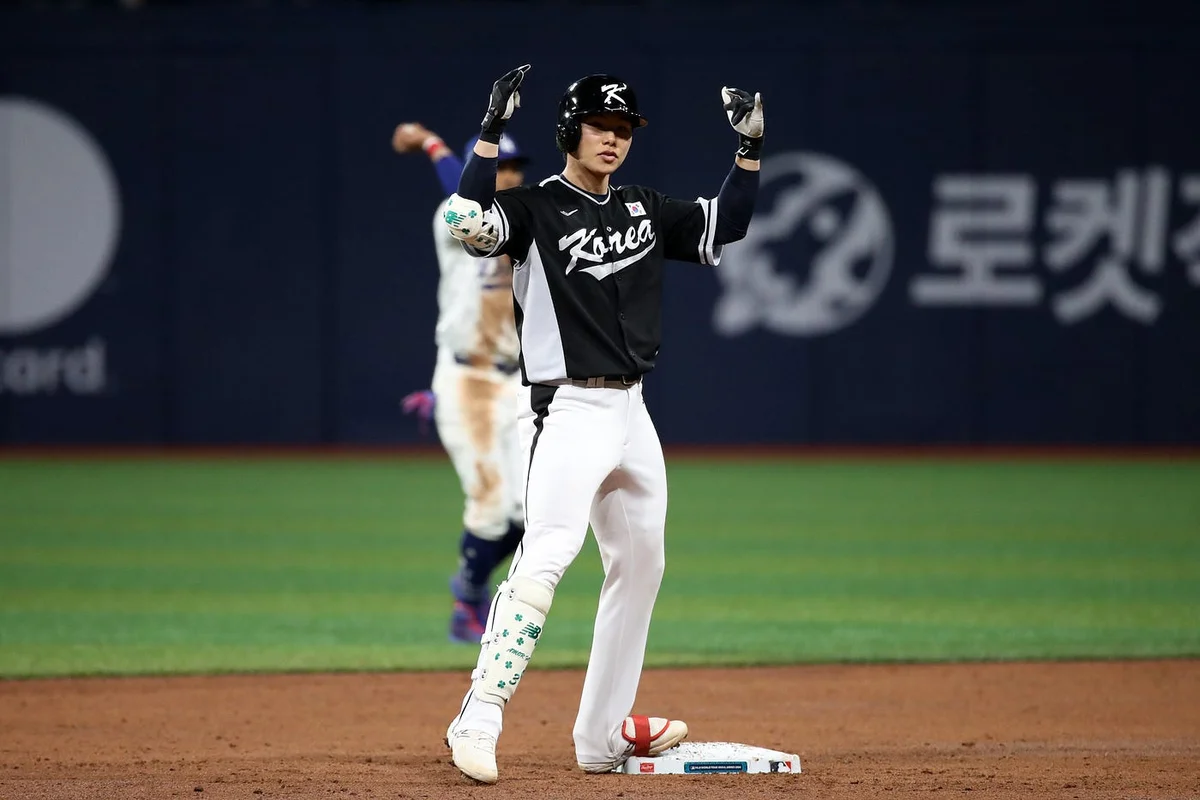
Hyeseong Kim’s Rookie Season as a Foundation for Growth
Kim’s debut campaign in 2025 offered encouraging signs despite his limited playing time and injuries. Without the traditional path through the American minor leagues, Kim managed to appear in 71 games, compiling 45 hits, 17 RBIs, and three home runs. His slash line of .280/.314/.385 demonstrated his ability to make consistent contact, an essential trait for a lower lineup hitter positioned ahead of star Shohei Ohtani.
Beyond his offensive contributions, Kim showed speed and smart baserunning with 13 stolen bases and only one caught stealing. His versatility was also apparent in the field, performing well both at second base and in center field, adding further value to his profile despite missing a significant portion of the summer due to injury.
Challenges in Earning Manager Dave Roberts’ Confidence
Although Kim displayed talent, his rookie status and adjustment period led to occasional errors and lapses in judgment on the field. These included missed catches and coordination issues with teammates in defensive scenarios, which contributed to manager Dave Roberts’ hesitant use of Kim in critical moments during the postseason. This hesitance relegated Kim to just two appearances in the World Series, with trusted veterans like Edman, Rojas, and Kike Hernandez preferred for high-stakes situations.
The Dodgers’ coaching staff remains cautious but optimistic, recognizing that Kim’s development hinges on increased exposure and experience at the Major League level.
Opportunity for Kim to Establish Himself Amid Edman’s Recovery
Edman’s extended absence presents Kim with a rare chance to prove his worth as more than just a role player or postseason energy contributor. If Kim can secure a starting role for the majority of Edman’s estimated 81-game hiatus, he could nearly double his MLB game experience, providing a clearer picture of his long-term suitability for the Dodgers’ lineup.
Playing in roughly 80 percent of those contests would bring Kim to around 136 career MLB games with over 300 at-bats, a significant sample size to help evaluate whether he can evolve into a regular starter at second base or even eventually transition to center field as a versatile option.
Evaluating Kim’s Role and Future Impact on the Dodgers
Kim’s potential trajectory is uncertain: he could mature into a key everyday player or remain a valuable depth piece, serving as insurance behind players such as Edman or prospects like Andy Pages. International players often face challenges adapting to Major League Baseball and may experience ups and downs as they progress, and Kim’s second season could swing either way.
Given Edman’s guaranteed absence regardless of performance, the Dodgers are incentivized to maximize Kim’s playing time in 2026. Doing so will clarify whether the team should invest further in his development or consider leveraging him in trade discussions ahead of the midseason deadline to acquire more proven and manager-friendly talent.
This decision will have lasting implications for the Dodgers’ infield configuration and depth, influencing both their championship pursuits and roster construction strategy moving forward.
