

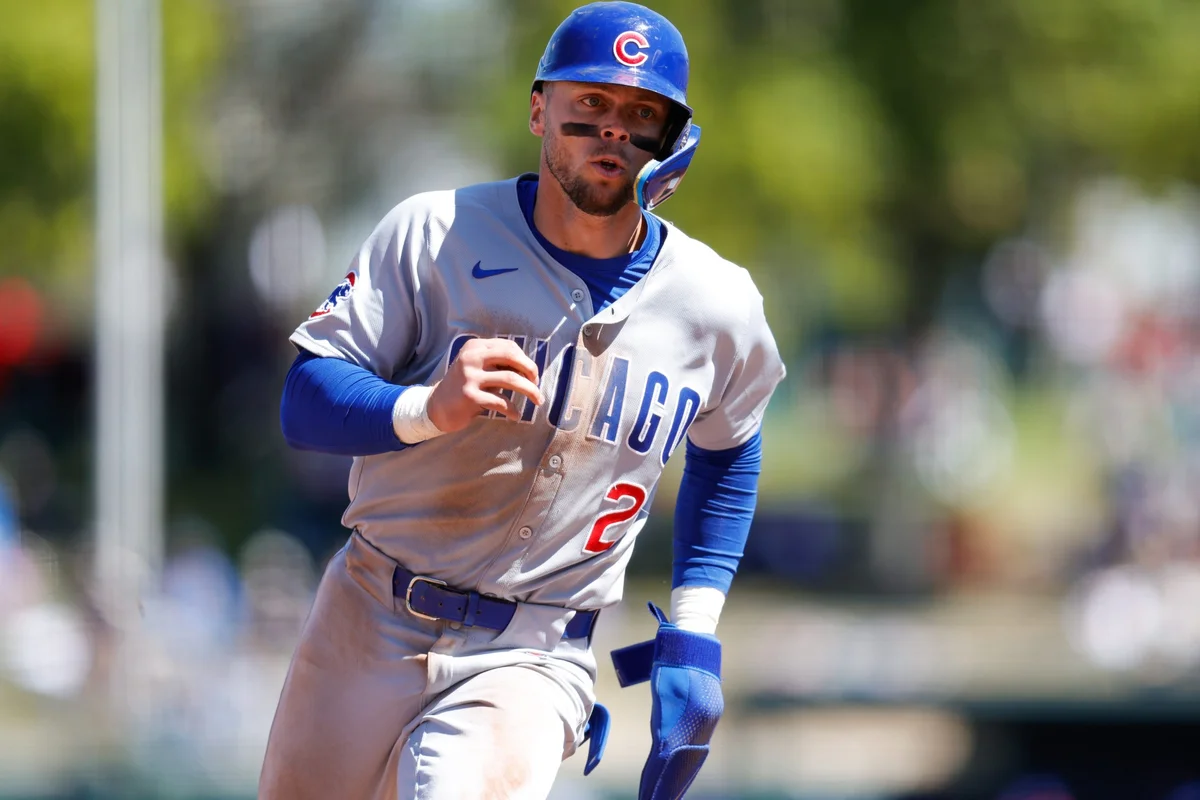
This offseason, the Chicago Cubs made a surprising move by targeting star Alex Bregman, creating a crowded infield situation that put Nico Hoerner’s future with the team into question. Despite this, the Cubs have been firm about keeping Hoerner, confirming no trade discussions are underway with Opening Day just weeks away. As Hoerner approaches the final year under team control, the Cubs face a critical decision about extending their promising two-way player, who is widely regarded as one of the best at his position. The challenge lies in financially committing long-term to a player with a unique skill set that offers both offense and defense at a premium position.
Evaluating the Feasibility of a Nico Hoerner Contract Extension
The Cubs appear optimistic about securing Hoerner before the season starts, especially given their history of valuing him. Chicago already extended Hoerner once with a three-year, $35 million contract that bought out his first year of free agency, and they promptly dismissed any trade rumors following their acquisition of Bregman. Under the management of Jed Hoyer, who has a track record of pursuing contract extensions, the Cubs have displayed a willingness to negotiate deals to retain key players like Hoerner and Pete Crow-Armstrong.
The crucial question remains whether Hoerner will agree to forego free agency just months from entering the market. While Hoerner has been a consistently strong performer, his ceiling may be lower than some contemporaries because he lacks significant power and relies on speed, which can be a riskier foundation for a long-term contract extending into a player’s mid or late 30s. Successfully agreeing on terms depends on whether the Cubs are prepared to match Hoerner’s value and if both sides can find common ground on contract length and compensation.
Contextualizing Second Basemen’s Top Contracts Across MLB
To gauge the potential financial scope of Hoerner’s extension, it’s useful to compare with recent deals for second basemen. Current highest-paid second basemen contracts include:
1. Xander Bogaerts – $280 million total
2. Marcus Semien – $175 million total
3. Jose Altuve – $125 million total
4. Ketel Marte – $116.5 million total
5. Andres Gimenez – $106.5 million total
6. Kristian Campbell – $60 million total
7. Jeff McNeil – $50 million total
These contracts highlight a range of values, but many are not perfect benchmarks. For example, Gimenez and Campbell signed their deals pre-arbitration, and Bogaerts’ deal is an unusually large outlier that is causing future roster concerns for the Padres. Thus, a reasonable reference point is around $25 million per year – a figure achieved by Altuve and surpassed by Semien.
Hoerner is younger than both Semien and Altuve at the time of their signings, but statistically, his lack of power and lower offensive upside may prevent him from resetting the market. Although his WAR (wins above replacement) over the past seasons is impressive, his offensive output, particularly in power numbers, lags behind those marquee players. Hoerner’s first season with an OPS+ above 110 came only last year, finishing at 114, underscoring his steady, rather than explosive, production. This profile may limit his ability to command bidding wars but still gives him leverage, especially given the scarcity of quality position players entering free agency next winter.
Forecasting the Terms of Nico Hoerner’s Next Contract
The projection for Hoerner’s upcoming contract extension centers around a deal spanning five years with a total value of approximately $110 million. This would place his average annual value just below that of Semien and Altuve, yet above Marte’s current contract. It aligns with carrying Hoerner through his age-33 season, hopefully positioning him for another extension if his performance continues. Such a deal would affirm Hoerner’s place among the elite at his position, recognizing the distinct way he contributes both offensively and defensively.
From the Cubs’ perspective, this extension makes strategic sense given the uncertain succession plan at second base. While Matt Shaw is waiting as a potential replacement, betting on him immediately brings risk due to limited big-league experience. Additionally, with other Cubs players like Seiya Suzuki and Ian Happ expected to become free agents next offseason, the franchise will likely have financial flexibility. Hoerner’s comprehensive value—in both offense and defense—arguably makes him the best candidate to invest in long term out of this group. Failing to extend him could lead to another team capitalizing on his talents.
“The only question, then, is whether Hoerner would forgo his free agency just months from hitting the market. The answer there should also be yes…” ? Jed Hoyer, Chicago Cubs Executive
