
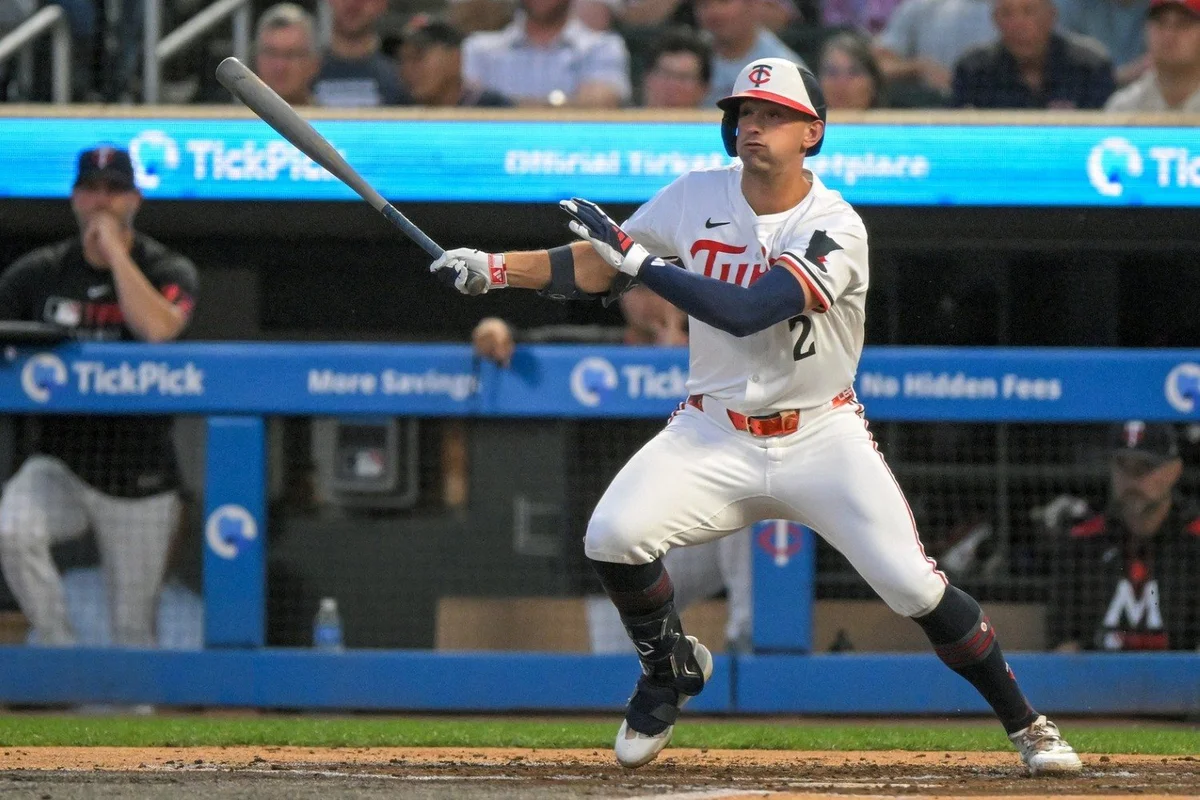
When the Minnesota Twins selected Brooks Lee with the eighth overall pick in the 2022 MLB draft, the organization had high hopes for his rapid rise to the major leagues. Lee, a standout at Cal Poly University, was seen as a player with the potential to quickly secure a spot on the Twins’ major league roster. However, the Twins did not expect he would remain available when it was their turn to pick, as some surprise selections like Kumar Rocker and Cade Horton were made ahead of them.
Twins scouting director Sean Johnson expressed his surprise on draft night:
“Now there’s a player who was maybe supposed to go [up higher] who is getting pushed closer to us. If Kumar pushed Brooks Lee to us, great. …We’re ecstatic.”
Early Signs and Emerging Questions in Lee’s Development
Four years later, heading into the 2026 season, Brooks Lee has faced challenges that cast doubt on the initial optimism surrounding his MLB development. While he earned a spot on the roster, his performance has not yet convinced many that he is ready to fully contribute at the big league level. Kaelen Culpepper’s rapid progress through the minors adds pressure, and Lee’s defensive struggles may lead to a position change, moving him away from his natural shortstop role.
Despite these uncertainties, Lee’s development path is often compared to that of Brian Dozier, a former Twins player known for turning early career difficulties into long-term success.
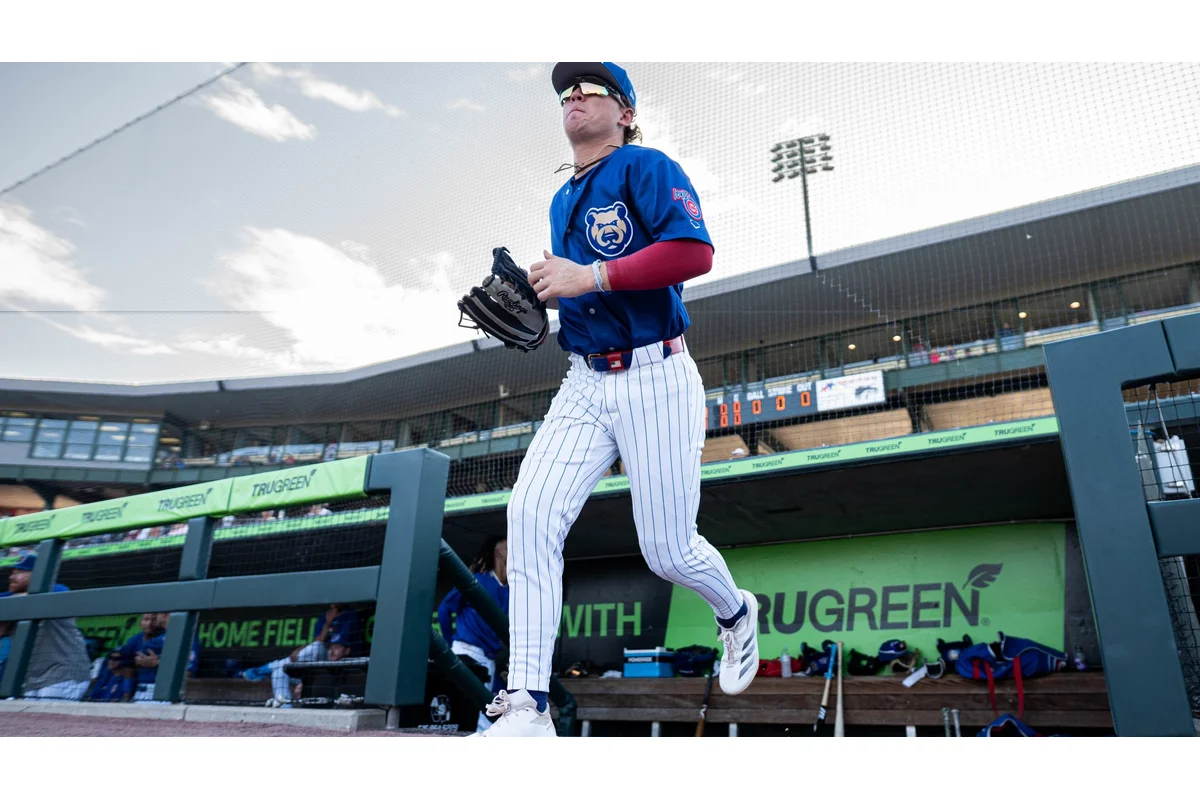
Brian Dozier’s Journey: A Model for Perseverance
During his time with the Twins, Brian Dozier emerged as one of the few highlights in the 2010s era for the franchise. Over 955 games, Dozier slugged 167 home runs and earned an All-Star appearance in 2015, becoming a fan favorite for his contributions. His journey to success, however, was gradual rather than immediate.
Originally drafted in the eighth round out of Southern Mississippi, Dozier began as a shortstop with decent minor league numbers but defensive and power limitations. His major league debut in 2012 showed promise with a batting average of .298/.370/.409 in the minors but a more modest rookie campaign (.234/.271/.332 with six home runs, 33 RBI, and nine stolen bases in 84 games).
The Twins shifted Dozier to second base in 2013, where he encountered a rocky start but soon found his power stroke after June 1, posting a .255/.331/.458 slash with 16 homers and 53 RBI over 106 games. His value continued to rise in subsequent seasons, notably hitting 23 home runs in 2014 and achieving an All-Star berth in 2015 as an injury replacement with 28 homers, 77 RBI, and 12 stolen bases.
Although the Twins struggled overall, at one point finishing last in the division, Dozier established a franchise record for second basemen with 42 home runs in 2016 and secured a Gold Glove in 2017. Despite being traded in mid-2018, his career illustrated how persistence and development could shift early setbacks into achievement.
The Twins’ Twitter account highlighted one of Dozier’s memorable moments:
“2015 MLB All-Star Game. Brian Dozier off Mark Melancon. 1st career All-Star Game home run. American League wins 6-3.”
Brooks Lee’s Challenges: Hitting and Defense
Brooks Lee’s traditional batting figures—.232/.279/.357 with 19 home runs and 91 RBI across 189 games—suggest that adjusting to major league pitching remains an ongoing struggle. Defensively, Lee has also faced difficulties, notably logging a minus-8 Defensive Runs Saved (DRS) over 595 innings at shortstop in the previous season, according to FanGraphs. Most of these shortcomings appeared later as he gained more opportunities at the position, though Lee insists shortstop is where he feels most comfortable.
Lee discussed his approach with MLB.com’s Matthew Leach last August:
“I’ve been playing as good of shortstop as I ever have. Just continue to do that. I think I’m a good shortstop, so no reason not to. … [It’s] just working at it every single day, making sure my body is in the right spot when I go out to play. Just playing hard all nine innings and making sure I have the same amount of focus as I do from pitch one to pitch 100.”
Interestingly, Lee performs better at second base, with a significantly reduced minus-1 DRS across 319 innings. The rise of Culpepper, the Twins’ first-round pick in 2024, complicates Lee’s positional prospects. Culpepper’s ascent could lead to position adjustments aimed at limiting the stress on Lee’s lateral movement, which Statcast metrics reflect as a minus-4 in Outs Above Average.
Additionally, Luke Keaschall’s defensive struggles at second base may open opportunities in the outfield, reshaping the infield configuration. However, these moves depend heavily on Lee’s bat improving.
Plate Discipline and Offensive Potential
Analysis from Baseball Savant identifies pitch selection as Lee’s most significant issue. His 31.8% chase rate—placing him in the 25th percentile—indicates he often bites at pitches outside the strike zone. His whiff rate stands at 24%, near the 52nd percentile, while he keeps strikeouts relatively low at 17.5%. Lee’s average exit velocity of 88.6 mph and hard-hit rate of 38.5% show room for improvement in making solid contact.
In contrast, Lee’s minor league performance was much stronger, where he hit .289/.360/.476 over 195 games, including a .267/.331/.492 line with 13 home runs and 48 RBI in 66 Triple-A games for St. Paul.
Though his MLB numbers have been uneven, Lee has displayed power potential with 16 career homers in 659 at-bats, suggesting that a turnaround at the plate is possible and could significantly influence his role on the Twins.
The Road Ahead: Pressure and Possibility for Lee
Turning 25 this year, Brooks Lee is at a critical juncture in his career. With the 2026 season crucial for his development, improving his offensive output could secure his place on the Twins roster and forestall potential shifts favoring players like Culpepper. Failure to raise his OPS above the .600 mark once again might prompt the organization to reconsider the long-term makeup of their infield.
If Lee adapts successfully and taps into his potential, his career trajectory could mirror that of Brian Dozier, transforming early struggles into sustained value and perhaps another fan-favorite homegrown player for Minnesota. The Twins’ hopes remain pinned on Lee’s ability to solve the challenges he faces at the plate and in the field, underscoring the uncertainty and urgency enveloping his MLB development.
📆ON THIS DAY📆
July 10, 2015.
The #MNTwins score seven runs in the ninth inning, capped off by a Brian Dozier walk-off home run to beat the Detroit Tigers. pic.twitter.com/m6W5jr8HlC
— Twins Dingers (@TwinsDingers) July 10, 2020
2015 MLB All-Star Game.
Brian Dozier off Mark Melancon.
1st career All-Star Game home run.
American League wins 6-3. pic.twitter.com/zkY8EevbwQ
— Twins Dingers (@TwinsDingers) July 16, 2024
